Latest NewsSpecialsEvents
Title Image

BRracing – Customer Results 2013

What our customers achieved last year (2012) is just AMAZING. We don’t and can’t control what customers we have, and we are thrilled to have them all. But, at the same time, not all customers are set up to be fast drivers. Our role is to coach them, guide them, and most likely, to provide a great car to use for any type of competitive event. What we want more than anything is that we have provided them the right enhancements at the right time, so that they can get the most of their car when they do go out and fling it around tracks.

The results in 2012 were truly stunning – class championship in the POC club series (Jesse M – Porsche 2011 Cup Car), lap records and class records in the PCA group at multiple tracks, Tribute to Le Mans Enduro winner (Fontana).

Here is a list of the events so far in 2013, and the customers and their results. And, just to put some of the results in context, in the POC events, a racer can enter both the Time Trial as well as the Race, so often, the top places in the Time Trial are from the full race cars. As an example, in the Spring Mountain Time Trial in 2012, 28 of the cars were full race cars, yet our customers street cars were right in the top group.

May 10 – 12, 2013 – Circuit of the Americas (COTA), PCA

Jesse Menczer (PCA Enduro) – qual P1 in class, P6 overall, finished P1 in class, P2 overall

Shahin Mobine (PCA Enduro) – qual P4 in class, P18 overall (due to issue in prior race), finished P2 in class, P9 overall

Jesse’s 1st place AWARD for the PCA race at COTA


April 5 – 7, 2013 – Fontana, POC/PCA/PDC

Jesse Menczer (PDC race) – qual P4, finished P3

Jesse Menczer (PDC race) – qual P3, finished P3

Shahim Mobine (PCA race) – qual P14, finished P10 overall


March 29 – 31, 2013 – Thunderhill, PCA

Shahin Mobine – Saturday – qual p2, WON the race overall

Shahin Mobine – Sunday – qual P2, WON the race

Jesse Menczer – Saturday – qual P1, fastest lap of race (1:49)

Jesse Menczer – Sunday – qual P1, finished P3 (again, after pit stop)


February 9 – 10, 2013 – Willow Springs, POC

Craig Ames – Saturday, qual P1 overall, finished 5th in race, 4th in class

Craig Ames – Sunday, qual P4 overall, finished 3rd overall and 3rd in class

David O – GT3 – set new personal best at Willow Springs in the Time Trial

Oil Changes – Does Frequency Make a Difference?

There seems to be a lot of contradictory information on oil changes.

Most manufacturers are starting to promote longer oil change intervals.? Why? Has some breakthrough been made that makes oil last longer, and the wear on the motor less? Or is this a game being played out in the market, to gain market share?

The answer is all the above. So, what should we know, or how should we manage the oil changes on our cars?

Market

In the ever competitive world of car sales, each manufacturer is trying to work all the little details to gain market share. Enter BMW in the early 2000′s, and their introduction of the “included maintenance” as part of the car purchase. Why did they do this? Research had shown that potential BMW customers were concerned that the ongoing maintenance costs of a BMW vs other cars was high. So, if they now included the maintenance, that removed the issue from the buyer. Now BMW was seen as less expensive to maintain than other cars. But, nothing changed on the car itself. BMW needed to keep the cost to themselves and the dealers down, so, they magically changed the service interval from every 7,500 miles to every 15,000 miles. As this market strategy has worked in BMWs favor, other car manufacturers are adopting some of the same elements. We see other manufacturers adopting the “included maintenance” solution, and at the same time, the service interval change (getting higher). Is this so bad?

Not for the car manufacturers. The downside to less frequent oil changes is wear on the motor and other lubricated parts. Who loses in this equation? The owner of the car once it reaches 100k miles, as the incremental additional wear on the motor will start to produce unwanted or unexpected results…..things will wear out sooner, or things will break sooner.

Evidence of this is now starting to become known. GM just released a letter to owners of cars between the years of 2010 – 2012, to notify them that they may need to do oil changes more frequently than their computer or service display shows. Why? Because GM is starting to have to deal w more warranty claims on broken motors. They are offering to reprogram the software on the car to show the need for more frequent oil changes than before, to prevent these downside affects of extending the oil change interval.

Now, we as independent shop service centers are seeing the evidence as well. We (BRR) are now dealing w replacement motors, highly worn parts on a weekly basis. The fundamental shift in oil change intervals has taken about 8 years to work its way into the market, but the results are clear. Cars and motors are not lasting as long, and not like before, where if you took good care of the motor, it could last well over 300k miles. Now motors and other parts are requiring replacement in the 120k – 200k range. Again, the car manufacturers don’t really care, as the owners of the cars at that age are not the next new car customer for the car manufacturer…so, they win on both sides. The longer oil change cycle introduces early product obsolescence, and they reduce their cost for included maintenance.

Product

Is this really so bad or has product improved (both the durability of the motor and parts as well as the lubrication protection of the new synthetic oils)? Yes to both. Car manufacturers have found multiple ways to improve the longevity of parts, even as they try to reduce the mass of the parts for weight and fuel economy gains. And, the new synthetic oils (and the next wave of new synthetic oils will come starting in 2014/2015, more on that in another article) have improved their thin wall compressibility, and extended the periods of molecular breakdown. Both of these elements have helped, but not to the point where oil change intervals can grow from the old standard of 3,000 miles to 15,000 miles.

(The picture above is from a current, post 2000 BMW engine, where the owner did not follow the oil change interval…and the results are clear).

NET

We see better product all the time, and continued evolution of all technology advances, but we have not seen the results for synthetic oils and engine design to the point of extending oil changes beyond every 7,500 – 10,000 miles. (Unless you now have an electric car, in which case you get to thing about coolant changes instead of oil changes).

As the old saying goes, you can pay a little now (for the proper protection), or pay a lot more in the future.


BRR 2013 Schedule – Current Outlook

2012 was a very busy year for us, as our “track customer” base exploded. And, we thank them greatly for it.
We started with just one full race customer in the beginning of 2012, and some looking to do more Time Trials. We ended the year with 7 full race customers, and 5 Time Trial customers, and 20 DE customers. Now, 2013 looks to be even better.
There are LOTS of track events, but our schedule is leaning in the direction that our growing base of ACTIVE track addicts. Where they want to go and when. With more of you doing Time Trials and Races…that means more of our events are focused on weekends or three day weekends. In several cases, we will have multiple events on the same weekend, but our crew, staff, and equipment can now support that.
We currently have one of our customers turning PRO, and will run the full season of the Pirelli Drivers Cup Championship w full BRR support. We may have more in this group.
Here is the updated view and current outlook -
Feb 8 – 10, 2013 – POC, Willow Springs (TT, race) (DONE)
Mar 26, 2013 – Apple/HOD, Laguna (DE, 92db day)(Tuesday)(DONE)
Mar 29 – 31, 2013 – PCA, Thunderhill (DE, TT, and race)(DONE)
Apr 5 – 7, 2013 – PCA, PDC, POC, Fontana (we are having to reserve garages NOW)(TT and race)(DONE)
May 11 – 12, 2013 – PCA, COTA (Race & DE)
May 17 – 19, 2013 – PDC, COTA (race only)(w Australian SuperCars)
May 24 – 26, 2013 – PCA, Buttonwillow (DE, TT, race)
May 31 – Jun2, 2013, POC, Fontana (TT, race, enduro)
Jun 8 – 9, 2013 – HOD, Thunderhill (DE)
Jun 14 – 16, 2013 – PRC, Sonoma (race only)(likely a NASA DE and TT at the same location)
Jun 14 – 16, 2013 – PDC, Portland (race only)
Jun 28, 2013 – Speed, Laguna (DE only)
Jul 4 – 6, 2013 – NASA, Laguna (DE, TT)
Jul 6 – 7, 2013 – PDC, Laguna (race)
Jul 13 – 14, 2013 – PCA, Thunderhill (DE, TT)
Aug 16 – 18, 2013 – PRC, Thunderhill (race only)(likely a NASA DE and TT at the same location)
Aug 31 – Sept 1, 2013 – PCA, Thunderhill (DE, TT)
Sept 6 – 8, 2013 – PDC, Sonoma (w FIA Touring Cars)(race only)
Sept 14 – 15, 2013 – PDC, Miller (race only)
Sept 20 – 22, 2013 – PCA, POC, MIller (TT, race)
Sept 27 – 29, 2013 – PRC, Sonoma (race only)(likely a NASA DE and TT at the same location)
Oct 5 – 6, 2013 – PDC, POC, Laguna (race and TT)
Oct 25 – 27, 2013 – PRC, PDC, Sonoma (race only)(likely a NASA DE and TT at the same location)
Nov 7-9, 2013 – NASA, Sonoma (DE, TT)
Nov 15 – 17, 2013 – PDC, COTA (race only)(w F1 race)
Nov 24 – 25, 2013 – PCA, Laguna (DE, TT)
Dec 7 – 8, 2013 – POC, Willow (TT, race)
Let us know where we can support you!

Porsche Center Lock ISSUE

UPDATE – April 9, 2013

We had previously reported about a formal announcement from Porsche about the 997 center lock hub assembly.? Now we have the official update and service recommendations if you are still using the OEM 997 street center lock system and are doing any track activities – here is the new update from PORSCHE.? (Comment by BRR – pay close attention to the schedule of how often this needs to be done, and the COST to do this service…..this is NUTS).

Vehicle Type & Affected Vehicles:
911 Carrera GTS (997)/911 Carrera 4 GTS (997)
911 Turbo (997)/911 Turbo S (997)
911 GT3 (997)/911 GT3 RS (997)/911 GT3 RS 4.0 (997)/911 GT2 (997)

Model Year:
As of 2009 up to 2013

Equipment:
Central wheel lock (I-no. 422, 430)

Concerns:
Maintenance and Service Intervals for race track use

Information:
This is to inform you of a voluntary Workshop Campaign on the above-mentioned vehicles.

Action Required:
Current market observation shows that the race track usage profile of many vehicles in the 911 model line now comes close to that of pure GT3 racing vehicles (e.g. GT3 Cup). The component stresses associated with race track use and competitive driving are much higher than for
a sporty driving style on public roads.

The new maintenance and service intervals for race track use must therefore be observed, particularly for highly stressed chassis components, in the same way as is required for GT3 racing vehicles.
If these new maintenance and service intervals are not observed, the failure of highly stressed
components cannot be ruled out, particularly in the case of components in advanced stages of wear.

For this reason, Porsche has established new maintenance and service intervals for race track
use.

During workshop campaign WD13, customers whose vehicles were fitted with the current standard version of the rear wheel hub at the factory will be informed about the new maintenance and service intervals for race track use.

Each owner of record for the affected VINs will be mailed a notification letter with an enclosed owner’s manual supplement that outlines the new maintenance and service intervals.

NOTE: The new Maintenance and Service Checklist is available in the Document Repository
under Service Operations, Group 0 (zero); P/N PNA 000 162 FG.
The VIN(s) can be checked by using PIWIS Vehicle Information link to verify if the campaign affects the vehicle. This campaign is scope specific to the VIN! Failure to verify in PIWIS may result in an improper repair. This campaign affects 4,709 vehicles in North America.

Attachment “A”: Procedure

PCNA will mail a customer notification letter to affected customers as noted above.

The new Maintenance and Service Intervals outlined in the supplement that accompanies the letter are as follows:

Additional maintenance for race track use/Vehicles with central lock, model years 2009-2013
Additional maintenance every 4,200 miles (7,000 km) for race track use (cumulative)
? Replace wheel hubs and wheel bearings on rear axle
? Replace central lock bolts on rear axle
Additional maintenance every 8,400 miles (14,000 km) for race track use (cumulative)
? Replace wheel bearing housing on rear axle
? Replace wheel hubs and wheel bearings on front axle
? Replace central lock bolts on front axle
Additional maintenance every 16,800 miles (28,000 km) for race track use (cumulative)
? Replace wheel bearing housing on front axle

Attachment “B”: Claim Submission – Workshop Campaign WD13
Warranty claims should be submitted via WWS/PQIS.
Open campaigns may be checked by using either the PIWIS Vehicle Information system or through PQIS Job Creation.
Labor, parts, and sublet will be automatically inserted when Technician is selected in WWS/PQIS. If necessary, the required part numbers will need to be manually entered into warranty system by the dealer administrator.


Original POST by BRR on December 7, 2012 – a formal recall was released in January 2013

OK, most of you will already know, that we (BRR) have seen, first hand, an issue w the Porsche Center Lock hubs found on the street GT3′s and GT3-RSs (997.2 versions).? Porsche has just made the first announcement, and a PR release by the head of R&D that there is an issue w the center lock hubs, when used for track purposes…..hmmm….or very aggressive driving, and that these forces can come close to the forces experienced when racing.

Their position is that the hub needs to be replaced (implying a new part, or different part).

Full announcement and the recall expected from Porsche in January 2013.

If you don’t know, we had a customer experience a complete failure of the right rear hub at a track event with his 997.2 GT3 w the center lock hubs.? There is no known evidence of a hub about to fail, when it will fail, or how to determine when failure is imminent.? The only resolution is to replace the OEM center lock hubs with either the Porsche Motorsport center lock hubs (the ones used on the Porsche Cup Car) or to go w the older 5 lug hub design.? We (BRR) have installed both, and know the parts and the solution for both alternatives.

Check w us if you have any questions.

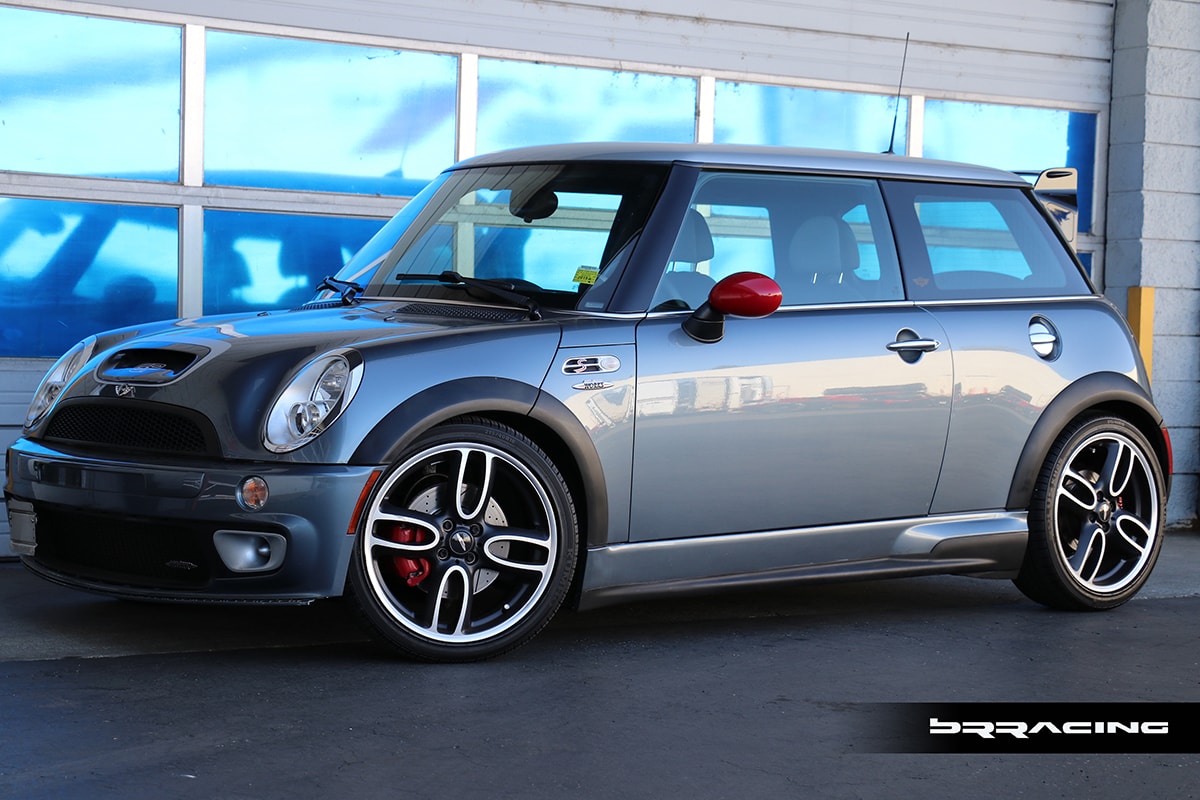
Mini Cooper S R56 – engine woes

SERVICE Alert

If you own, or know someone who owns a MINI Cooper S (R56) car, from 2006.5 to 2011, read on with great interest or concern.

With the push to get more new cars produced, broaden the product line, the life cycle has gotten shorter and shorter, and manufacturers have also taken other steps to outsource some major parts of the car to help in the rush to get this all done. Add in the change in technology, push for greater gas mileage and more power, hybrids, and there is a certain formula that something along the way may not go according to plan. We have seen this with many of the manufacturers…it doesn’t seem limited to any category or segment. Now enter MINI…and with the introduction of the second version of the second generation MINI, they have fallen in this hole. They outsourced the first MINI motor for the Cooper and Cooper S, and now have taken that same path again with the current version of the MINI, albeit with now a different engine supplier and having moved from a first version Supercharged motor to the current version Turbocharged model.

None of that would be bad….unless something could go wrong. Most of our customers today believe their car should run nearly trouble free, and not have any significant engine issues till the car nears 200k miles. Some of that is forgiven if the car is a specialty or high performance car (read Porsche and Ferrari).

The other concern is when the manufacturer tries to turn their head the other way when an obvious, and recurrent problem pops up. This is what we are seeing w the current model MINI Cooper S, the one with the turbocharged motor. Due to the size of our MINI customer base, we first started to see this issue about 2010, and now are seeing a more steady stream of occurrences. As one would expect, MINI themselves first saw the issue arise, and after a full year of issues, had issued a Technical Service Bulletin….first to its dealers, and then to the public. But, this doesn’t mean the were stating they knew there was a problem, a Service Bulletin is to make service managers and technicians aware of how to test and repair a known issue. That is how MINI positioned it, and continues to do so. Their first Service bulletin even took a more backhanded approach as it communicated the issue to the dealer network.

The issue – as low as 20k miles, and we have seen it mostly around 50k miles, the motor starts to make loud rattle. This noise is louder on cold start up, and is less noisy or may sound like a normal engine sound once the engine is fully warm. The issue is the chain tensioner….and it is not working as designed, and not producing the tension the timing chain needs, and the timing chain hits the outer enclosure and makes the rattle sound. But, that in and of itself wouldn’t be too bad, but what can happen if this is not taken care of is. If the customer doesn’t have this addressed, and this tensioner continues to get worse, and the wear occurs to the timing chain guides as well, the customer could experience complete engine failure (the chain will jump the timing chain gears, timing will get off, motor won’ t run well, valves open at the wrong time, and then really bad things happen as the pistons and valves do direct battle, with the engine losing)…read the motor will break.

There is a known fix to this, and MINI even has a test to determine if the tensioner is producing less than desired tension. Depending on when this issue is identified, and the longevity of the wear period, the extent of the fix can be minor or major. At a minimum, it requires a new timing chain tensioner (not a quick fix, but not out of the ball park in cost either). But, if the wear is greater, then several parts need to be replaced (timing chain, timing chain tensioner, gear, guides (3), and some key bolts).

If your car or someone you know has this, and the car is under warranty, MINI will test the car, and should cover the repair. If you are outside the warranty period, then even though MINI knows of this, the repair will NOT be covered.

The current TSB related to this issue is:

SI M11 02 07
Engine – February 2011
Technical Service

This Service Information bulletin supersedes SI M11 02 07 dated October 2010.

So, be aware, listen to your motor, and you may want to have MINI test your car to see that all is OK.? Believe us…this is a REAL ISSUE.

UPDATE – JUNE 2012

I’m updating this post (originally written by us in Dec 2011, but updating now in June 2012….as we are seeing cars at about the rate of one a week w this issue with many NOT having addressed this issue early, and producing other unwanted results…..read….more expensive repairs).

Here are pics of a recent example where the following occurred -

(1) The timing chain tensioner does not provide sufficient tension (you can feel a significant difference in the current motor version versus the new version)

(2) The upper timing chain guide wears through, and then breaks. The picture is of the pieces left after it has broken into multiple pieces. These pieces then fall down into the timing chain galley and do further damage…and in another recent case, got caught in the oil pump chain, and broke and stretched the oil pump chain nearly throwing that chain and causing oil starvation (which would have been the end of the motor).

(3) The side timing chain guides break into pieces, and fall into the oil pan, also requiring additional time and work to repair. The pic below shows how one case, the pieces did get caught in the oil pump chain, stretching it, and almost causing it to be thrown and killing the motor altogether.

NET – if you own, or know someone who owns a 2007 – 2009 MINI, have them get this fixed, even if they think they are FINE.

MORE UPDATES – Feb 2013

Here is a comment from another shop who has read and follows our blog, about the MINI issue -

“I work in an engine rebuild center . we are seeing more & more of these MINIs coming in every day now … burning oil & timing chain problems … new one is the top guide is wearing causing metal fillings into engine ” not what you want “. Last one causing Vanos unit (variable camshaft) to cause a fault code 287d to stop working as relies on oil pressure… not the best from BMW/MINI I must say.” …..

Another comment rec’d on March 14, 2013

This just happened to me. 68k on my 2009 S. Was running perfectly, never noticed a rattle or anything, but blam, dead car. It

New Ferrari Supercar – Laferrari

Here is the Press Release from Ferrari on their new Supercar.? Some amazing facets and facts…..enjoy.? (See our photo gallery under “cars” to see more photos of this best Ferrari of all Ferrari’s.)

Maranello, 5th March 2013 ? The wraps are finally off the LaFerrari. The Prancing Horse’s eagerly-anticipated limited-series special, of which just 499 will be built, made its world debut today at the Geneva International Motor Show.

“We chose to call this model LaFerrari,” declared Ferrari’s President, Luca di Montezemolo, “because it is the maximum expression of what defines our company ? excellence. Excellence in terms of technological innovation, performance, visionary styling and the sheer thrill of driving. Aimed at our collectors, this is a truly extraordinary car which encompasses advanced solutions that, in the future, will find their way onto the rest of the range, and it represents the benchmark for the entire automotive industry. LaFerrari is the finest expression of our company’s unique, unparalleled engineering and design know-how, including that acquired in Formula 1.”

For Ferrari the development of a limited-series special like the LaFerrari represents an opportunity to experiment with all the technological solutions that will later filter down onto the production cars. Of particular significance in this context is the introduction of the hybrid system which, making full use of the Scuderia Ferrari’s F1 KERS know-how, has resulted in a solution that exalts Ferrari’s fundamental values ? performance and driving thrills. The hybrid technology used, known as HY-KERS, represents the perfect combination of maximum performance and lower emissions. LaFerrari in fact emits just 330 g/km of CO2 but without resorting to electric-only drive which would not fit the mission of this model. The HY-KERS system is, however, designed so that in future applications a car can be driven using exclusively electric power for a few kilometres and, during development testing, a full-electric version of LaFerrari achieved just 220 g/km of C02 emissions on the combined cycle.
The LaFerrari is equipped with dynamic controls that are integrated for the first time ever on a Ferrari road car with active aerodynamics and the HY-KERS system. Thanks to Ferrari’s proprietary logic which govern all the systems, the car can achieve absolute levels of performance, aerodynamic efficiency and handling without any form of compromise in any area. A very advanced and uncompromising approach was also taken with the interior design which features an HMI inspired by F1 single-seaters.

Architecture
The LaFerrari’s architecture posed the first challenge for the Prancing Horse team at the planning stage of the design. The aim was to achieve ideal weight distribution (59% at the rear) and a compact wheelbase despite the extra bulk of the hybrid system. The result is that all of the masses are situated between the car’s two axles and as close as possible to the floor to lower its centre of gravity (by 35 millimetres) and thereby guarantee dynamic handling and compact dimensions.
The layout of the cabin made a significant contribution in this regard. The seat is fixed and tailored to the driver while both the pedal box and steering wheel are adjustable. The driving position is similar to that of a single-seater and was designed after consultation with the Scuderia Ferrari drivers, Fernando Alonso and Felipe Massa, who played an active role throughout the entire development process.
The LaFerrari’s chassis features no less than four different types of carbon-fibre, all hand-laminated and autoclave-cured in the racing department using the same design and production methods as the Formula 1 car. This helped optimise the design: various functions were integrated (e.g. seats and battery compartment) into the chassis to improve torsional rigidity (+27%) and beam stiffness (+22%) whilst cutting weight.

Powertrain
The LaFerrari is the first car in Ferrari history to be powered by the HY-KERS system. The ICE represents the pinnacle of engine development and research, with a 6262 cc V12 that punches out 800 CV and revs to a maximum of 9,250 rpm, a record for an engine of this displacement. It also features a very high 13.5:1 compression ratio and a high specific output equal to 128 CV per litre. The engine is coupled with a 120 Kw (163 CV) electric motor, giving it a combined power output of 963 CV.
The high torque levels available at low revs from the electric motor allowed the engineers to optimise the internal combustion engine’s performance at higher revs, thus providing a constant supply of exceptional power throughout the rev range. Total torque generated is in excess of 900 Nm. The hybrid system is composed of two electric motors developed in collaboration with Magneti Marelli ? one powering the driven wheels and the second the ancillaries ? and a battery pack attached to the floor of the chassis consisting of cells that are assembled in the Scuderia Ferrari department where the KERS for the F138 is also made. The Scuderia’s expertise allowed considerable savings in weight and size of the individual components and the batteries weigh just 60 kg while providing the highest energy density possible for this kind of application.
The batteries are charged in different ways: under braking (even hard braking with the ABS active) and every time the V12 produces more torque than required, such as in cornering. In the latter instance, rather than the being sent to the wheels, the excess torque is converted to energy and stored in the batteries.
The electric motor is coupled with the F1 dual-clutch gearbox to the benefit of optimal weight distribution, but also to boosting energy efficiency as torque is instantly available to the wheels and, vice versa, from the wheels to the electric motor in recharging.

Aerodynamics
Active aerodynamics play an essential role, as they allow a complete adjustability of the car’s configuration to attain LaFerrari’s exceptional performance.
The engineers’ aim was to deliver the highest degree of aerodynamic efficiency ever achieved with any road car, with a coefficient of nearly 3, thanks to technical solutions honed with CFD analysis and fine-tuned in the F1 Wind Tunnel.
To boost efficiency, the LaFerrari sports active aerodynamic devices front (diffusers and guide vane on the underbody) and rear (diffusers and rear spoiler) which generate downforce when needed without compromising the car’s overall drag coefficient. These devices deploy automatically on the basis of a number of different performance parameters which are monitored in real time by the car’s dynamic vehicle controls, thus guaranteeing the ideal configuration on the basis of the driving conditions.

Control systems
One further innovative aspect of the LaFerrari is the integration of its active aerodynamics and hybrid system with the other dynamic control systems aboard. This means the car responds intelligently to driver inputs, making for a seamless blend of unprecedented performance and unparalleled driving emotions.
Proprietary Ferrari algorithms deliver optimal integration of the electric motor and V12 for instantaneous response. In cornering, for instance, the HY-KERS keeps the V12′s revs high to guarantee better acceleration on exit.
The LaFerrari’s Brembo braking system is also integrated with the hybrid system, and incorporates several new features, including new lightweight callipers designed to guarantee correct cooling and carbon-ceramic material (CCM) discs featuring a new composition.
The car’s extreme performance potential called for a different tyre set-up, with 265/30 R 19 Pirelli P-Zeros on the front and 345/30 R 20s on the rear.
All in all the car guarantees maximum driving thrills in every situation and performance levels are top level: 0-100 km/h in less than 3 seconds and 0-200 km/h in under 7 seconds, a lap time at Fiorano of under 1’20″ ? 5 seconds faster than the Enzo and over 3 seconds faster than the F12berlinetta. LaFerrari is thus the fastest road car in Maranello’s long history.

Styling The Ferrari design team led by Flavio Manzoni developed the LaFerrari’s styling working in close synergy with the engineers to emphasise the exacting link between form and function. The result is an extreme, innovative design which retains close links to the marque’s tradition. This is most evident in its side profile: the car has a sharp, downward-sloping nose and a very low bonnet which emphasises its muscular wheelarches, a clear nod to the gloriously exuberant forms of late-1960s Ferrari sports prototypes.
The LaFerrari’s body has been given a sculptural treatment heavily influenced by its clearly F1-inspired aerodynamics and a tail section that exudes uncompromising sportiness.
Inside there’s a newly-designed steering wheel sporting all the major commands, and the gear-shift paddles are now longer and more ergonomic. The signature bridge on which the F1 gearbox functions are clustered has taken on a sleek, suspended wing-like shape. The whole interior, in fact, has a fiercely track-inspired, pared-back allure.

The Ferrari range
Aside from the new limited-series special, the Ferrari stand also features the complete range which is the most wide-ranging and critically acclaimed in its entire history. The five models all share the same Ferrari DNA in terms of performance, driving pleasure and technology, yet each one has its own strongly unique identity, in line with the company’s philosophy of “different Ferraris for different Ferraristi”.

Ferrari’s 12-cylinder GT sports car prowess is represented at Geneva by the FF, the very first four-seater and four-wheel drive in Prancing Horse history. It will be sporting a Grigio Ingrid livery with an elegant glass roof and Iroko interior. The FF is also now seamlessly integrated with Apple technologies, thanks to direct access to the infotainment system via SIRI voice commands and the adoption of two iPad Minis as the entertainment system of choice for the rear seat passengers.

Blistering performance and sublime driving pleasure even at low speeds are assured behind the wheel of the multi-award-winning F12berlinetta, which is powered by a mid-front V12. Unique handling characteristics, extreme aerodynamics and an innovative yet classic design are its signatures. The car on show at Geneva has a Grigio Silverstone livery and a Sella di Cavallo interior.

Moving on to the 8-cylinders, the California 30, in sophisticated Nero Stellato with a Crema interior, is a convertible GT that uncompromisingly marries sportiness and versatility. The California’s already-massive popularity with both press and public alike grew still further after its V8′s output was upped by 30 hp to 490 hp, and 30 kg was slashed off its overall weight.

The blistering 458 Italia is a sublime, thoroughbred sports car. It and its drop-top sibling, the 458 Spider, are equipped with the same extraordinary mid-rear-mounted V8 engine which was named International Engine of the Year in both 2011 and 2012. These two models continue Ferrari’s glorious tradition with this particular layout. The coup

Porsche 991 GT3 release

Article content from AutoSport news release (March 4, 2013)

BRR – We’ve seen the spy shots.? We’ve read the articles and leaks w great interest.? Now Porsche releases the official details on the next generation Porsche 991 GT3.

The Porsche 911 celebrates its 50th anniversary in 2013, what better way to celebrate than with a new Porsche 991 GT3! Now in its fifth generation, the Porsche 991 GT3 promises to be one of the best supercars of 2013. It make its debut tomorrow at the Geneva Motor Show 2013 (Tuesday, March 5, 2013).

The engine, transmission, body and chassis are entirely new. The Porsche 991 GT3 gets a 3.8-litre flat engine developing 475hp at 8,250 rpm. It is an adaption of the engine used in the current generation Porsche Carrera S but with only a few common parts. The engine weighs around 25 kg less than the previous unit with a power output of 125 hp/litre of displacement.

The crankshaft and valve train, were specially adapted or developed for the GT3. The GT3 uses titanium connecting rods attached to forged pistons. Purists will have to adapt as, for the moment, the Porsche 991 GT3 only gets a Porsche Doppelkupplung (PDK) double-clutch gearbox. It is adapted and strengthened specially for the GT3.

All power is routed through the rear wheels. This also gets an innovative rear wheel steer feature for the first time. The system takes into account variables such as the speed and improves the cars agility and stability.

The new 911 GT3 is designed for further gains in precision and lateral dynamics throughout. Porsche is using active rear-wheel steering for the first time. Depending on the speed, the system steers in the opposite or the same direction as the front wheels, thereby improving agility and stability. Among the other new driving dynamics features are the electronically-controlled, fully variable rear differential lock, and the dynamic engine mounts.

The Porsche 991 GT3 features 20-inch forged alloy wheels with center locks (BRR – hmmm…wonder which version this car has????). The new GT3 is 44 millimeters wider than the Carrera S at the rear axle. Porsche have fitted a new rear wing to aid with downforce.

Performance is as follows, 0 to 100km/h is passed after just 3.5 seconds, and 200km/h in less than 12 seconds. The top speed of 314km/h is reached in seventh gear of the PDK transmission. The lap time on the N

BRracing adds COBB Tuning product line

BRracing has been using and testing the complete line of Cobb Tuning products for most of the last year.

The products are now available in our online store and can be ordered directly from BRracing.

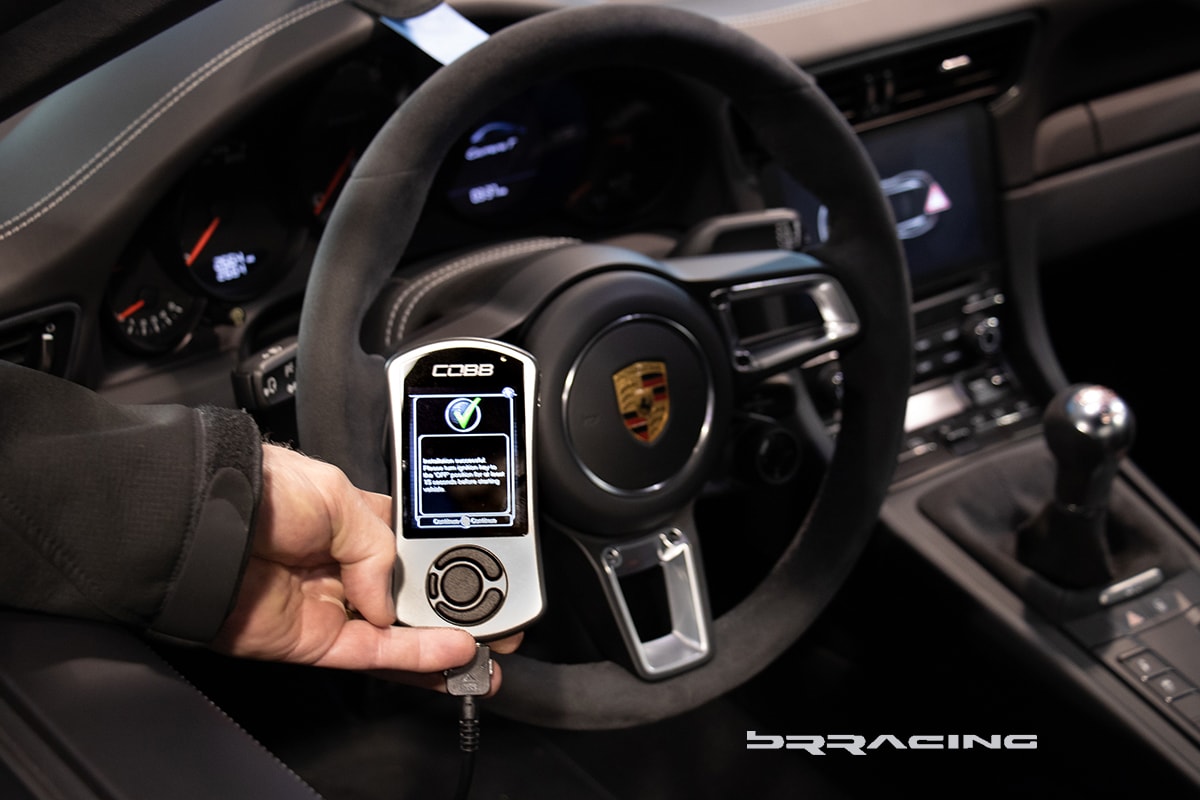
If you are not familiar with the new AccessPORT hand held tuner…then feast your eyes on the new generation tuning tools. The AccessPORT is an all-in-one tuning tool.? It not only always you to do the tuning (select the file you want, from stock and original OEM file to any other file you have downloaded), but also is a diagnostic tool (you can read and clear codes).? But there is actually a lot more.

Here is the details on the AccessPORT tool -

Engine Management -

- Power – Modern vehicles are very sensitive to performance modifications. Simply changing an intake can have a dramatic, even degrading effect on performance and driveability. This is because modern ECUs (Engine Control Units) use very precise sensors to collect data in order to calculate appropriate fuel, ignition and cam phasing responses. Modifying a vehicle with performance parts will most likely cause one or more sensors to be improperly calibrated, feeding erroneous data to the ECU and contaminating the response. This is why changing a part as simple as an intake or a panel filter can cause the engine to run too lean, too rich, or even stumble.

The AccessPORT is the device that enables recalibration of sensors and manipulation of data on the factory ECU. It provides the capability to reflash select segments of information that are stored in the computer that control engine function. These segments of data that are written to the ECU are collectively referred to as maps. Our engineers and calibration specialists create maps that modify sensor calibrations, lookup table values and algorithms to ensure that the ECU is receiving accurate information and responding in an appropriate way.

COBB Tuning provides Off-The-Shelf (OTS) maps for the most common modifications made by performance enthusiasts. These OTS maps recalibrate the appropriate sensors and modify tables with more aggressive settings. The result is increased power output, improved response and better driveability, since all of the components are working together in harmony. It is the ultimate integration of performance and sophistication as the manufacturer’s complex and precise engine management logic and ECU data integrity is retained.

The beauty of the AccessPORT is that it can continue to grow with additional modifications beyond the scope of the OTS maps. For more extreme modifications, COBB Tuning AccessTUNER software can be used to create custom tuned maps that match the modifications perfectly. COBB’s extensive network of professional tuners are available to custom dyno tune any modification configuration. For those that want to take on the challenge of tuning their own vehicle, AccessTUNER Race is downloadable software with all of the tuning capabilities as used by our professional tuners.

Logic – Automobile manufacturers spend enormous amounts of money on the research and development required to create the complex engine management systems that are found in modern vehicles. They put significant effort into sophisticated logic that controls power output, fuel efficiency, exhaust emissions, hardware protection, self diagnosis, etc. Modern Engine Control Units (ECUs) are very refined and ensure proper engine operation at all times; cold starting, warm starting, extreme heat or cold temperatures, many different fuel blends and a wide ranges of altitudes. The manufacturer even builds in contingency plans to protect the engine in the event of sensor failures or other component failures by limiting power output until the faults are rectified.

The AccessPORT seamlessly integrates with the manufacturers solution. The AccessPORT changes specific table values in order to recalibrate sensors and optimize fuel, ignition and cam phasing to generate safe and reliable power gains. Stock logic is retained so that the ECU continues to operate as the manufacturer intended. This translates into impressive power gains with all of the intelligence, sophistication and protection that the manufacturer built into the system.

In some cases the factory ECU just was not designed to support some of the functionality that enthusiasts desire. For these situations, COBB Tuning develops and tests additional logic that allows for different functionality should the user want it. This can range from implementing flat-foot shifting, launch control, MAP based tuning or disabling DTC codes, limp modes and limitation tables.

The AccessPORT delivers many features found only in a stand-alone ECU with all of the sophistication and reliability found in a factory ECU.

Integrity – High performance cars are meant to be fun, but as performance increases, so does risk. The automobile manufacturers have developed data checking algorithms on their Engine Control Units (ECU) to ensure that the data held within is intact. With more and more of the vehicle’s systems being controlled electronically by the ECU, including throttle control, it is increasingly important to detect corrupt data and intercede in an appropriate fashion.

COBB Tuning puts forth significant effort to maintain the factory data integrity functions of the ECU. Start-up checksums remain in place while using the AccessPORT, unlike many other reflash tuning solutions which simply zero out the checksums in order to trick the ECU without verifying data integrity.

Validating ECU data integrity is a critical component in maintaining a high degree of safety for internal engine components as well as personal safety. Consider the effects that corrupt data can have in drive-by-wire throttle control on a high horsepower car or the fueling tables in an expensive motor build and the implications are clear.

AccessPORT tuned cars retain these important safety checks as deemed necessary by the manufacturer.

DTC Defeat – Off-road motorsport racing activities do not have the same strict rules regarding engine emissions and safety warnings required for street use. The AccessPORT enables the user to turn off certain Diagnostic Trouble Codes (DTC) related to emission controls and other warnings that can be distracting in motorsport racing environments.

Disabling the DTC’s that are irrelevant in racing keeps the DTC warning lamp useful for when other more important trouble codes are found.

FEATURES -

Simple Installation – The AccessPORT is one of the easiest modifications you can make to your high performance vehicle. On a scale of one to four wrenches, the AccessPORT is half a wrench. Drawn in crayon. No tools are needed and no computer connection is required. Just plug the AccessPORT into the OBD-II port under the dashboard and follow the simple step-by-step on-screen instructions. In just a few minutes you will have a new performance map loaded on your ECU and you will be ready to experience the additional power and driveability of a proper tune for your modifications.

Change MAPS – The AccessPORT can store up to 20 maps so you can be ready for any challenge. Use the Change Map function to browse the maps stored on your AccessPORT and select the map most appropriate for what you want to do. Parking your car overnight? Load the Anti-Theft map. Handing your car over to a valet for dinner? Switch to the Valet map to prevent abuse. Running down the drag strip to beat your last ET? Fill up the tank with race gas and load up your race fuel map. Heading out on a long boring highway drive? Perfect time for that fuel economy map.

It’s like an MP3 player for your engine. The “songs” are maps and the “music” plays through the exhaust! What song is up next? You decide.

Base MAPS – The AccessPORT comes pre-loaded with maps to get you on your way, right away. Once the AccessPORT is installed on your car, you will have the following base maps to choose from:

Stock Mode: The stock mode map uses the same calibrations that came from the factory. The stock mode map is a great way to re-establish a baseline when comparing tunes as it lets the engine behave the same way it did before installing the AccessPORT.

Stage 1 Maps: These maps are performance maps that are designed for vehicles with no engine modifications or mild modifications such as a cat-back exhaust.

Stage 1+ Maps: These are performance maps for vehicles with an upgraded intake system. Aftermarket intakes can dramatically change the airflow pattern across the MAF sensor which can generate incorrect readings and make the engine run lean or rich. A Stage 1+ map recalibrates the MAF sensor for the specific aftermarket intake system you are using.

Stage 2 Maps: These maps are geared towards performance upgrades that reduce restrictions in the exhaust system. If you have replaced the factory downpipe from the turbo, added race headers or replaced the factory catalytic converter with a high flow cat, a Stage 2 map is what you are looking for.

Stage 2+ Maps: These maps address both upgraded intake modifications and the high flow exhaust enhancements of Stage 2.

For even more map selection, be sure to visit our Online AccessPORT Map Database. Click on the Maps and Map Notes button that corresponds to the manufacurer of your vehicle. Here you will find many more maps that are designed for additional aftermarket parts manufacturers, race fuels, turbo upgrades, ethanol and more!

Performance – Every AccessPORT has built in Performance Monitors. These are great for showing the performance of your vehicle in the current state of tune with the modifications you have installed as well as helping to quantify performance gains when you make additional modifications. These are also great tools to help you improve your skills at the drag strip. It’s like printing off your own time slip any time you want!

The following Performance Monitors are available:
60′ Time:?? ?Elapsed time to 60′ distance. Indicates how well your car is hooking up off the line.
330′ Time:?? ?Elapsed time to 330′ distance.
0-60 mph:?? ?See where your car stacks up against the 0-60mph times published in the major car magazines.
1/8 Mile:?? ?Elapsed time and vehicle speed at 1/8 mile distance (660′).
1000′ Time:?? ?Elapsed time to 1000′ distance.
1/4 Mile:?? ?Elapsed time and vehicle speed at 1/4 mile distance.
Dynamometer:?? ?This monitor simulates a dynamometer. Based on vehicle weight and acceleration rates, it estimates the horsepower of your engine. This is a great tool for evaluating performance gains after completing new modifications or installing a different performance map.

Data Logging – The AccessPORT functions as a hand-held data logging device. There is no need for a clunky PC to ride shotgun with you in the passenger seat. Just plug the AccessPORT into the OBD-II port, select Data Logging from the menu and choose which monitors you wish to data log. Choose as few or as many monitors as you like. Hit enter and data logging begins. Once the data gathering is complete, hit the enter button again. The data is stored as a data log file within the AccessPORT. The AccessPORT can store up to 10 individual data logs and the combined duration of data logs can be up to 10 hours.

The data logs are stored on the AccessPORT for as long as you want them there. Just unplug the AccessPORT and put it in your pocket, back-pack or briefcase. Your data goes with you with all the portability of an MP3 player. To analyse the data, simply plug the AccessPORT into any PC and download the data logs. The data can then be imported into your favorite spreadsheet or graphing software for detailed analysis.

Data logging monitors consist of both raw data types and calculated data types. Some examples of data logging monitors are throttle position, boost, ignition advance, wastegate duty cycle, mass air flow, fuel trim, battery voltage, intake temperature, coolant temperature, injector duty cycle, air/fuel ratio, knock correction, knock learning, injector pulse width, calculated load and many more. When logging multiple monitors, it is easy to see how powerful a tuning and performance analysis tool AccessPORT Data Logging can be.

Live Data – The Live Data feature allows you to view sensor data and calculated values in real-time right on the AccessPORT. There is no need for a clunky PC to ride shotgun with you in the passenger seat. Just plug the AccessPORT into the OBD-II port, select Live Data from the menu and choose a monitor to view. Any monitor that can be data logged can also be viewed in real time using this feature. Live Data can function as an auxilliary gauge to supplement the stock gauge cluster, or it can be used to help in fine tuning custom tunes.

Unlike dedicated auxilliary gauges that can clutter up your dashboard, the AccessPORT functions as a soft gauge, allowing you to decide what gauge to display. Some examples of possible gauges are throttle position, boost, ignition advance, wastegate duty cycle, mass air flow, fuel trim, battery voltage, intake temperature, coolant temperature, injector duty cycle, air/fuel ratio, knock correction, knock learning, injector pulse width, calculated load and many more. As you can see from this small sampling, some of these monitors would be impossible to duplicate with a traditional auxilliary gauge.

The AccessPORT also has a full fuel economy suite built in for live viewing. Keep an eye on your Instantaneous Fuel Economy to see how your driving inputs affect fuel consumption. This is a great tool for helping you develop a high fuel efficiency driving style. Average Fuel Economy shows your fuel mileage for the current trip you are on. The Accumulated Average Fuel Economy shows the overall fuel mileage across multiple trips. The Reset Fuel Economy feature can be used to zero out your Average and Accumulated Average Fuel Economy and lets you start again.

As an added bonus, the AccessPORT screen can also function as a Rev Warning Light. Simply enter the RPM you want the Rev Warning Light to activate at. The screen will brightly flash red and white to alert you when that RPM has been reached, while simultaneously showing a Live Data monitor!

ECU Settings – The AccessPORT is unique in the tuning world as it gives the user the ability to control exciting ECU functions from a hand-held device. Configure launch control, flat foot shift, adjust idle and adjust timing through the easy to use on-screen interface of the AccessPORT.

Launch Control:?? ?This ECU setting adjusts the rev limit of the car while attempting to launch from a stop. The user can adjust the RPM that the engine maintains while at wide open throttle and the clutch is in. The speed that launch control disengages can also be configured.
Flat Foot Shift:?? ?Flat foot shift is logic added to the ECU to control engine RPM during a gear shift with the throttle held wide open. The user can adjust the RPM that the engine maintains while the clutch is depressed at WOT. This allows boost to be maintained between shifts and generates faster acceleration.
Adjust Idle:?? ?Allows user to adjust engine idle via the AccessPORT. Some applications even allow idle changes for air conditioning on and off separately.
Adjust Timing:?? ?Allows ignition timing adjustments to be made across the rev range via the AccessPORT.

Trouble Codes – The AccessPORT allows you to read engine codes to help troubleshoot issues and potentially save you from an expensive trip to the dealership. A brief description of the trouble code is also provided, which is handy when you don’t happen to have a shop manual in your pocket.

The AccessPORT will read any trouble code reported by the ECU. In most cases this equates to hundreds of trouble codes and descriptions to help diagnose issues where ever you may be. Once the issue is resolved, the AccessPORT can be used to clear the codes to turn off the check engine light.

Dependable / Warranty – The AccessPORT is a mature product that has been deployed on 20 different vehicle models with tens of thousands of units in the field. While firmware and software upgrades keep the AccessPORT on the leading edge of tuning capabilities, the hardware design is well proven and very dependable. COBB Tuning backs up the AccessPORT with a full 1 year warranty on on parts and service.

COBB Tuning is so confident in the capabilities of the AccessPORT that we offer a 30 Day Customer Satisfaction Guarantee. If you purchase the AccessPORT directly from COBB Tuning and are not satisfied with the performance of the AccessPORT, return it to us within 30 days from the date of purchase and you will receive a full refund. We know that the right solution is critically important to tuning enthusiasts. COBB Tuning makes purchasing the AccessPORT from us a “no-risk” buying decision by guaranteeing sastisfaction, or your money back!

Upgradeable – The AccessPORT is designed to grow with the ever changing modifications the most demanding tuning enthusiasts aspire to. Likewise, the AccessPORT itself must change and grow to stay on the cutting edge of tuning capability.

The AccessPORT is fully upgradeable via an internet connection. The included AccessPORT Updater software automatically checks to make sure that the firmware on your AccessPORT is the most up to date version available. This ensures your AccessPORT has the latest and greatest functionality available for your vehicle model.

Off-The-Shelf Maps available in the AccessPORT Map Database are often upgraded to take advantage of the latest table discovery or new features deployed on the AccessPORT. Updated maps are publicly announced and are available for free download. The AccessPORT Manager allows easy transfer of maps and data logs between the AccessPORT and PC.

Our AccessTUNER Race and AccessTUNER Pro software also receive updates to provide additional access to tables and control of new features as ongoing ECU discovery opens up new functionality. Software upgrades are announced and download links are provided to AccessTUNER software users.

These ongoing upgrades keep the AccessPORT relevant and breaking new ground in the tuning world. This dedication improving the AccessPORT keeps it high demand and ensures impressive resale value should you ever need to sell it.

NOT all features are available for ALL cars and models.

Examples of the HP gain via the TUNE files from Cobb

- BMW E82 135i

Stage 1 TUNE MAP file – +30% Peak HP & +38% Peak TQ

Stage 2 TUNE MAP file – +51% Peak HP & +55% Peak TQ

ORDER today for your car via the BRracing online STORE

Check the Cobb Tuning website for the specifics for your car.


BRR video – POC race, Oct 2012

BRR (courtesy of our awesome photo, sound, and video team member Ryan Holst) has produced a one lap video of the POC (Porsche Owners Club) race at Sonoma October 2012.

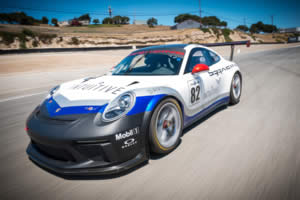
Car is a Porsche Cup Car (2011), driver (and champion) is Jesse Menczer.

Track is Sonoma Raceway (used to be Infineon, or Sears Point).

Take a look here (at our YouTube channel) -

BRR POC RACE single lap 2012

BMW recall – 1 series, 3 series, Z4 battery cable


BMW?is recalling 570,000 cars in North America for power failures and engine stalling, according to filings with the National Highway Traffic Safety Administration.

The battery cable supplying power to the fuse box has a terminal that can wear out over time, particularly due to road vibrations, BMW said. About 504,545 models of the 2008-2012?1-Series, 2007-2011?3-Series?and 2009-2011?Z4?are affected in the U.S.

An additional 33,000 BMW models are?being recalled in South Africa, where a significant percentage of 3-Series models are built and exported to the U.S. The 1M and?M3models are not included.

If the battery-cable terminal wears out, “variations in electrical resistance” could occur, which could cause the instrument panel to flicker or the engine to cut power. At worst, the engine could stall completely while driving, or if parked, may not start. Other systems, such as the power steering, would also be affected by the electrical failure.

BMW said it received two U.S. reports of “no-start” problems during July 2010 and additional problems through 2011, when the company switched its terminal coatings from tin to silver to better handle electrical heat. BMW said it continued to fix “occasional warranty claims” for the same issue even after the fix. In Canada in May 2012, BMW said it received multiple owner complaints of the same problem, including a collision allegedly due to an engine stalling.

Dealers will replace the battery-cable connector and secure it to the fuse box with a “vibration-safe method” beginning in March 2013. Owners can contact BMW at 1-800-525-7417 or at?CustomerRelations@bmwusa.com.

?Do you have any questions about your car? Curious to see what's possible? Submit Inquiry, and we'll get back to you quickly.
cartWe carry the full line of performance parts for european cars. We accept Visa, MasterCard, AmEx, Discover, and Paypal.
emailYou can reach BR Racing at 408.356.1515. You can also Submit Inquiry, or simply email us at brracing@gmail.com.


Facebook BR Racing LLC
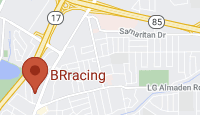
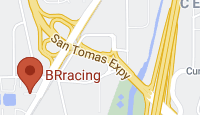
15553 Los Gatos Blvd. Los Gatos, CA 95032
● Phone: 408-356-1515 Fax: 408-356-5057 Email: brracing@gmail.com