BMW G87 M2 – Two Perspectives
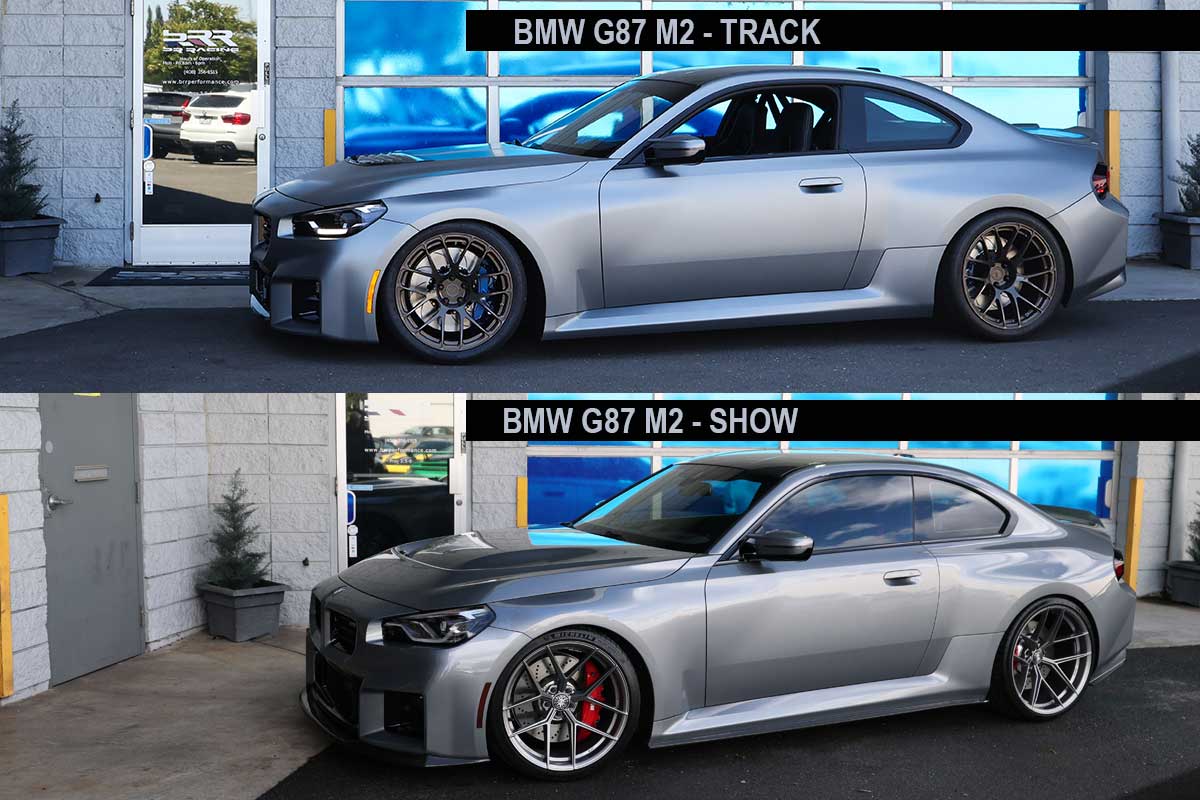
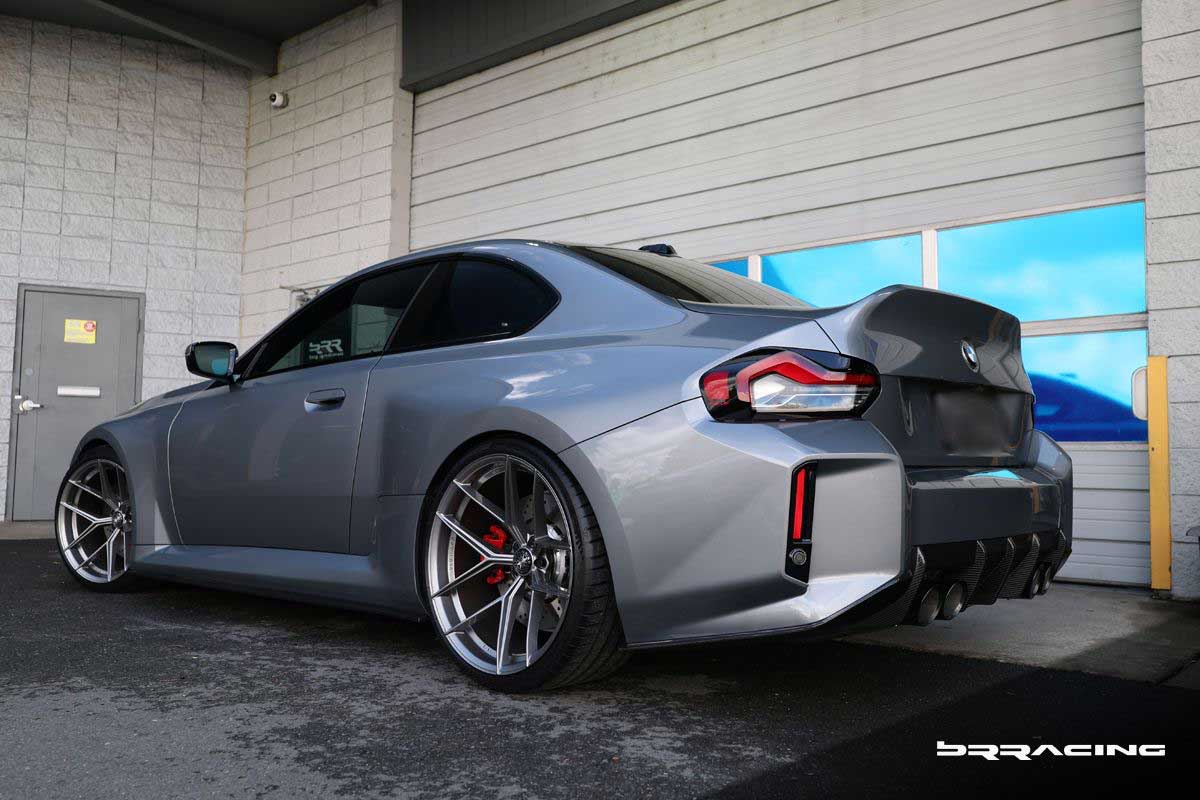
We normally write about a single car, single project, with a set of defined objectives. But, this time, we had two different customers, come in with brand new BMW G87 M2, but with two drastically different objectives. So, rather than pick one over the other, we will write about both, and how the decisions on common areas were made differently for the different applications. It may also look like they are the same car, but they are not, and while the colors are very similar, the objectives are very different.
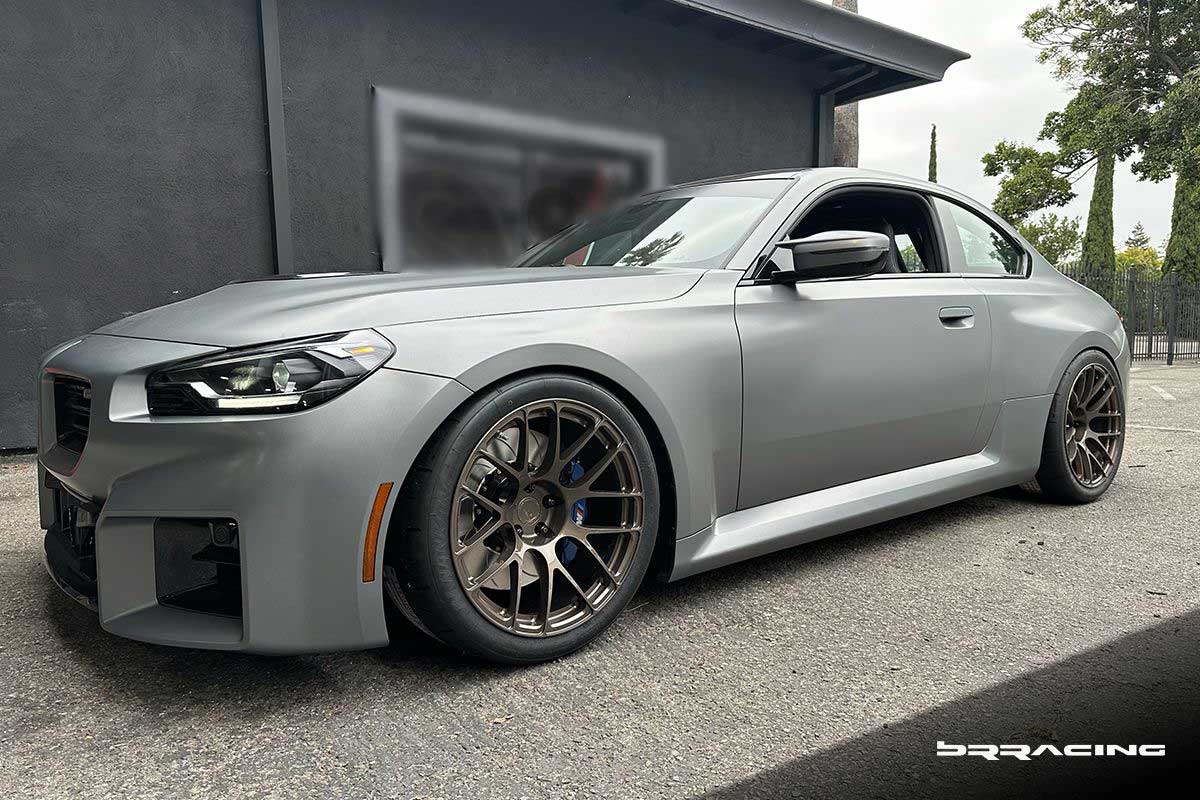
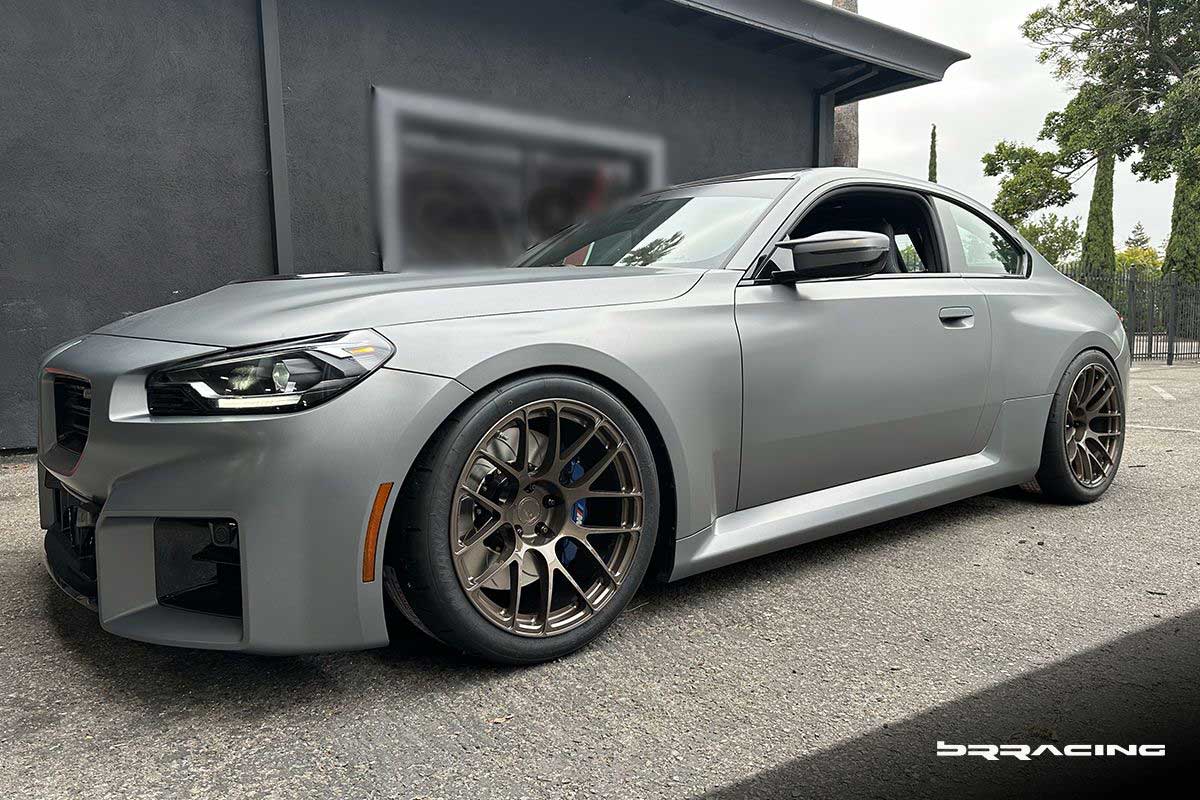
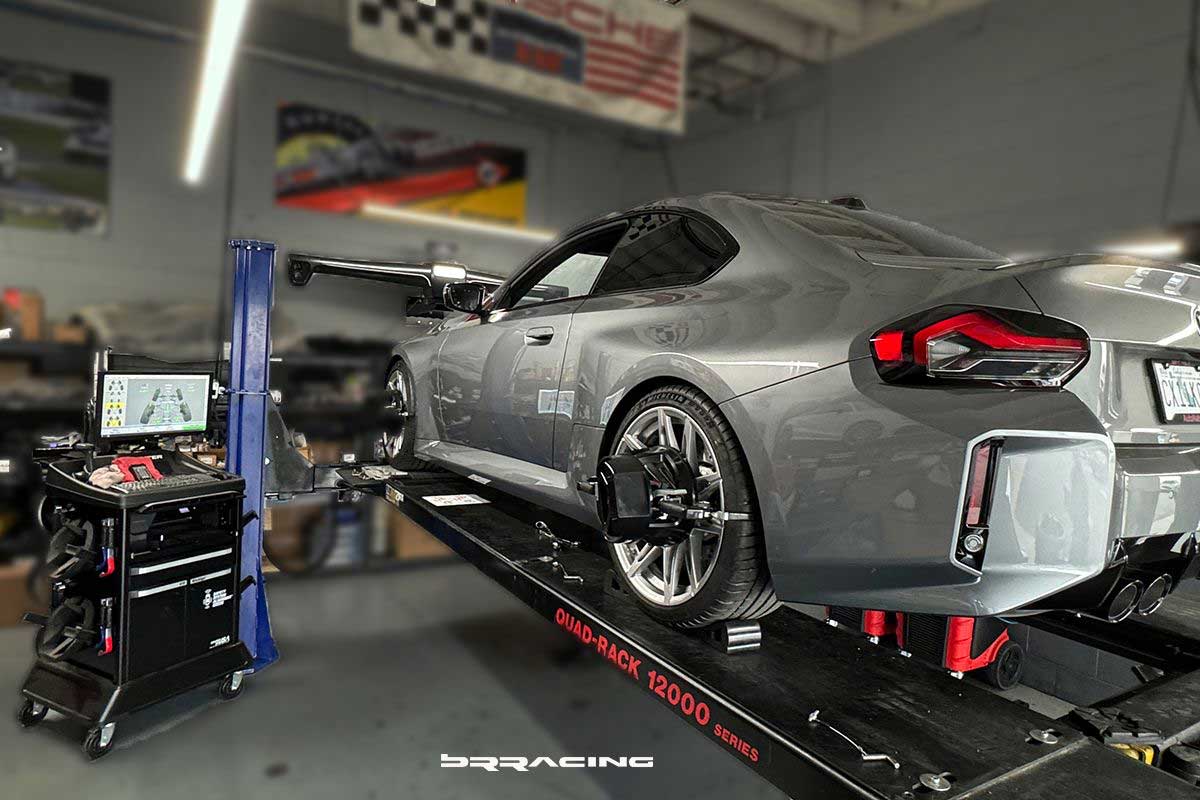
The car pictured below had a very specific objective – to build the BEST Time Attack / Grid Life BMW G87 M2. This car would not be driven on the street, would be trailered to track events, and all decisions were based on the singular focus of make it fast and make it handle, and make it brake better than any other BMW G87 M2.
BRAKES
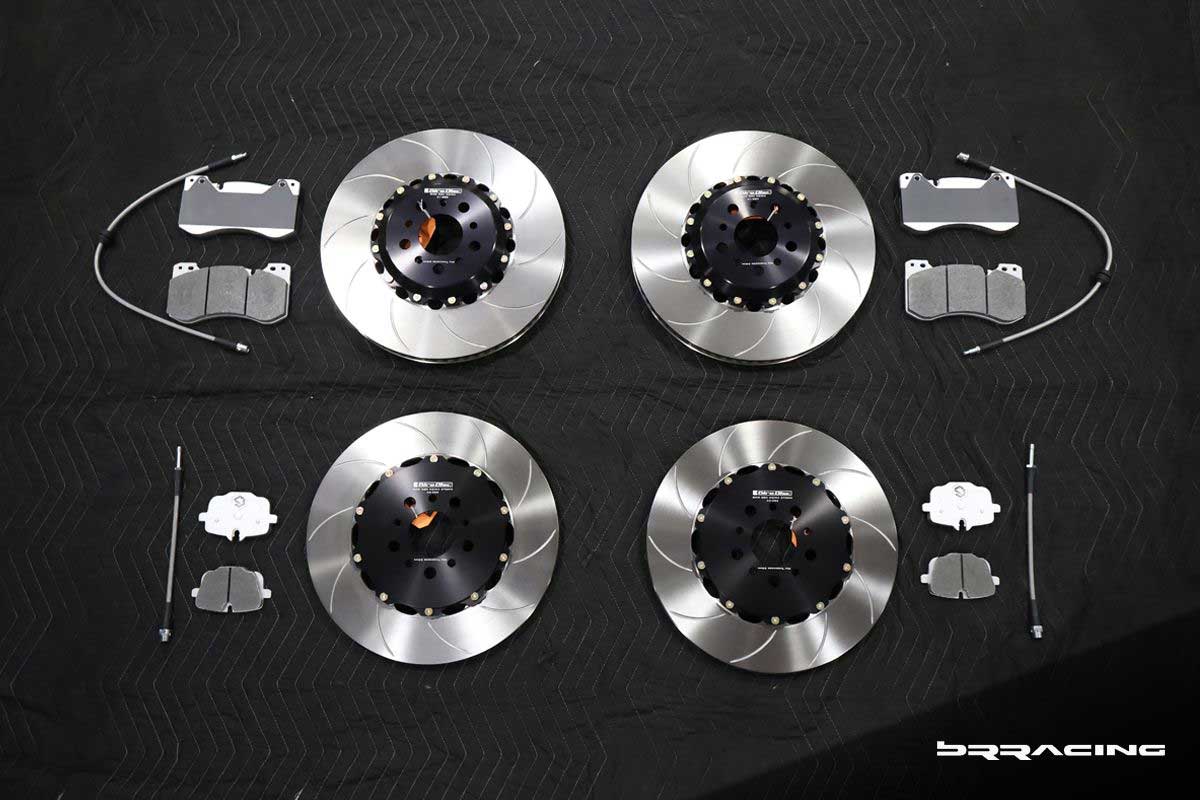
For most modern sports cars, when it comes to brakes, you no longer have to make the big jump to a full “big brake kit” (BBK). The main driving reason for a BBK in the past was due to the limitation on the size and type of rotor, and the size and type of caliper. But, as mentioned, newer sports cars, like this BMW G87 M2, come with very big, large, brakes. In the near past, the BMW brake calipers have not been great, they have been big, but heavy, very prone to heat sink, and cast (too flexible under hard braking). The good news here is the newer BMW M2 / M3 / M4 brakes have improved on the caliper side – right size, sufficient caliper pistons (6 piston front, 4 piston rear), and lighter and stronger. It also used to be that if you wanted the larger, diameter rotors, and true 2-piece floating style, you also were driven to choose a BBK. This also has changed, and now, you can get aftermarket rotors from the likes of GiroDisc, Brembo, AP Racing that are larger diameter, harden, floating, and take full track abuse well. Our “go to” solution here for the last couple of years has been the GiroDisc option – long lasting rotors, perfect fitment, less expensive. Combined these and the stock, large BMW calipers, mated to your track brake pad of choice, and you have a full, track suitable solution. Add in the stainless steel brake lines, and you are all set (remember, there is not much difference in one good brake solution versus another…all good brake systems, with the right brake pad, can generate way more stopping power than your tire and the ABS system can deliver, focus more on the tire and the ABS system if you are trying to eek out every possible gain. Our current flavor of the month in the brake pad game for hard track use is either the Endless ME20, or the Ferodo DS3.12. We like the Endless the most, as it offers the best initial bite, and high co-efficient of friction, along w the ease of pedal modulation under trail braking applications.
SUSPENSION
The area, surprising to many, that the BMW needs the most help in, is the suspension. Virtually everything needs to be replaced here. Mounts, bushing, control arms, shocks, springs. The BMW M2 has a short wheelbase, prone to very quick transitions, along w some questionable suspension geometry. This is not to say the BMW M2 is evil, but for hard core track applications, the car needs a lot of help. This “geometry” issue will pop up again later in our discussion, when it comes to wheels / tires (to make the largest wheel / tire combo work (and we want as much tire as we can get)), the rear suspension geometry may have to be altered, and if not done correctly, will cause all sorts of “bump steer” issues (like on hard acceleration).
Camber Plates
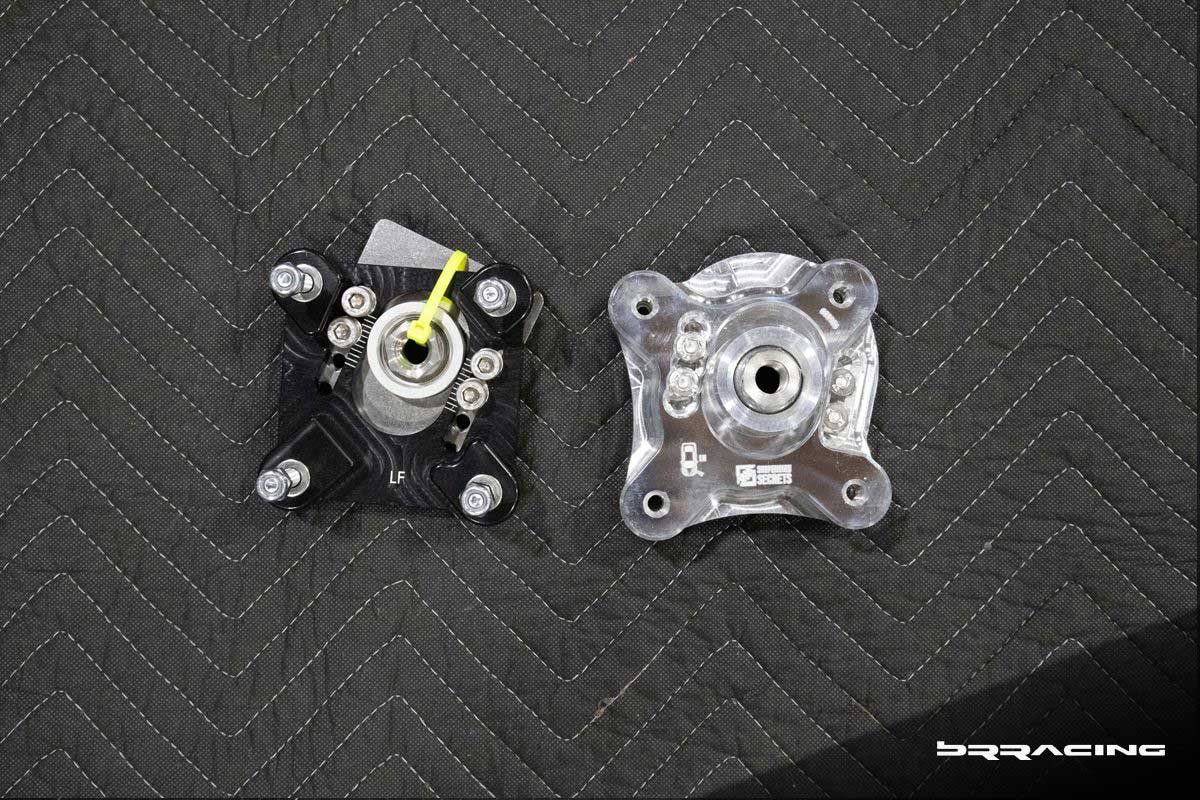
We had three choices in the camber plate area (in our view, there are more camber plate options out there, like AST, Millway, Carbahn, Turner, Versus) – MCS, Suspension Secrets, and Vorshlag. For this customer, and the coil-over decision for this car, we went with the Suspension Secrets option. Same range of adjustment, same “stack height”, but a little more robust upper bearing in the camber plate. No matter which option, the key is that we need the front negative camber adjustability for the M2.
Control Arms
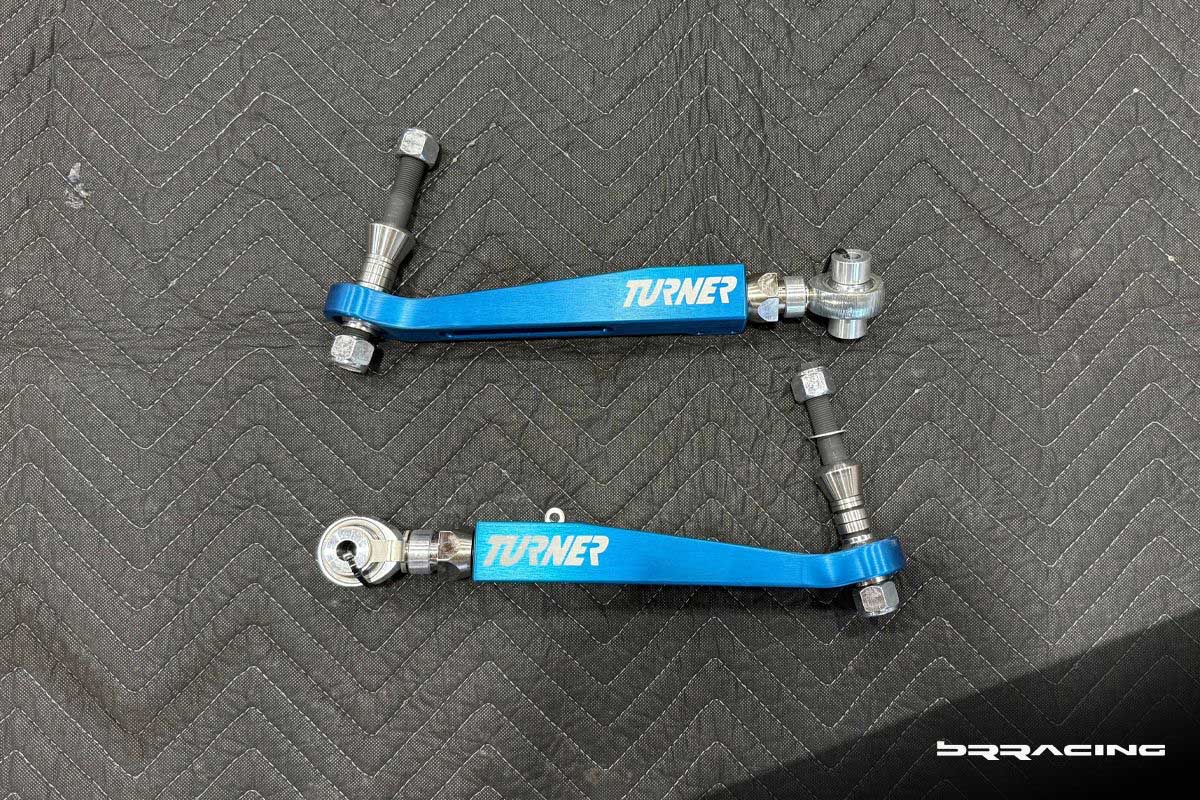
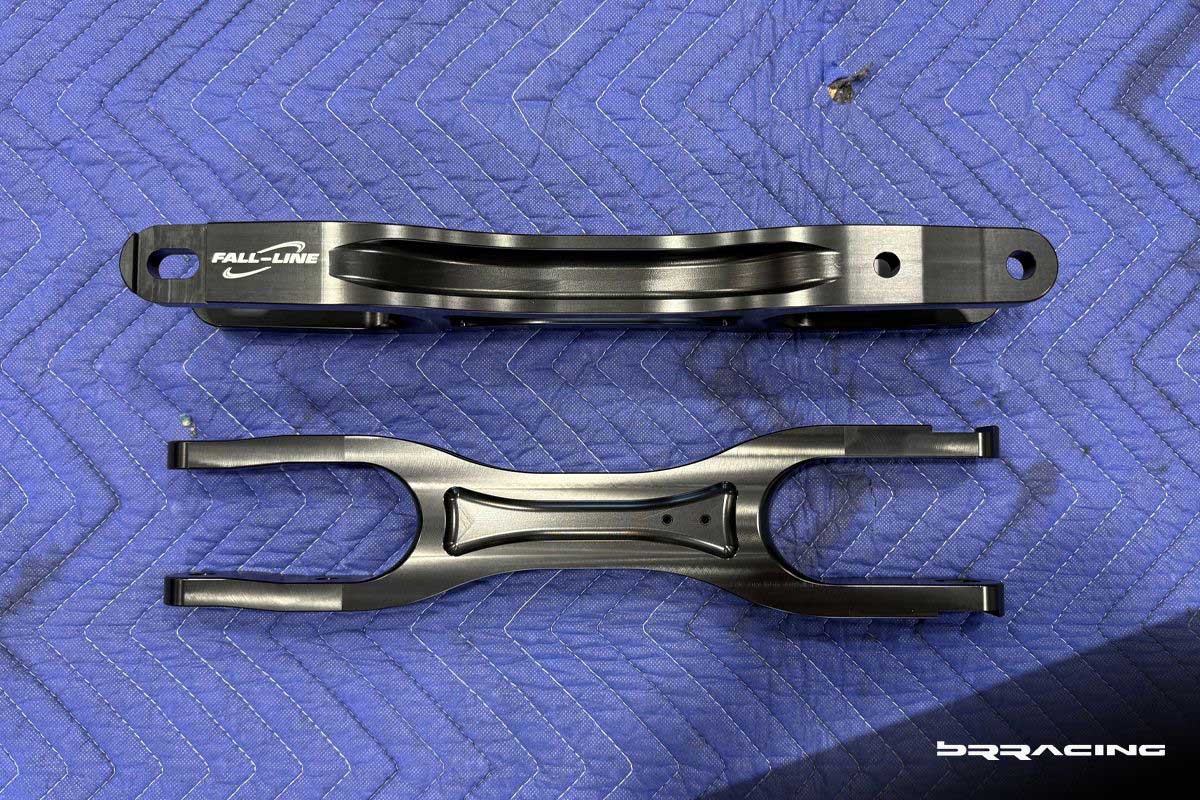
Given that this car was going to be a true, dedicated track car, we didn’t need to mind ourselves wtih evaluation or consideration of control arm bushings. The criteria here was strength, weitght, and range of adjustment for those arms that were adjustable. The players here were: SPL (not a big fan of their stuff for track applications), E-Motion / Fall Line, Carbahn, DINAN, BimmerWorld, and I’m sure there are more. Our favorites from our testing over many years are E-Motion / Fall Line, or Suspension Secrets.
There are five arms in the rear suspension, and two in the front. If you are trying to decide between brands, always go w the more robust, larger bearing choice.
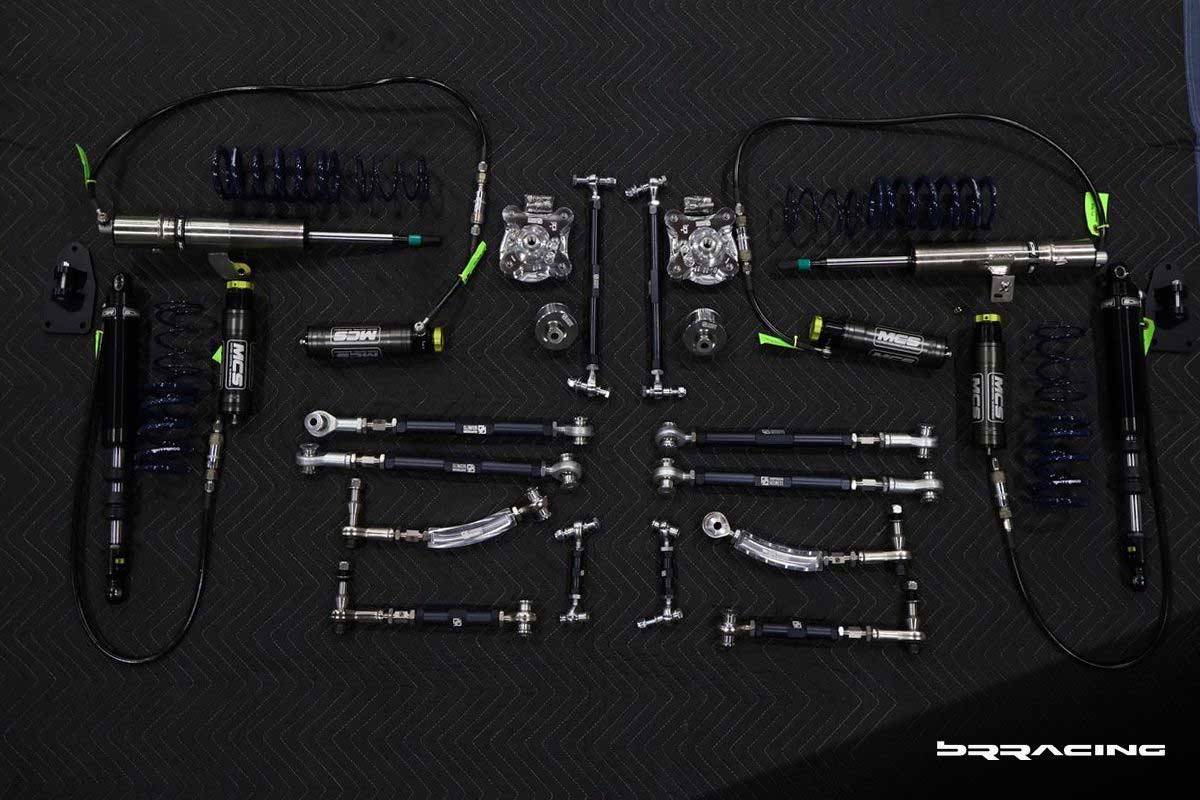
As mentioned above, we evaluated several brands, and in some cases, made other choices.
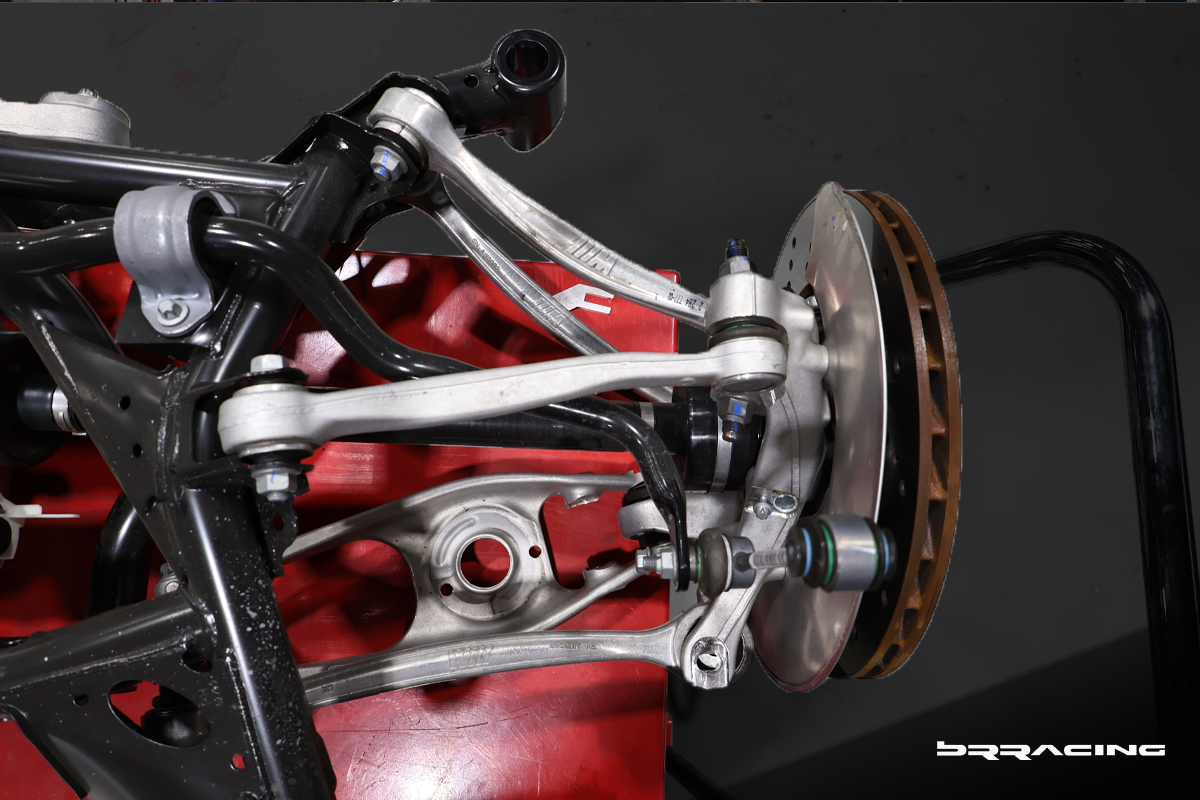
Here is a pic of the stock rear suspension before any changes or upgrades were installed (this is with the complete rear suspension and subframe removed from the car to ease installation) –
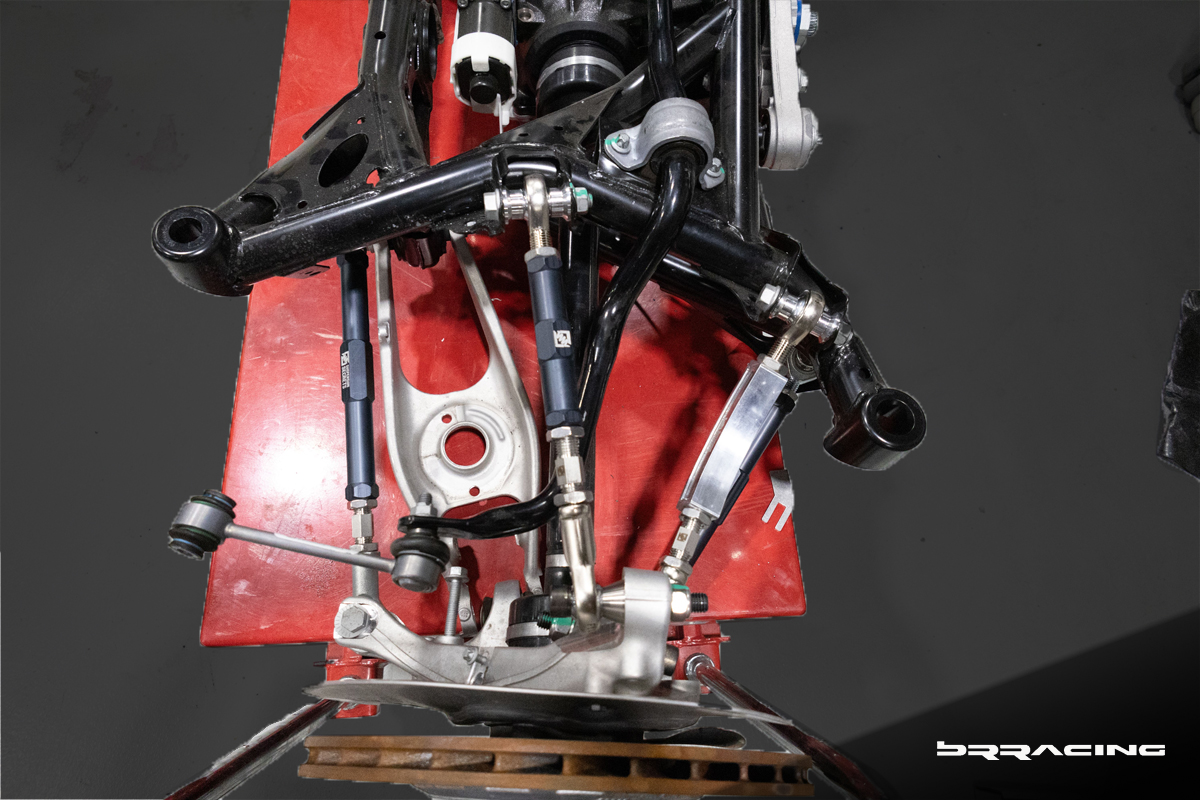
This is now part way thru the installation, as many of the control arms are replaced –
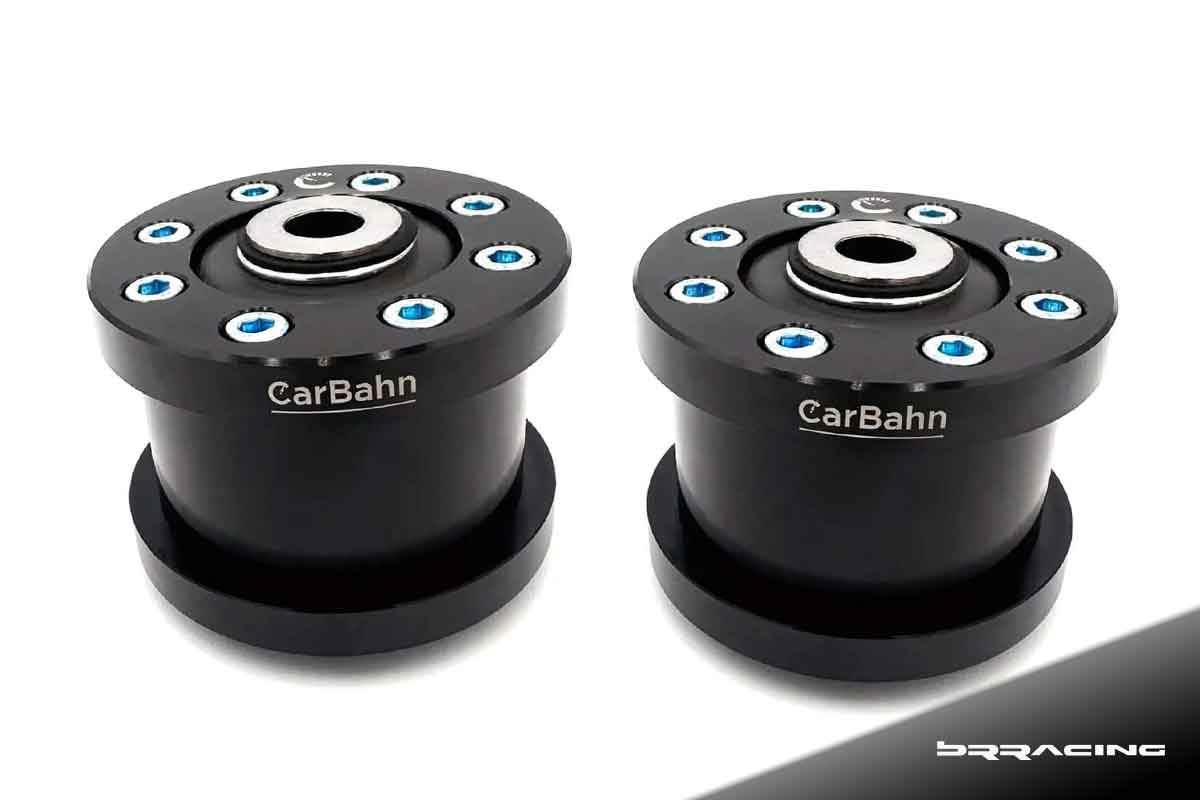
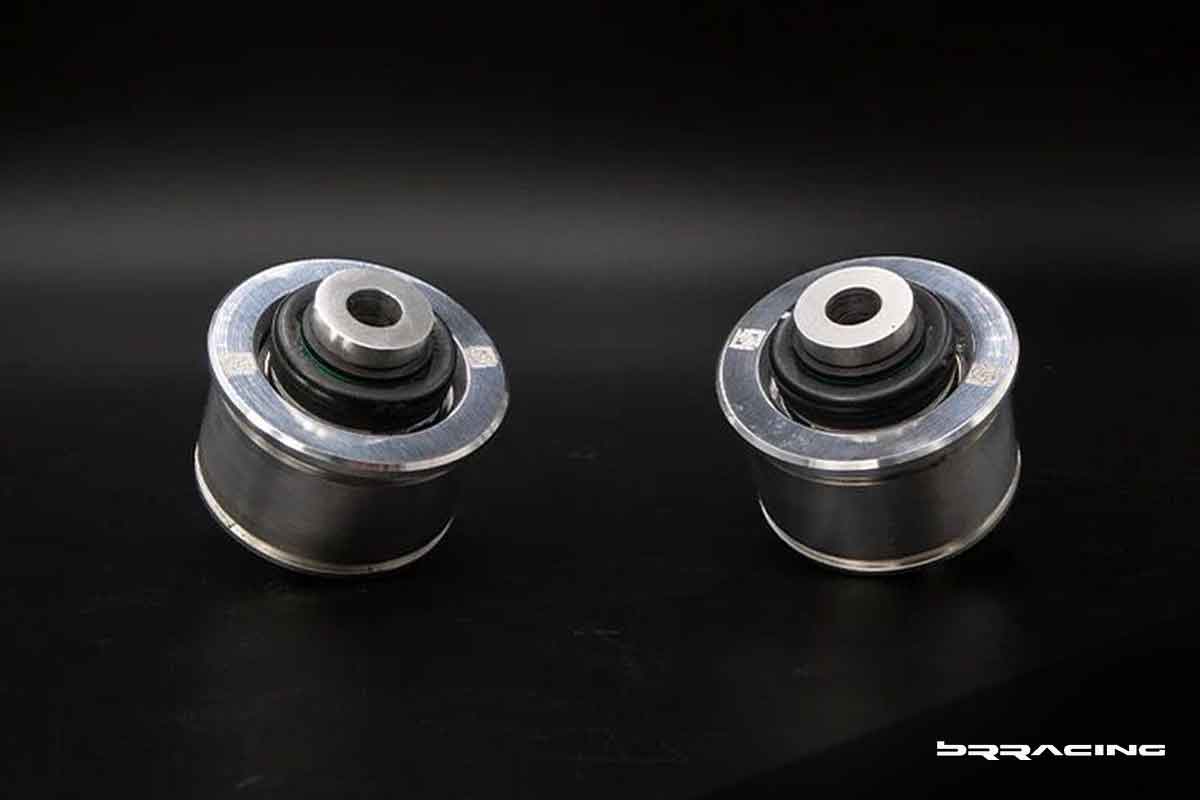
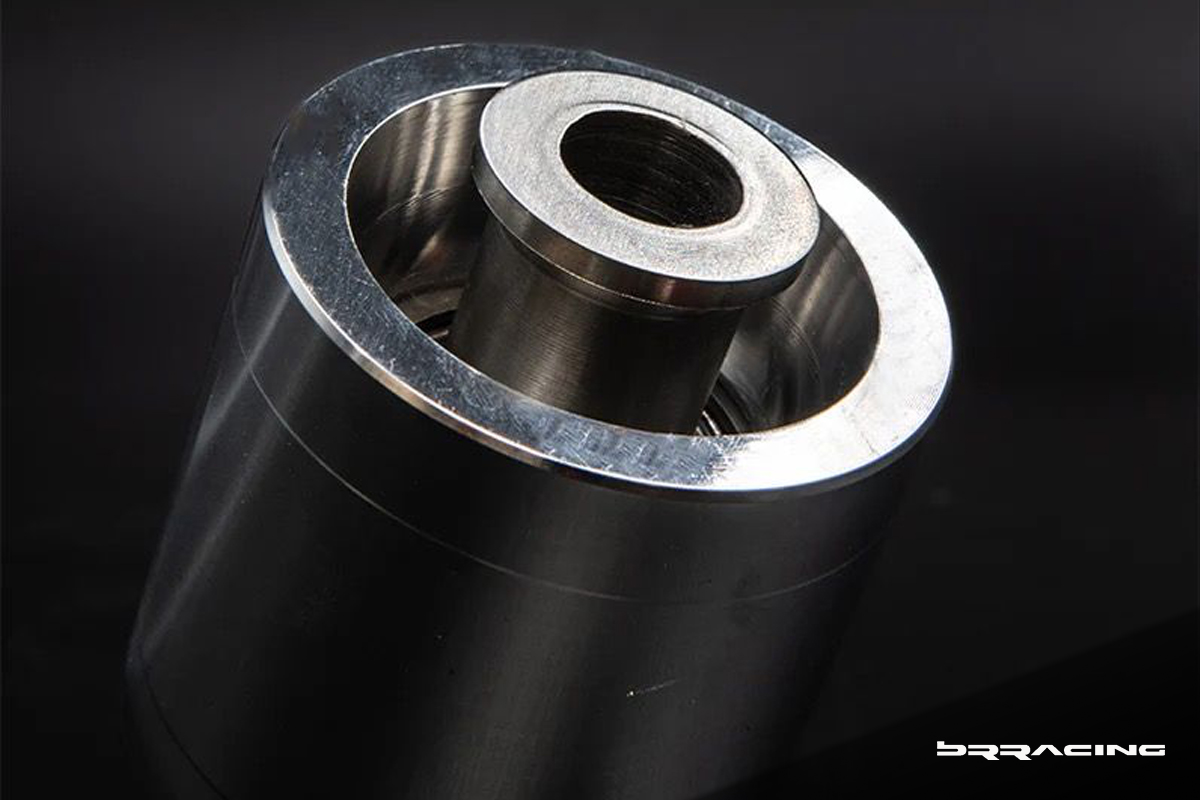
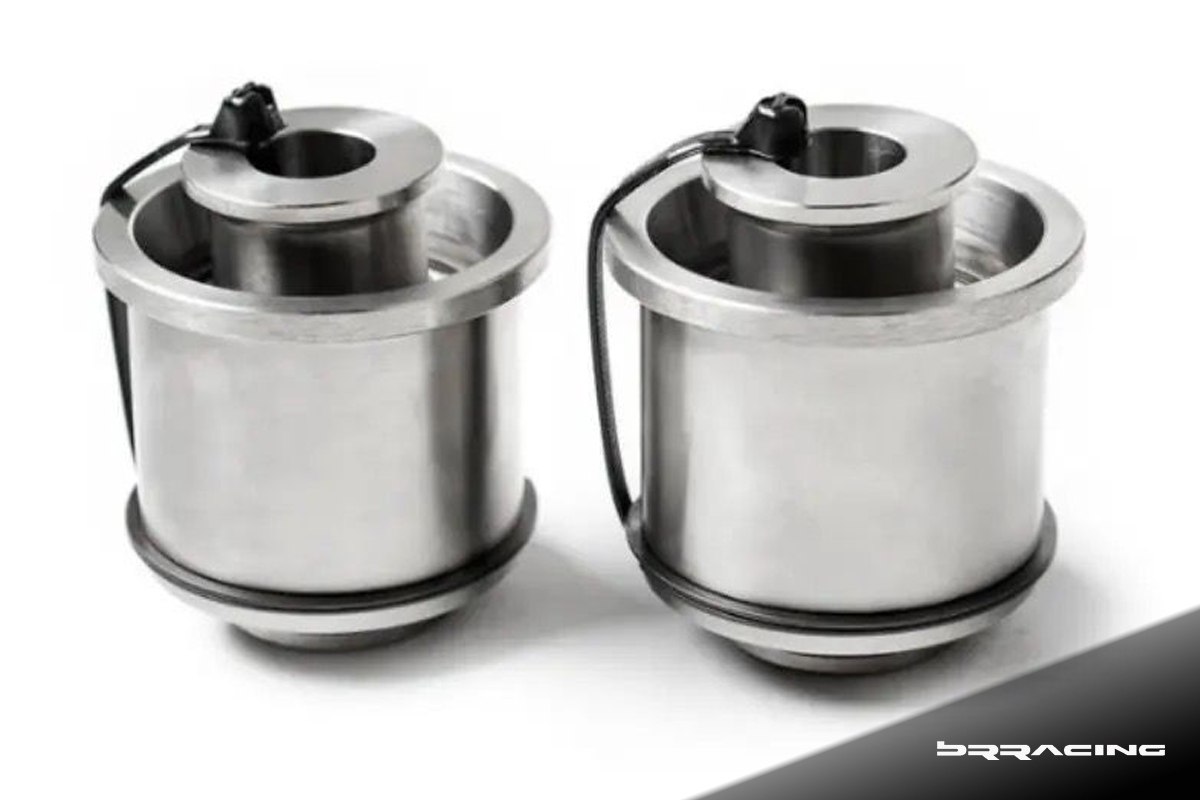
There are two places where you need to go beyond just replacing control arms to achieve solid / monoball joints at all connecting points. For these, you will need to press out the existing bushings, and press in new, solid, monoball style bushings.
Shocks / Springs
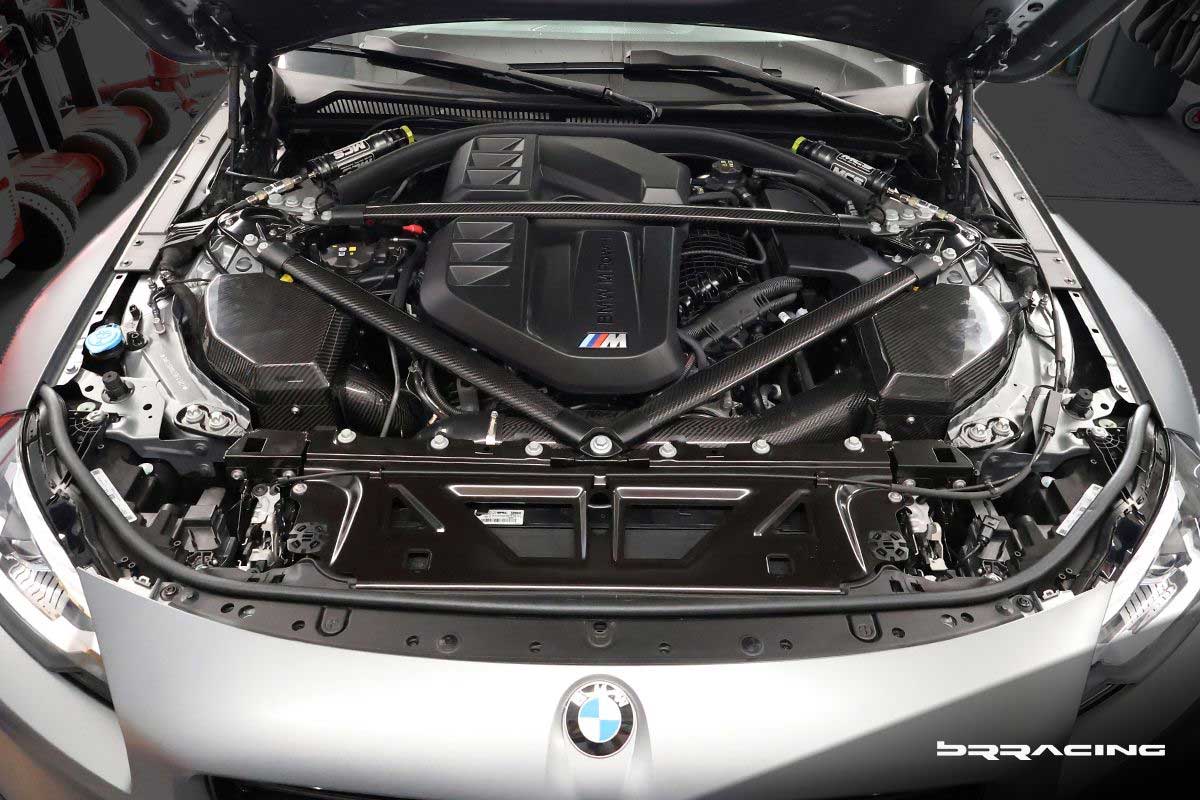
You can see our decision here from one of the prior images. You have to make a fundamental choice early in your evaluation of which coil-over solution do you want to go with. Do you stay eletronic (EDC) or convert away to pure mechanical. This is often guided most by budget, as mechanical coil-overs are generally less expensive than the electronic comparable option. There are lots of options here…on the electronic side: KW, Bilstein Damptronic, Nitron, Tractive (and I’m sure there are more). On the mechanical side (and this category can be further subdividied into – single adjustable, dual adjustable, triple adjustable, quad adjustable, 5-way adjustable, with or without blow off valve, with or without external reservoirs.
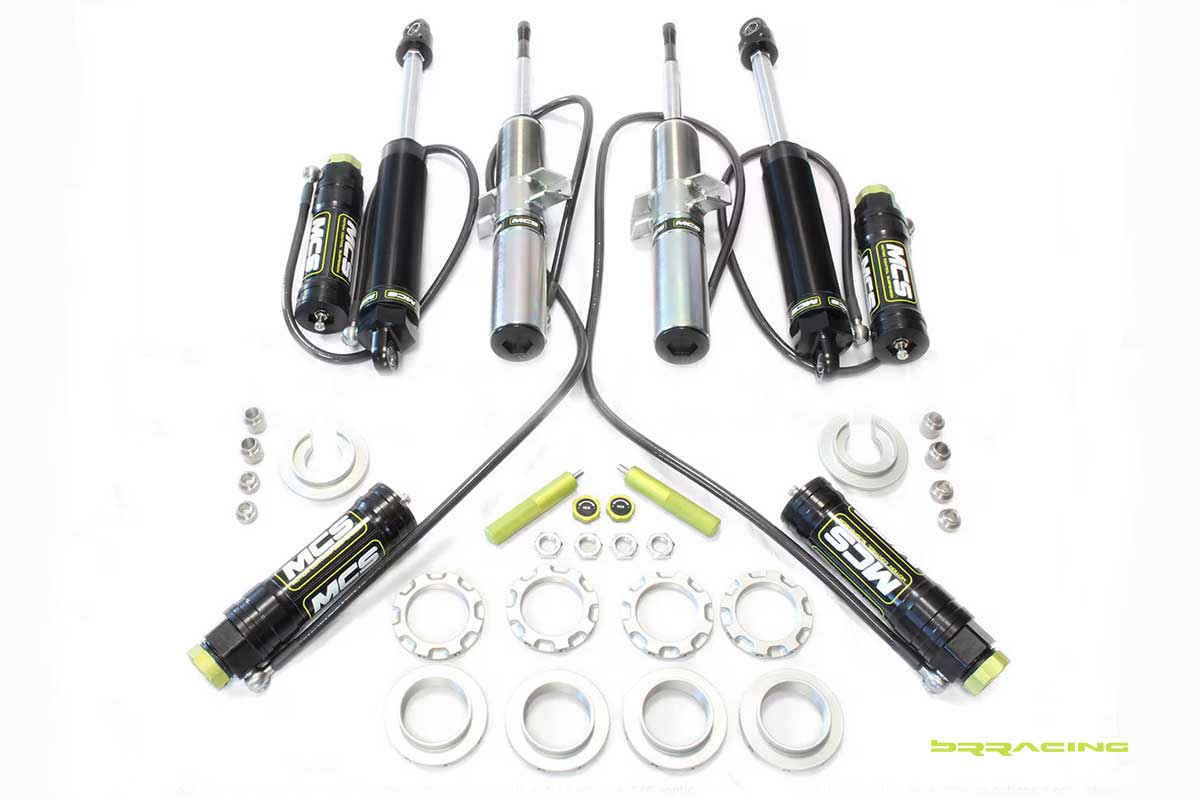
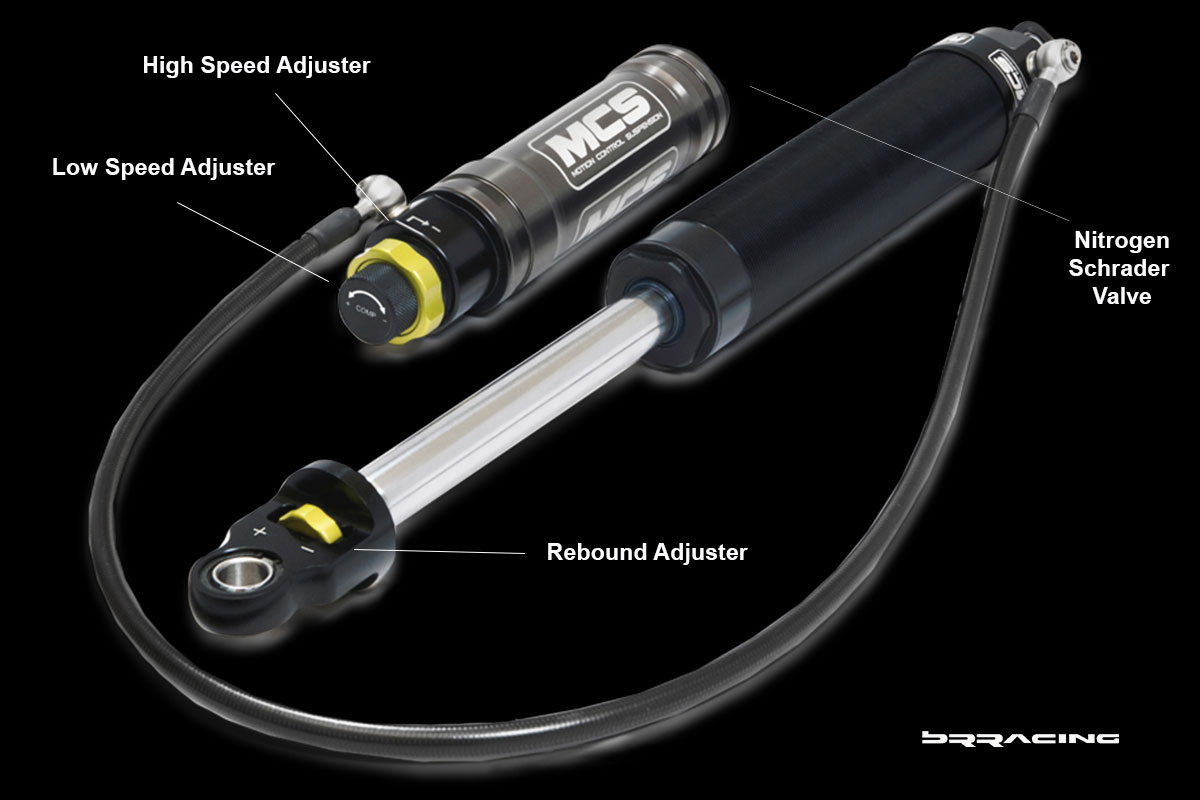
Background on the MCS 3-ways:
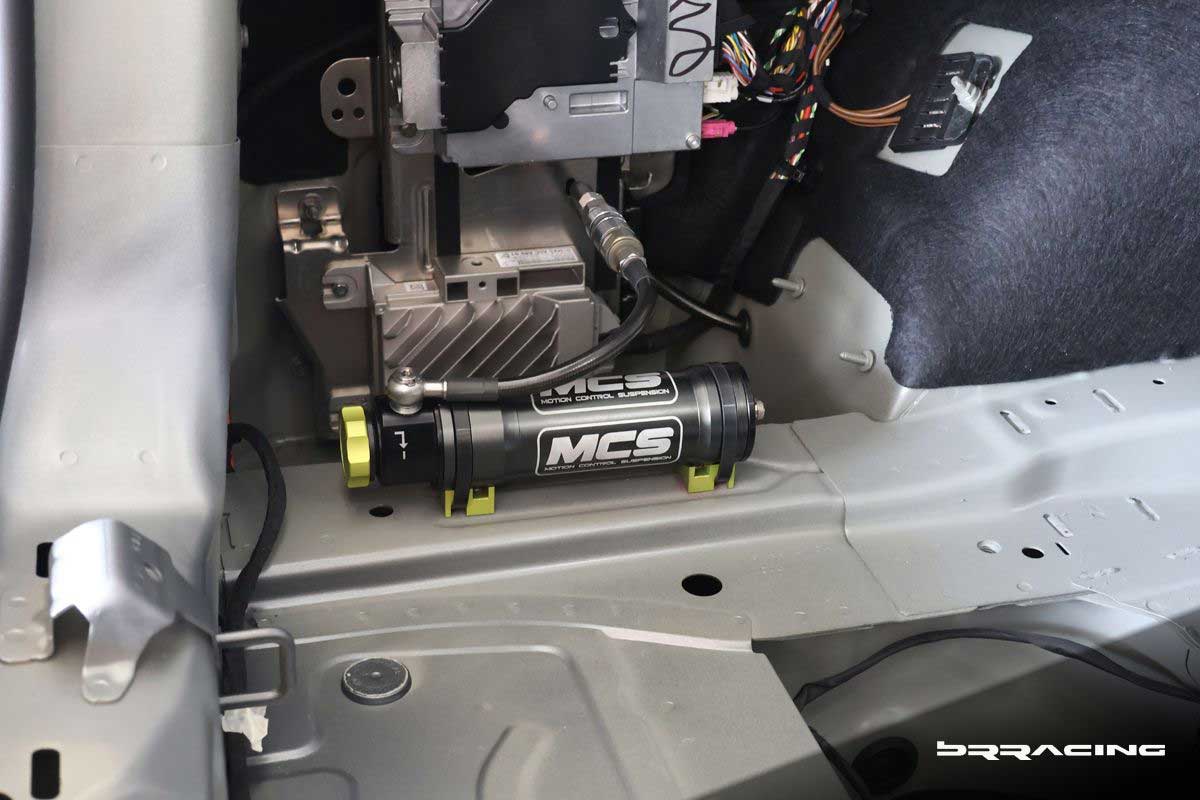
The MCS 3W damper is a triple-adjustable damper with external reservoirs which allow for adjustment of the gas pressure in the damper. High speed compression, low speed compression, and rebound damping forces are independently adjustable with the compression adjusters located on the reservoir head and the rebound adjuster located on the shaft-end.
High Speed Compression damping forces are controlled by a large blow-off valve located directly on the reservoir main piston for the most precise and accurate damping control, and not a needle valve with a smaller effective adjustment range before the needle is too far out of the orifice to influence flow.
Low Speed Compression damping forces are controlled through orifices located at the compression main piston assembly in the reservoir head and allow for precise hydraulic control of damper oil.
Rebound damping forces are controlled through orifices located at the main piston assembly in the damper body and allow for precise hydraulic control of damper oil through the main piston. Utilizing orifices introduces the ability to have a wide operating range, avoiding pesky re-valves, consistency in damping adjustment per click, and virtually eliminates fatigue with usage.
Gas pressure can be adjusted through a schrader valve located at the end of the remote reservoir, allowing you to increase or decrease the overall support to the vehicle. Reservoir pressure can be adjusted between 100 – 275 PSI to help support the platform in fast cornering that generate large loads or allow more weight transfer to generate more traction in low grip scenarios.
These dampers are packed with technical features but with an elegantly clean execution. The monotube design is very stable with more oil capacity and better heat dissipation than twin tube dampers. Large shafts give extremely high, low-friction side-load support unmatched by shocks inverted and converted for strut applications. The large main piston gives quick, accurate damper response and the divider piston separates oil and gas, eliminating cavitation which often causes noise and sloppiness.
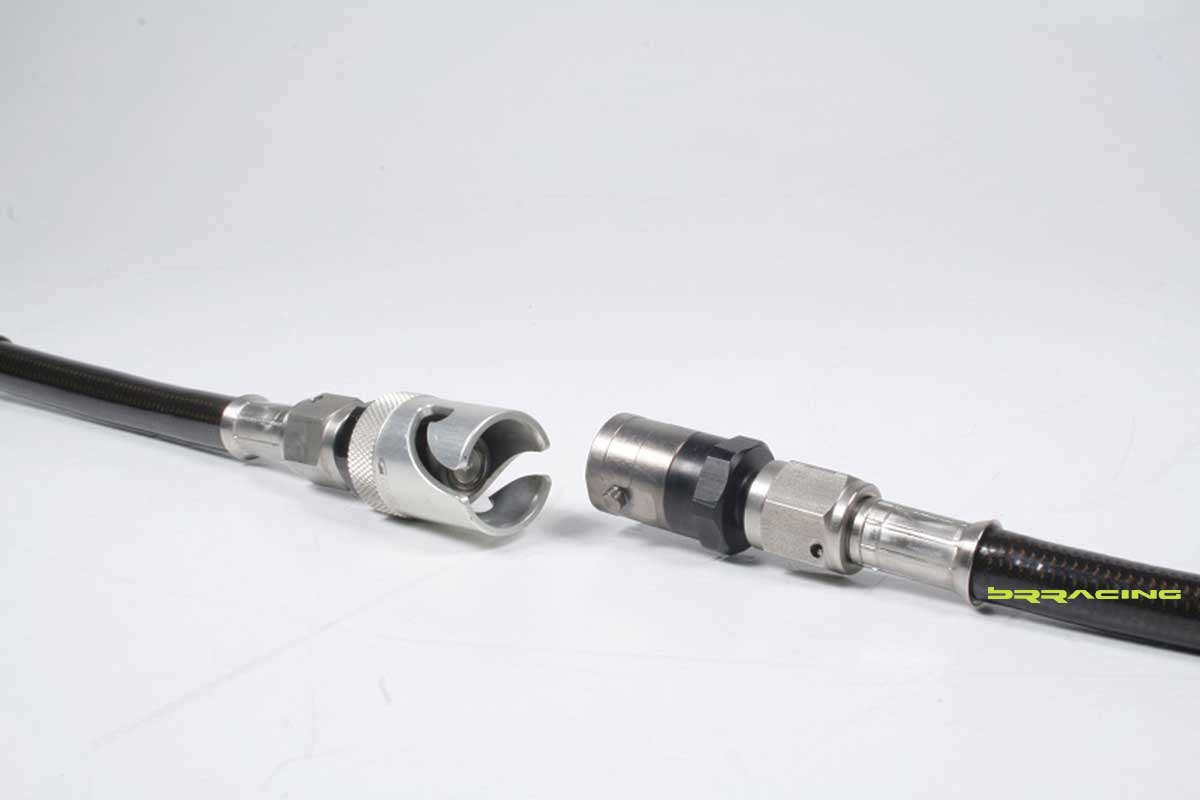
Remote reservoirs give superior fluid temperature control and are available (or standard depending on application) with Staubli dry-breaks / quick disconnects for easy installation.
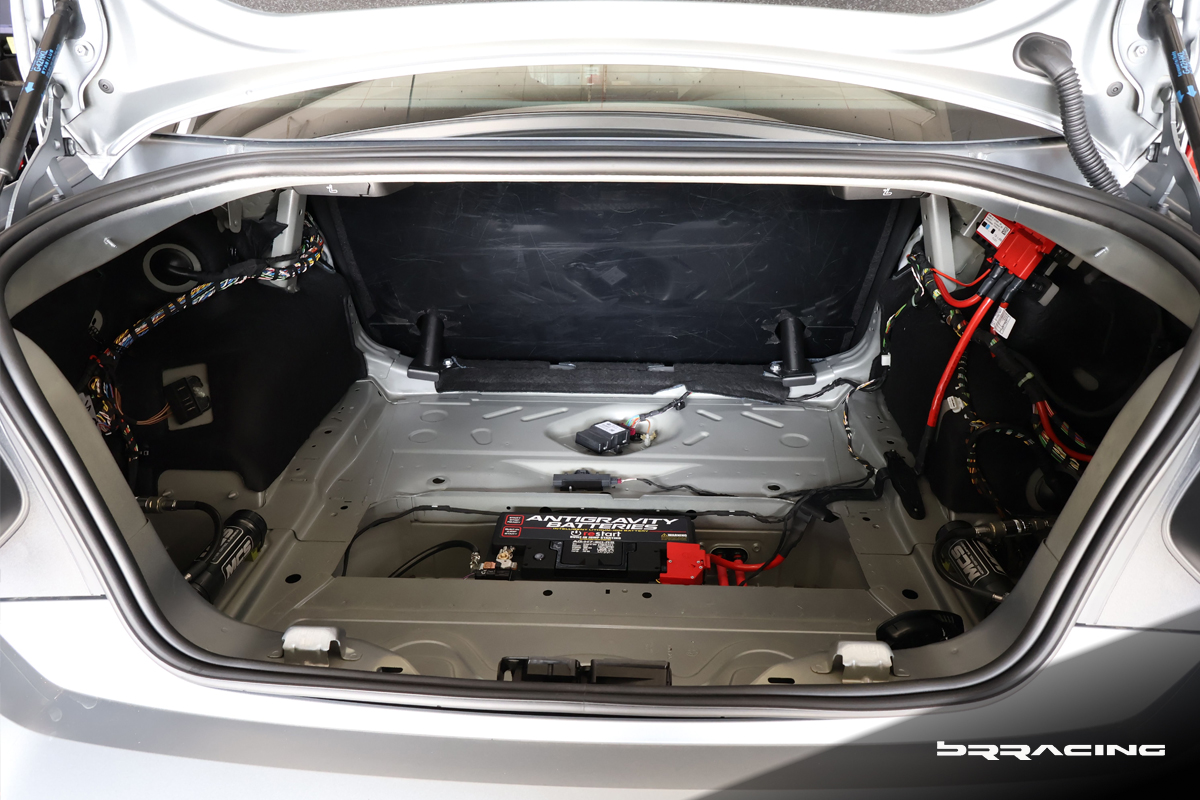
Wheel Studs
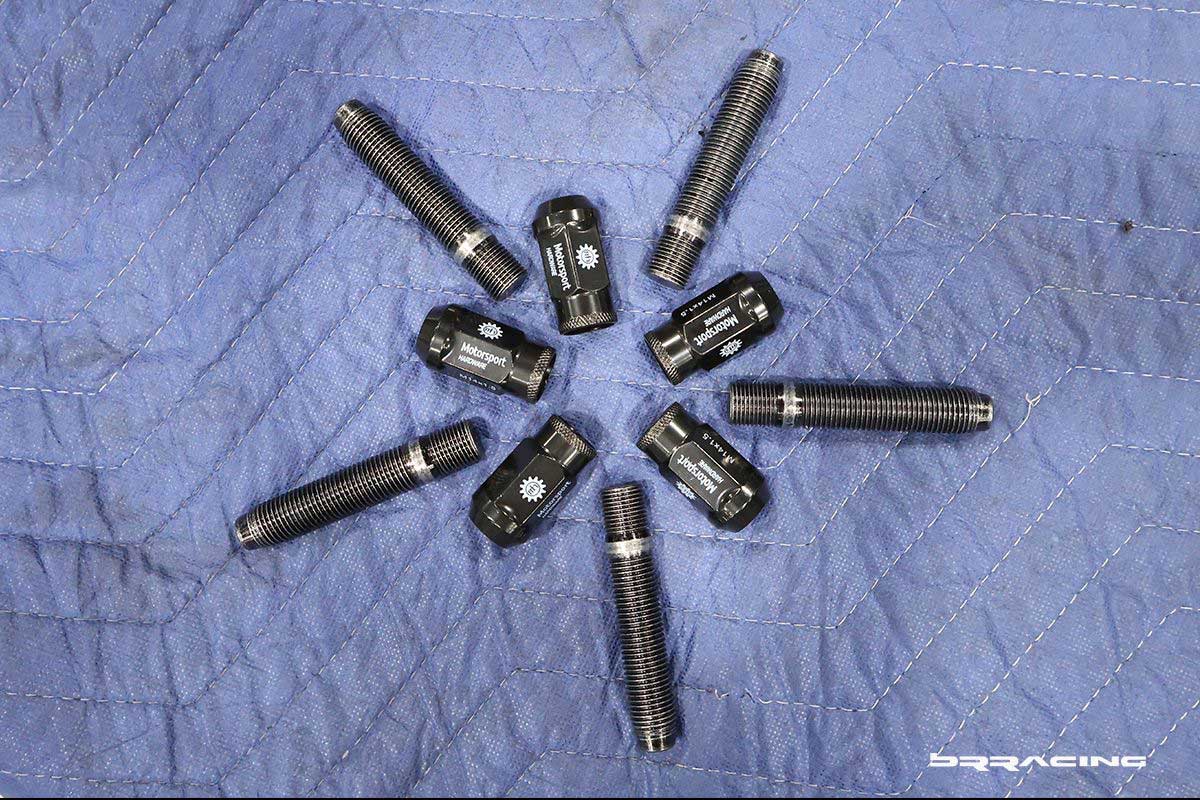
Given that this is going to be a track car, then we know there will be lots of wheel / tire changes. To facilitate that, one of the necessary upgrades is the replacement of the stock wheel lug bolts with wheel studs and nuts.
BODY
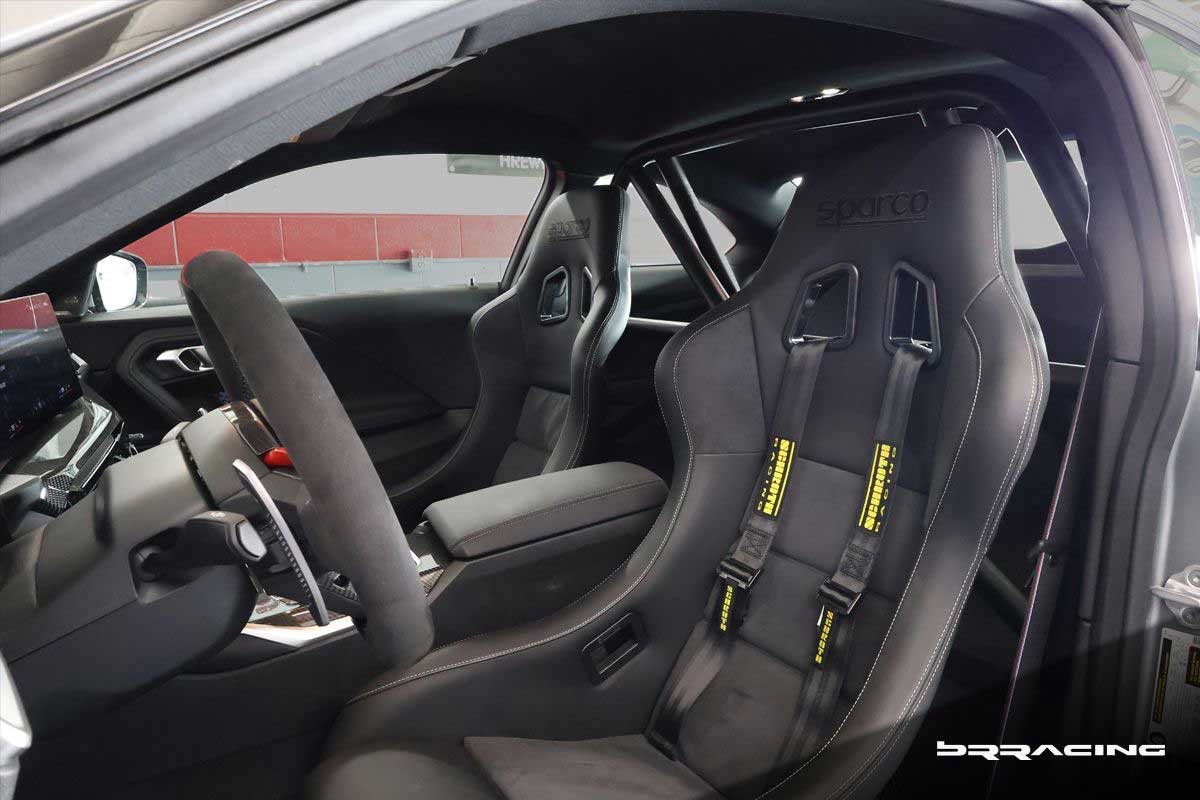
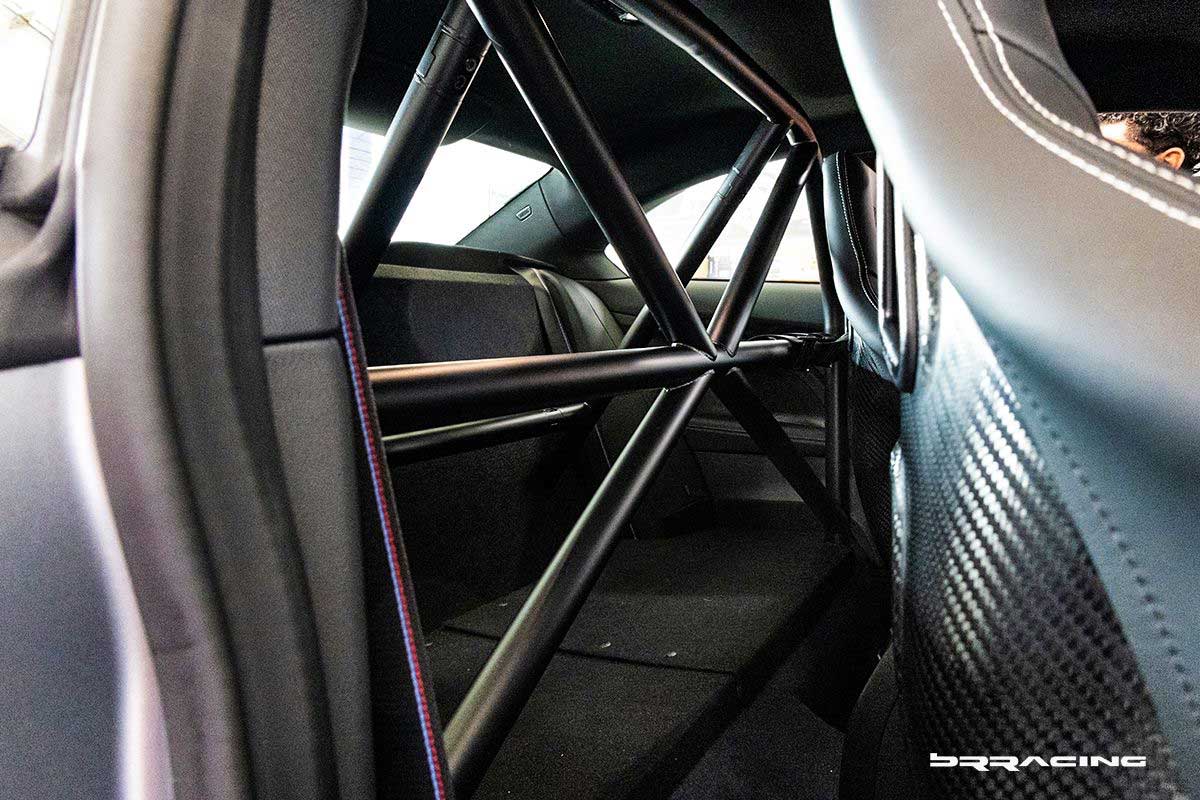
There are two perspectives relative to the upgrades needed when it comes to the broad category of “body”. One is aerodynamics, one is safety.
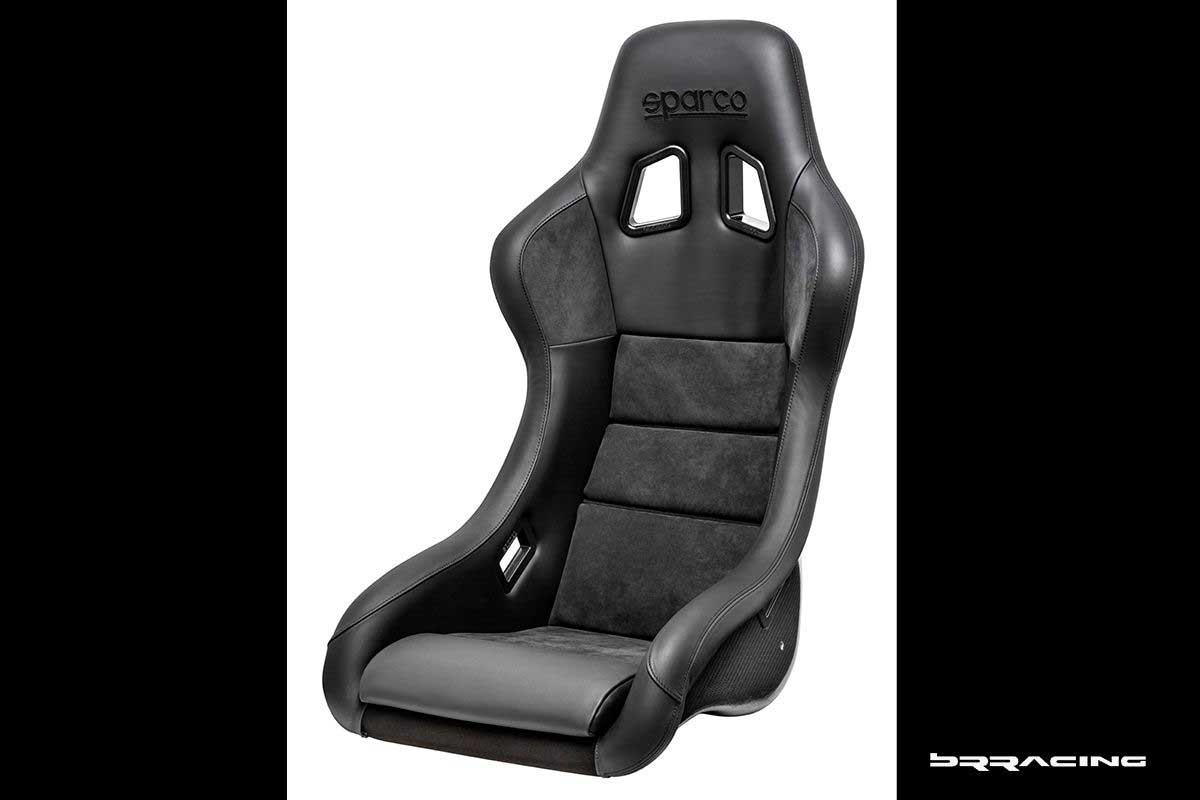
Safety is always paramount – and straight forward. Roll bar, 6pt harnesses, and a seat.
Aero considerations are more defined by the rules and the class that one wants to run in. For this customer, the rules limit the aero upgrades that you can do. No rear wing (but this car needs it), no big front splitter, limited light weight body part replacement.
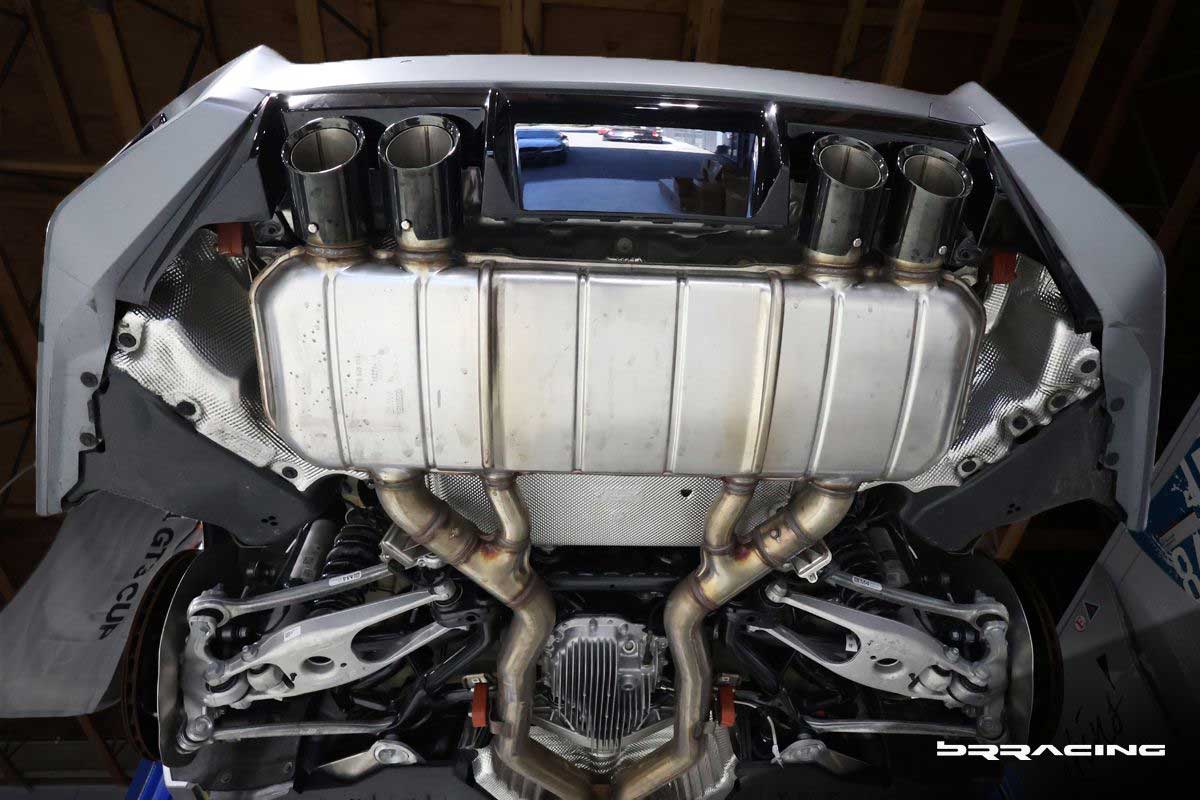
EXHAUST
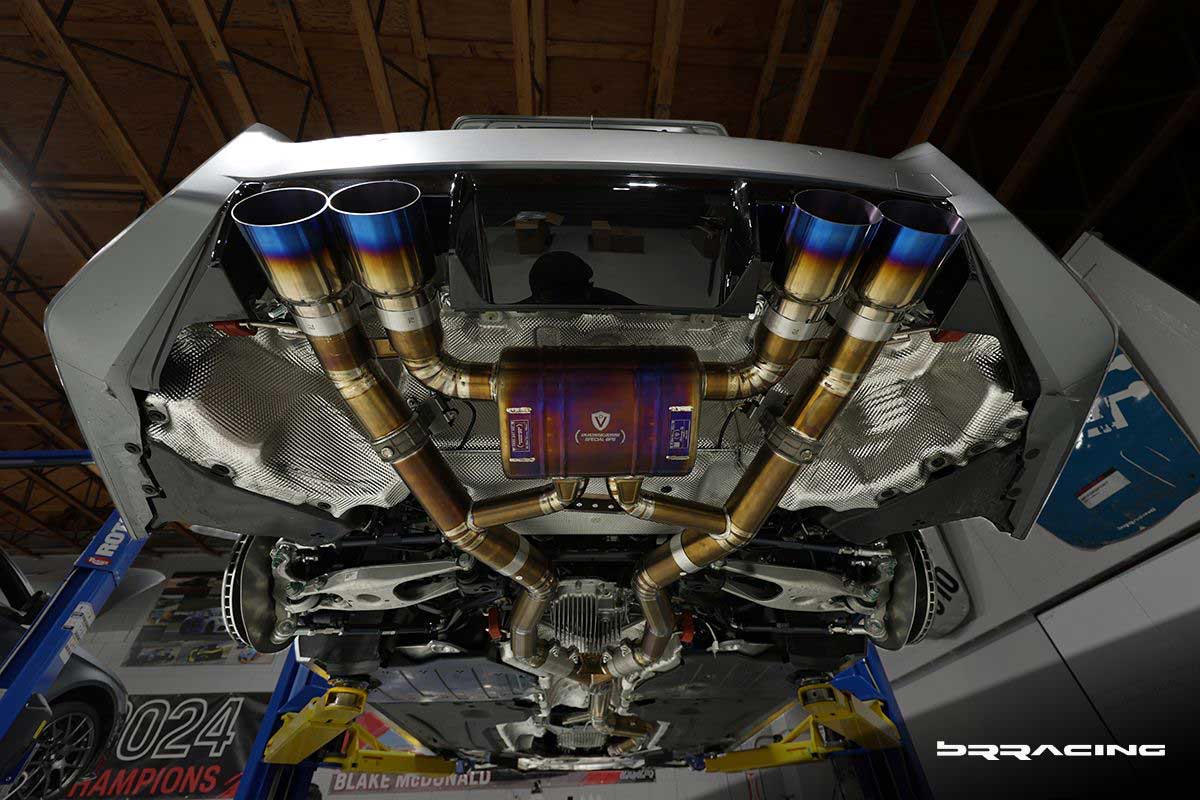
Here is a image of the stock BMW M2 exhaust. Not much to see, doesn’t elicit much excitement, but it is valvetronic, and heavy. Ripe for an upgrade.
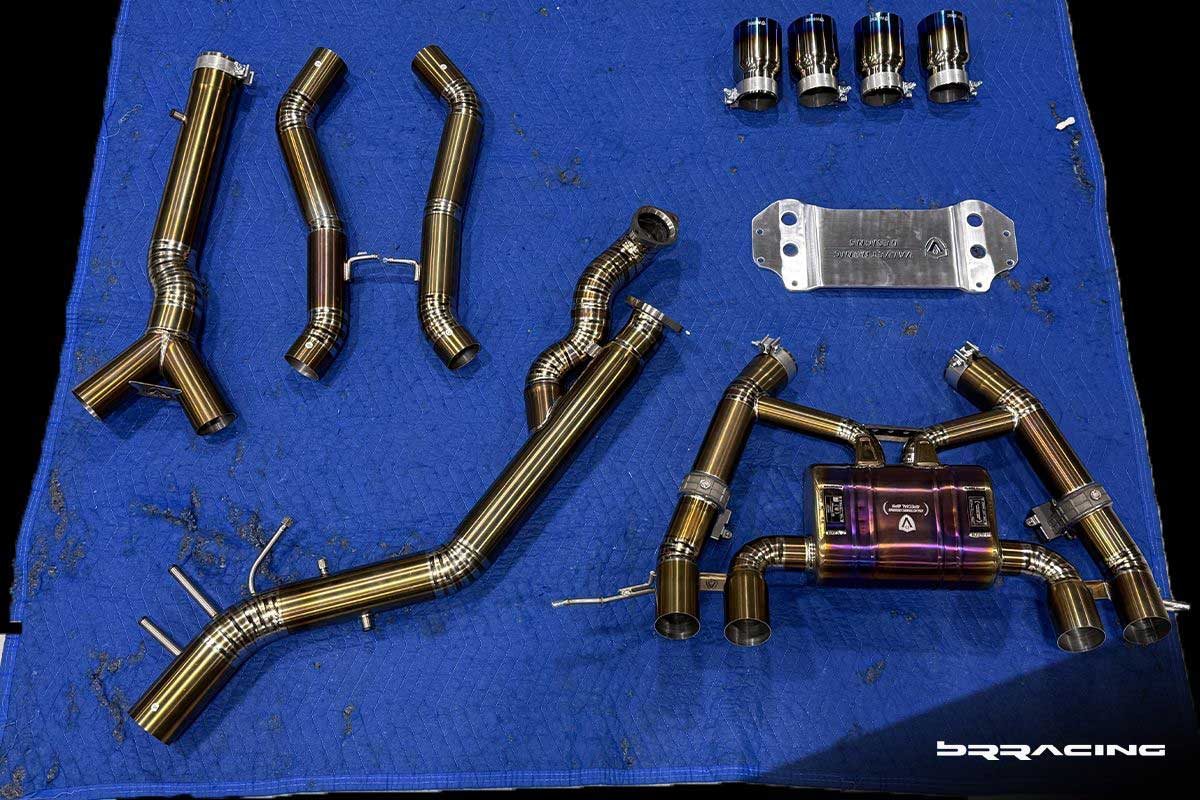
There are lot of options when it comes to exhaust systems. Our customer chose “Valvetronic” (the brand), in Titanium (for maximum weight loss), and retained the full “valvetronic” operation. For track cars, there is no need to focus or concern yourself w maintaining the valvetronic element, as the car will likely be run in the most advanced “sport” mode (which means valves always open), and w the engine RPM about 4k (which also means valves always open). Good valve, great fitment, great price. Unlike many exhaust manufacturers, Valvetronic also provides a replacement center support brace (newer, larger exhaust systems will likely hang just a little lower, often rubbing on the center support, causing a rattle, Valvetronic provides a replacement center support to provide the proper clearance.
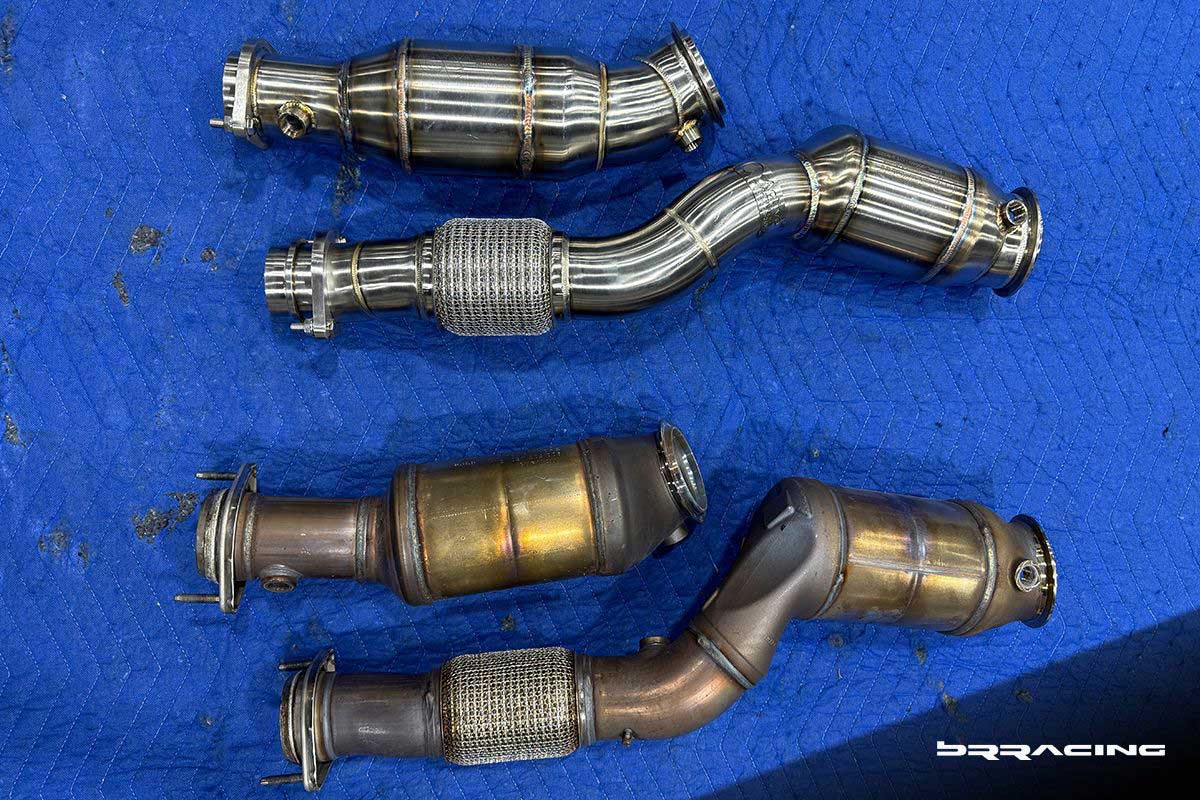
Again, with this being a track car, one does not need to worry about “CA smog” rules. Therefore, the downpipe can also be fully upgraded (or upgraded to what the rules allow).
WHEELS / TIRES
This is the area where the BMW G87 (even prior generation M2’s as well) can benefit the most…tires, or more precisely, tire size / width. The BMW M2 handles well, but still lacks for proper track level grip. In addition, the car comes w a slightly narrower tire in the front vs the rear. This also affects the overall balance of the car. Therefore, we want to go bigger or wider, and we want to go “square” or symmetrical. That leads to the next quetion…what diameter, and just how wide can we go?
You have to be aware of a little caution here. You can go quite wide…we have gone w 305mm width, square. But, to achieve this, you have to make some suspension modifications, and not so much up front (just need coil-overs, and sufficient negative camber. Up front, using the adjustable main lower control arm will be important as well to achieve the right fitment. The bigger concern is at the rear. The good news is that we replaced all the control arms w adjustable units, so, if we needed to bring the top of the tire in, we can alter the length of the rear upper arms. BUT, that’s where the trick lies. If you alter the rear geometry (like by shortening the rear upper control arms)..that will dramatically impact the geometry of the rear suspension, and you will get some nasty results on the track. So, be careful here!
BMW G87 M2 – STREET / SHOW
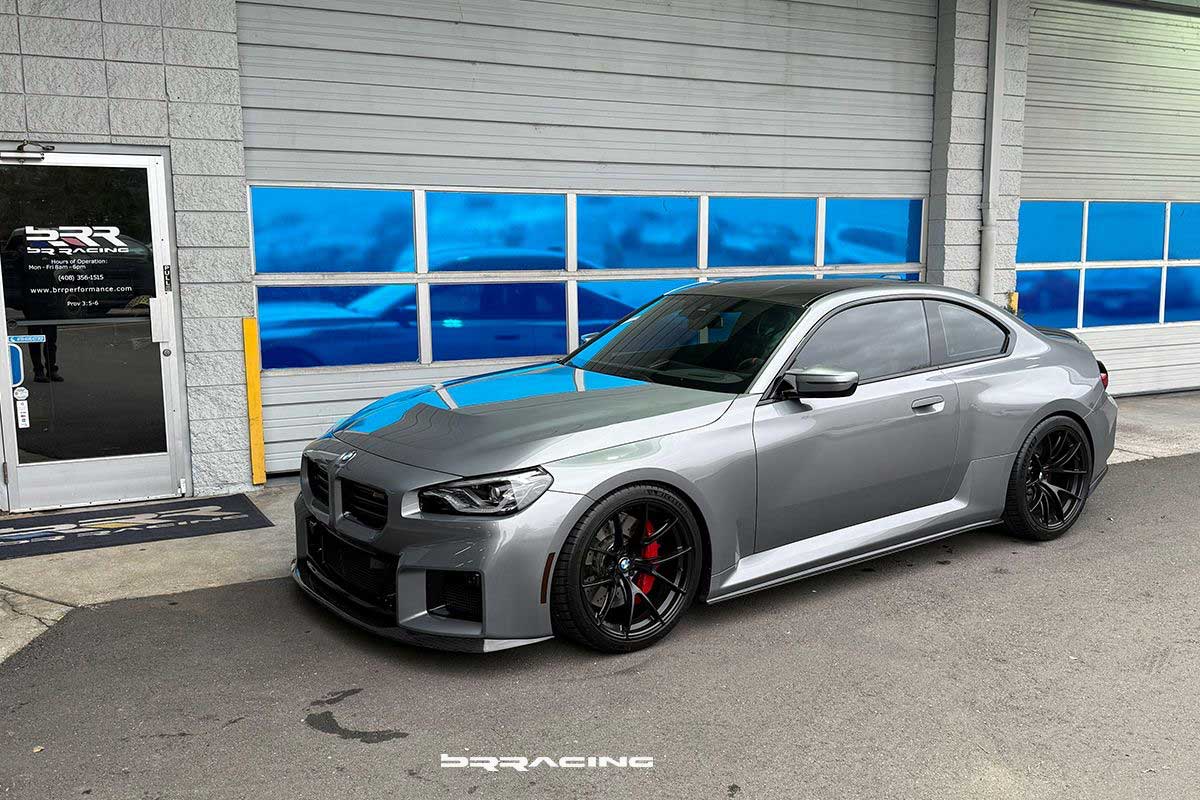
The objective for this customer was to do all the aesthetic type improvements – better stance, better look, better performance, better sound. Not building a car for track use, this was to be a car that can be driven around town, in the mountains, and for long cruises when desired.
First up was to to provide a slight improvement in engine performance. This is now so easily done, and by far and away the greatest “bang for the buck” upgrade. For us, there are only two vendors we promote – DINAN and Carbahn. Both offer essentially the same type of tune options, but we just wanted a simple, Stage 1, 91 octane solution (again, this is a CA car). No need to change intercoolers, charge pipes, turbos, downpipes here.
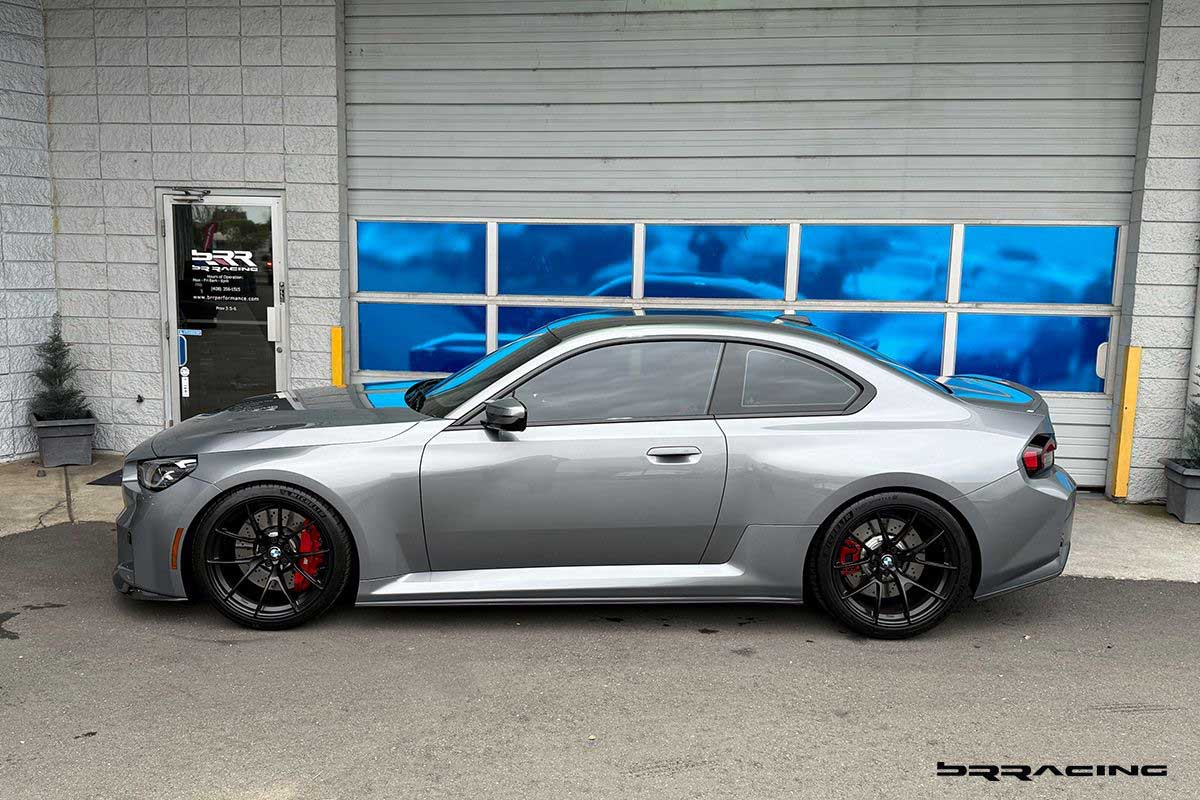
WHEELS
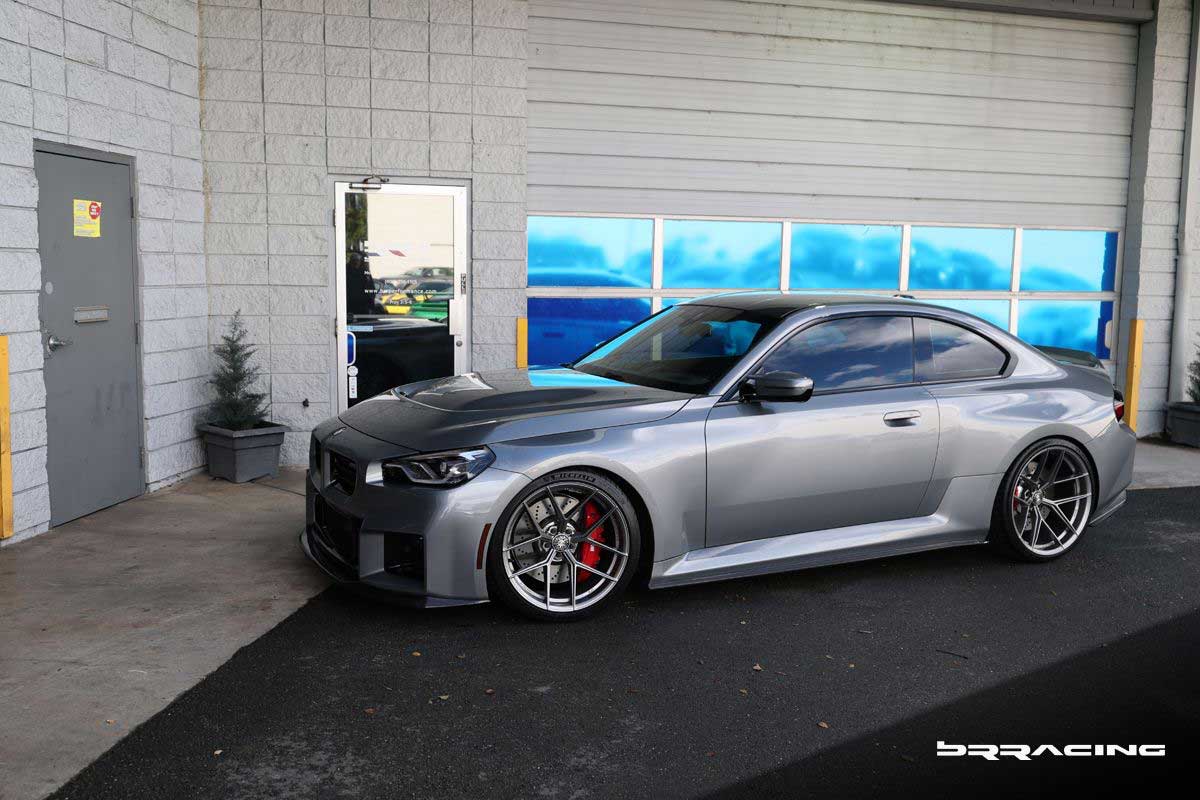
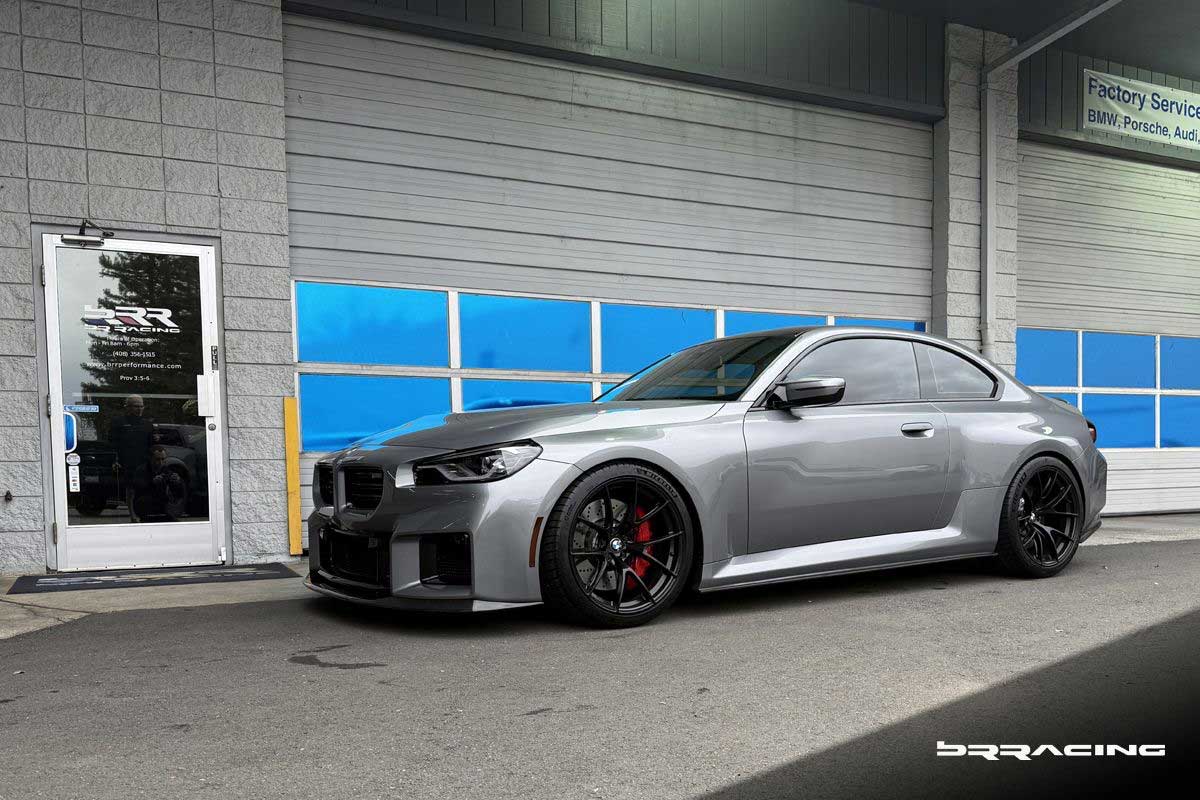
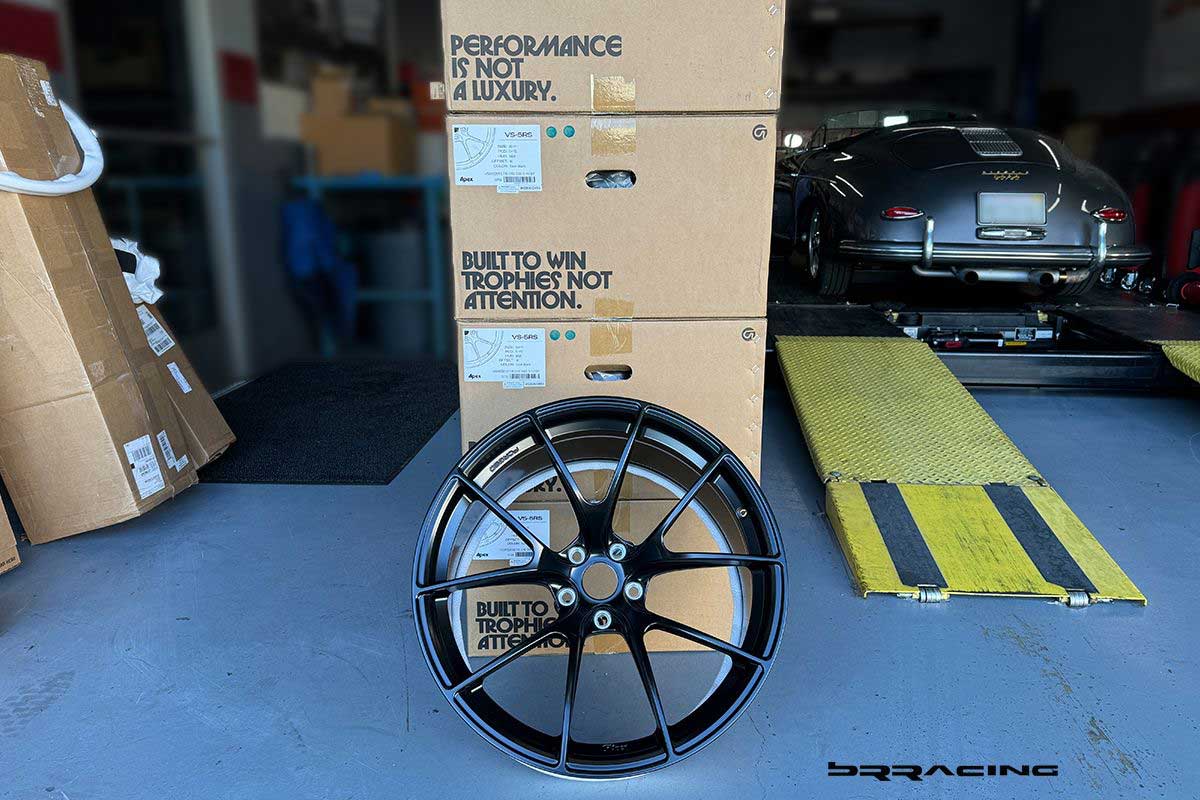
You’ll notice that we weren’t certain of which “color” wheel we thought we look best for this car. We know that APEX produces the best wheel fitment options, so we went w the APEX forged VS-5RS in black, in 20″ diameter. Great wheel, as mentioned, perfect fitment. Tires were Michelin Pilot 4s, F 285/30/20, R 295/30/20.
SUSPENSION
The primary objective for suspension was to improve the look, and the handling, but again, not with race car like results. This car is never going to see the track. The desire was to keep the EDC (electronic dampening control), or electronic shocks. Therefore, a HAS (height adjustable spring) kit was the desired upgrade. There are now several HAS kits on the market, but we choose to go w the Carbahn kit. Right amount of height adjustment, complete kit in that it included the revised bump stops as well. Ride is not compromised, a little firmer, but never overally firm or harsh, roll is reduced, and the ride height exactly the look we were going for.
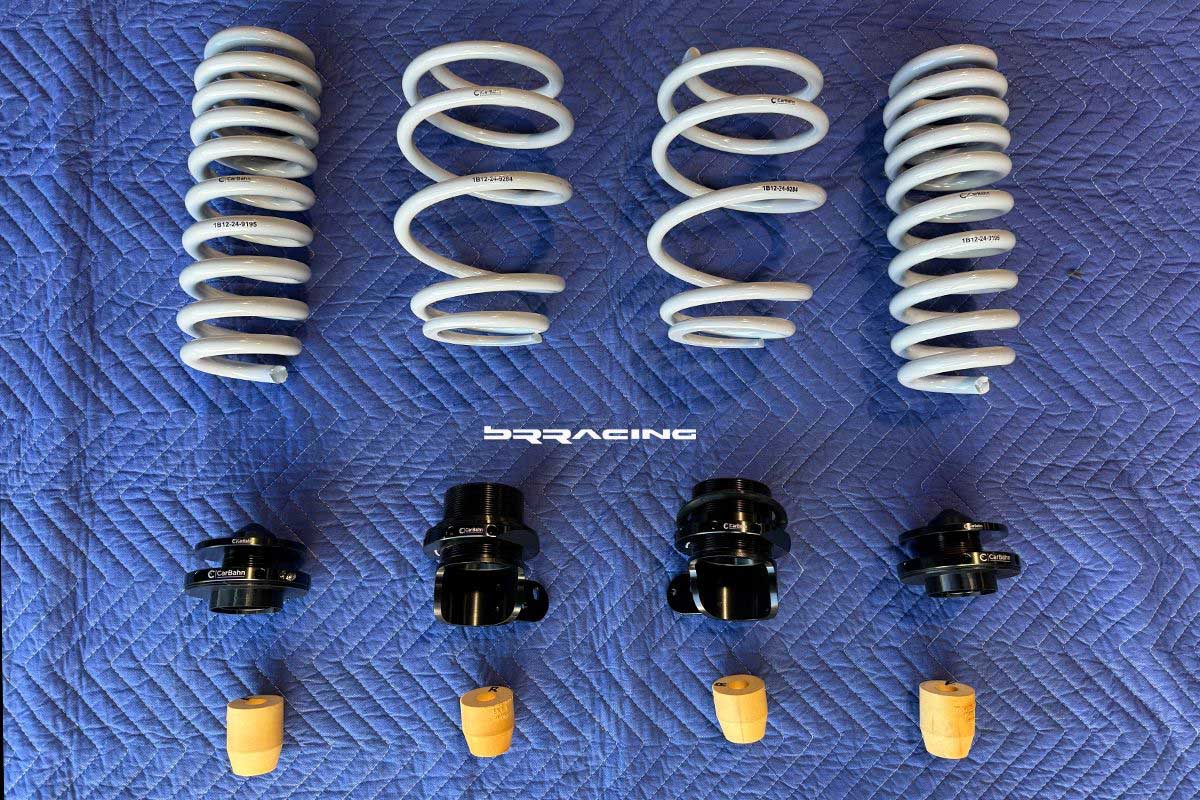
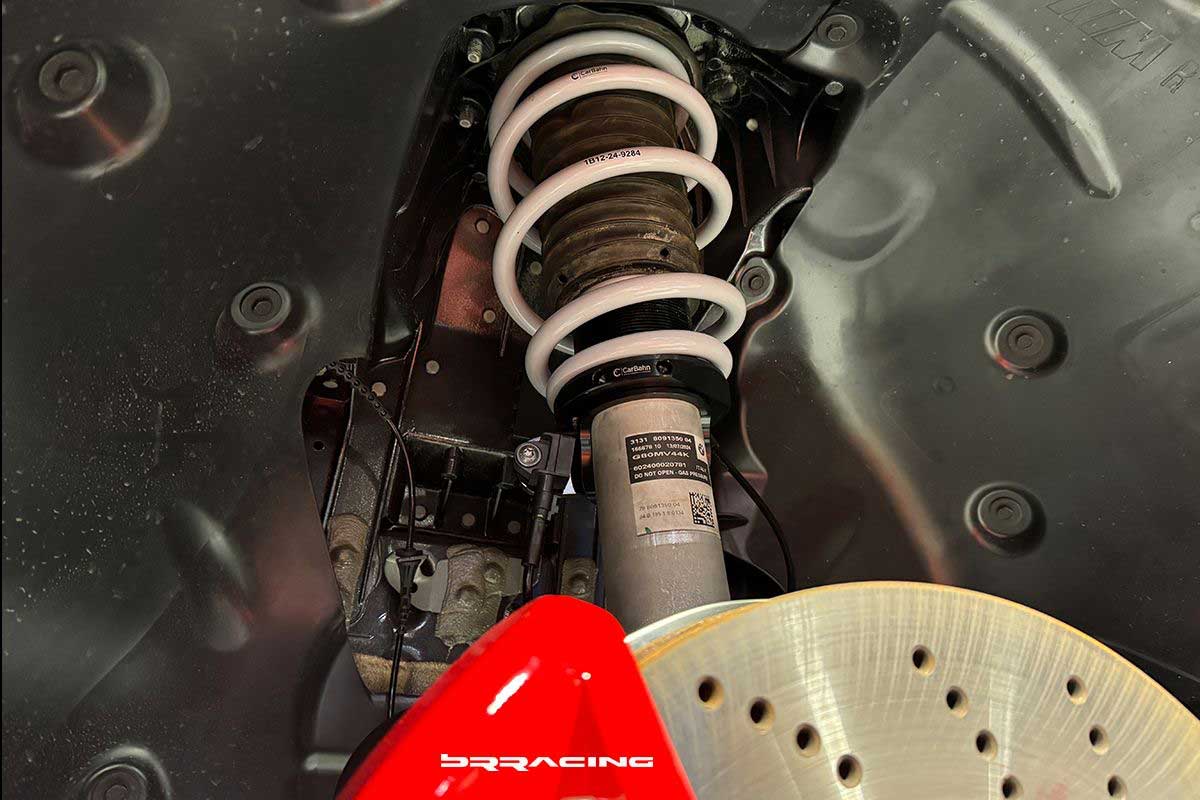
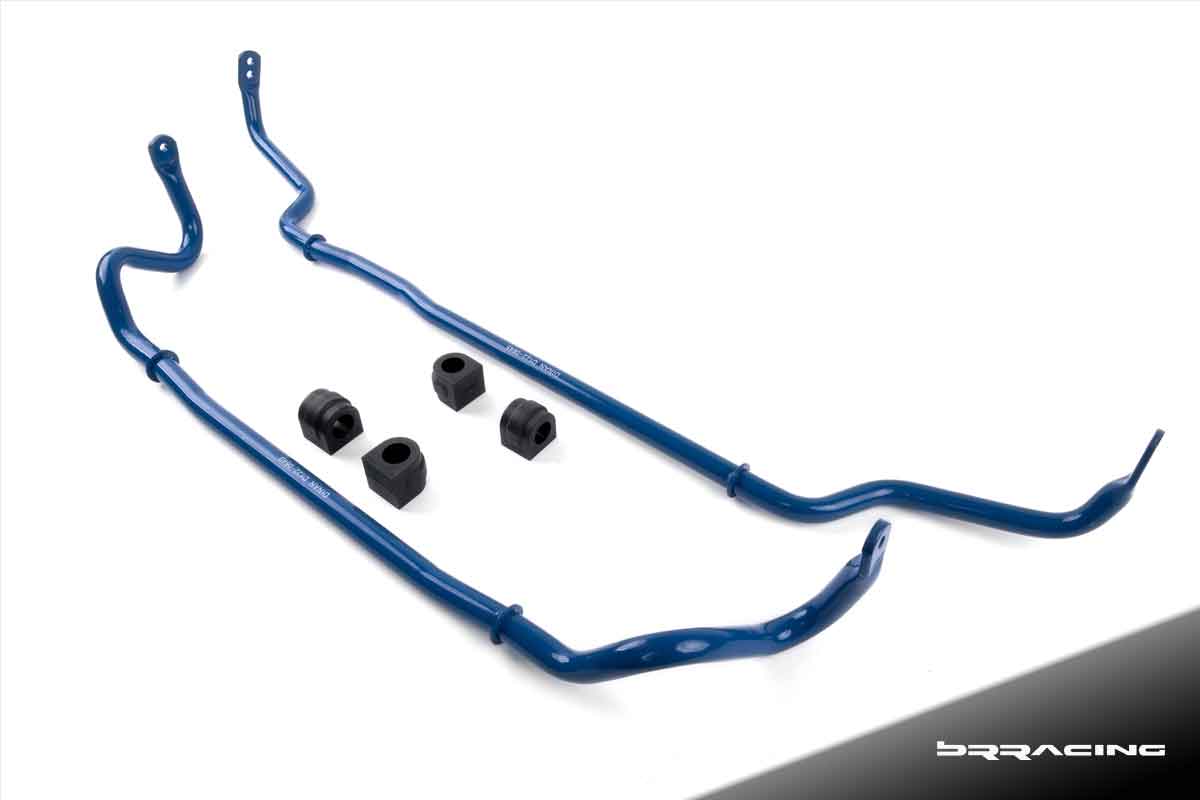
Add in a full set of DINAN sway bar, and this perfectly complements the HAS suspension upgrade. Sway bars are firmer, and offer a slight amount of adjustability.
BODY
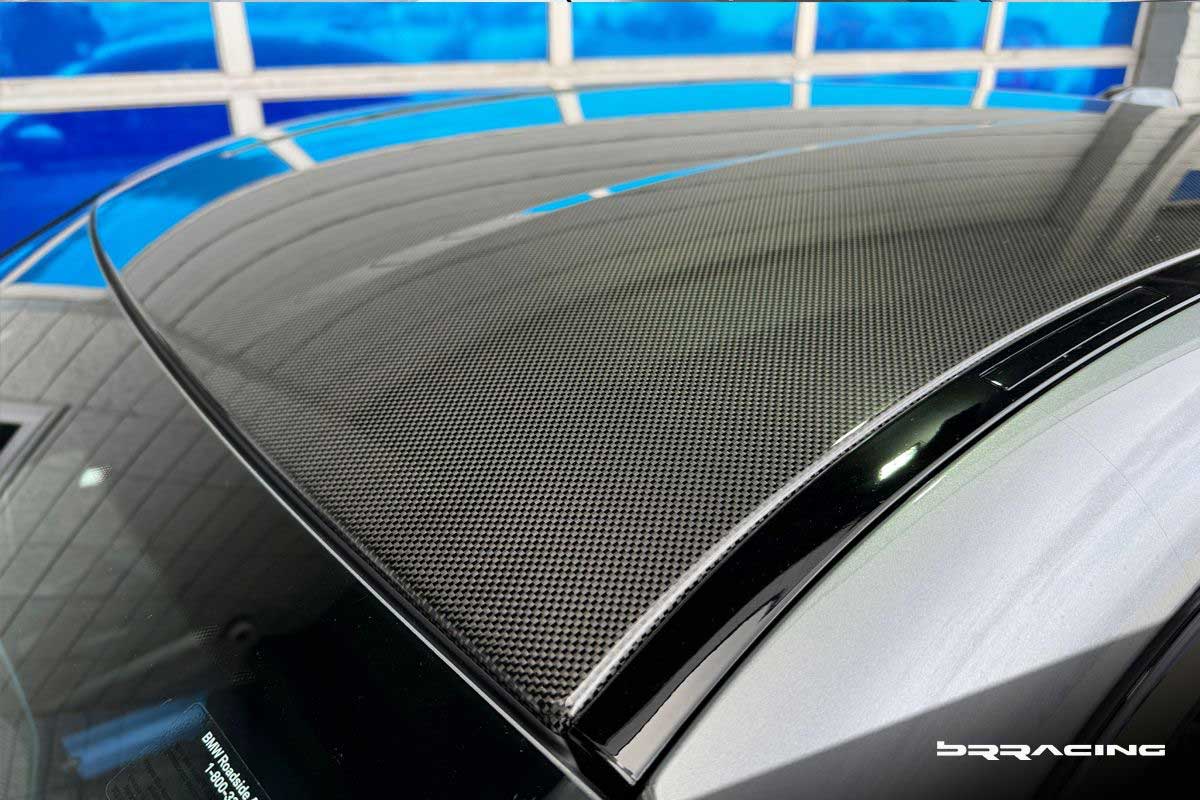
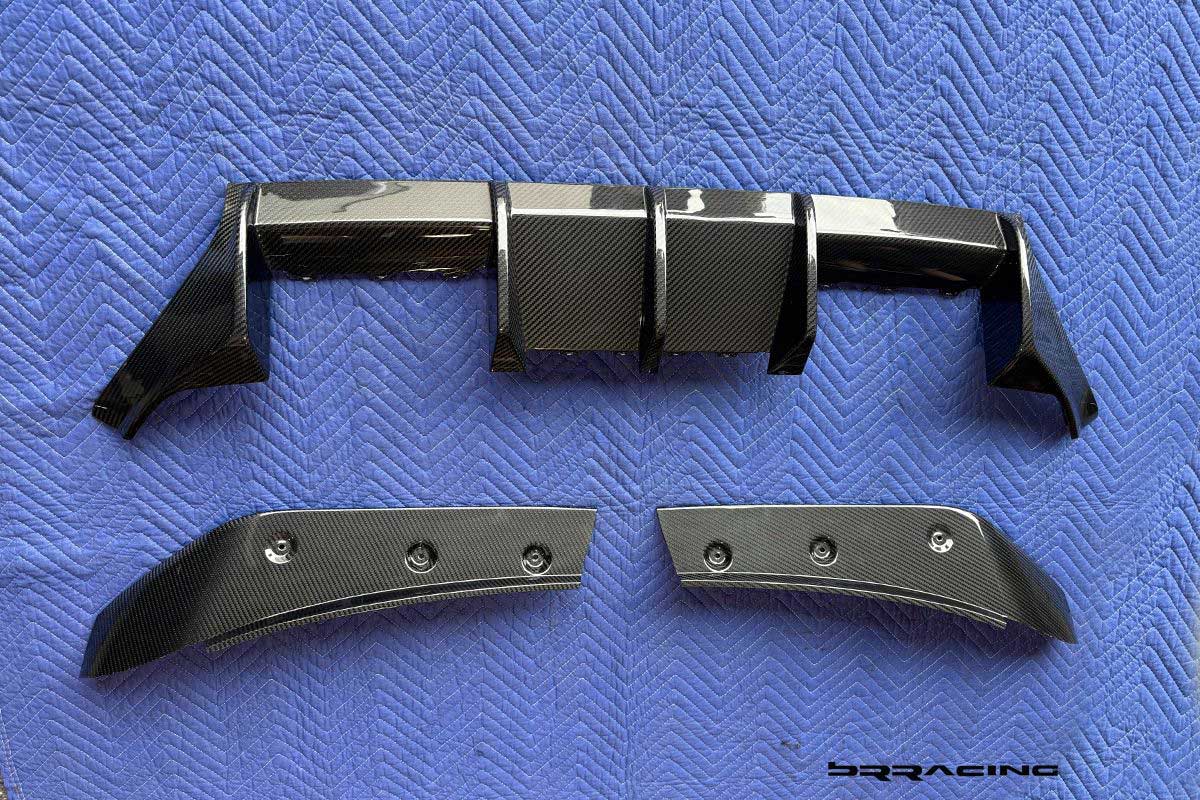
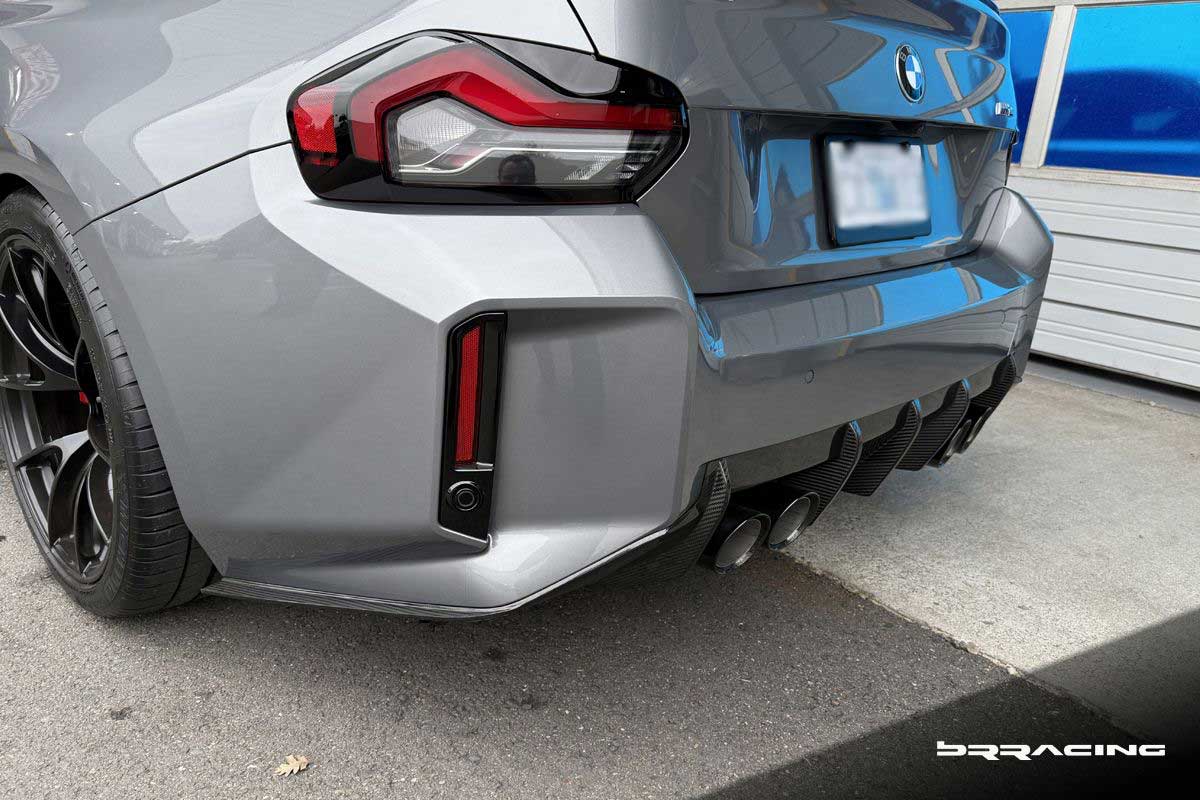
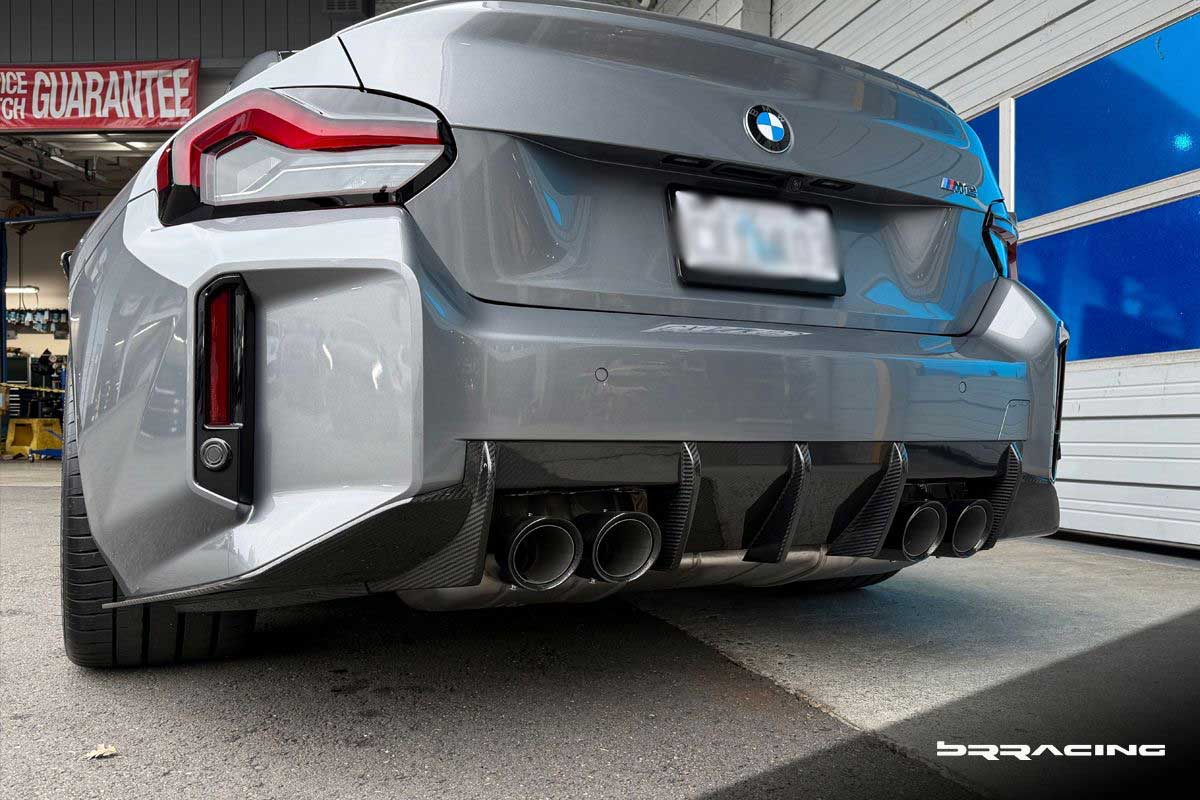
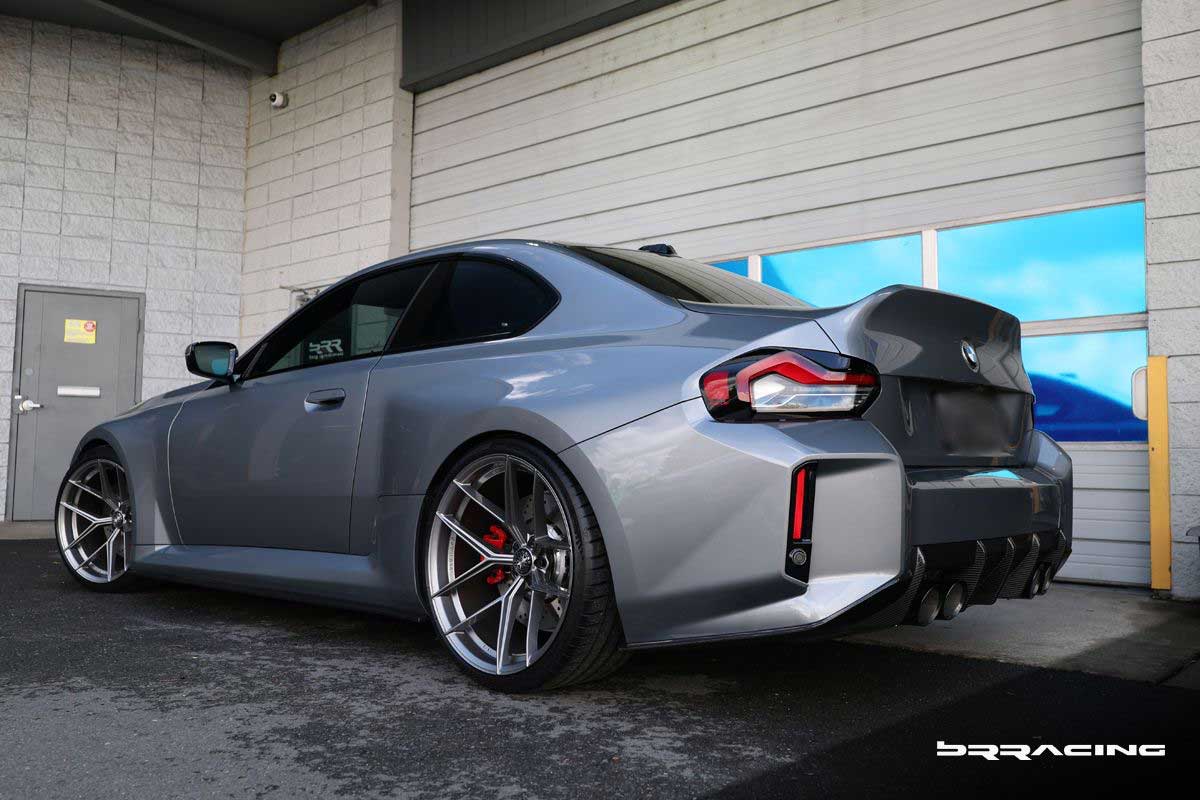
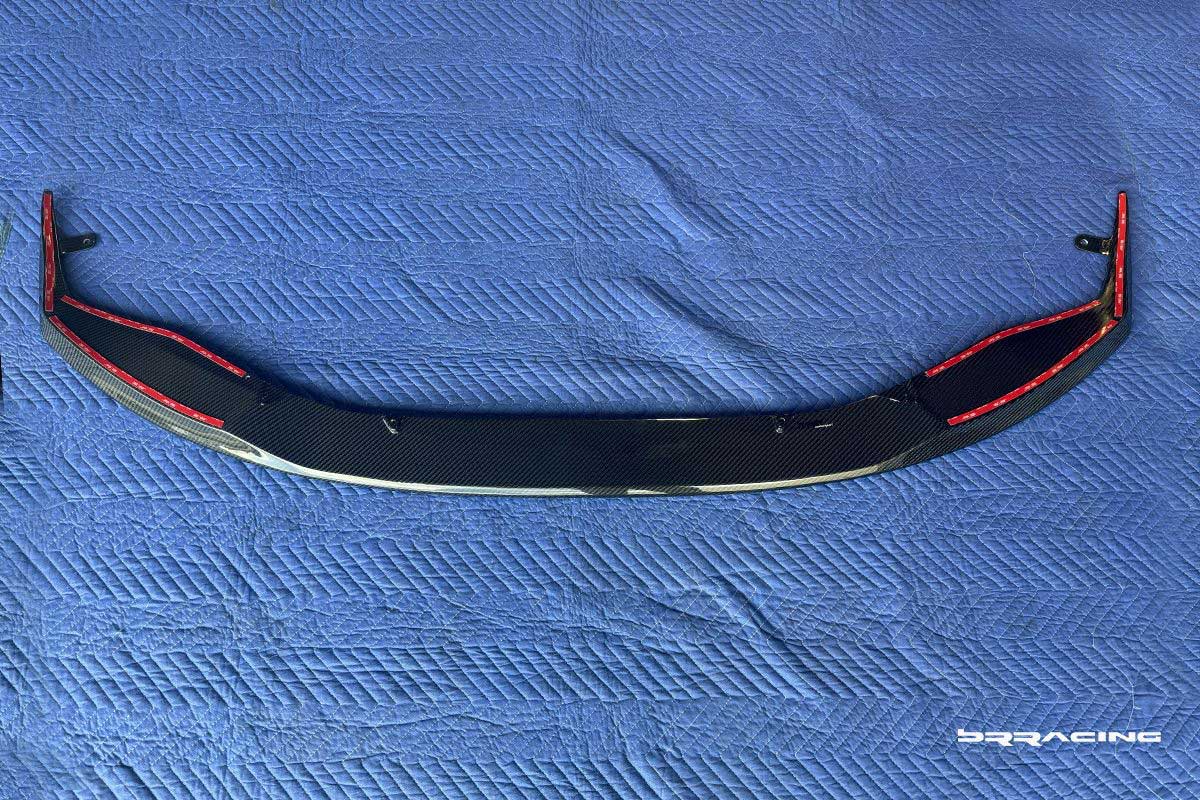
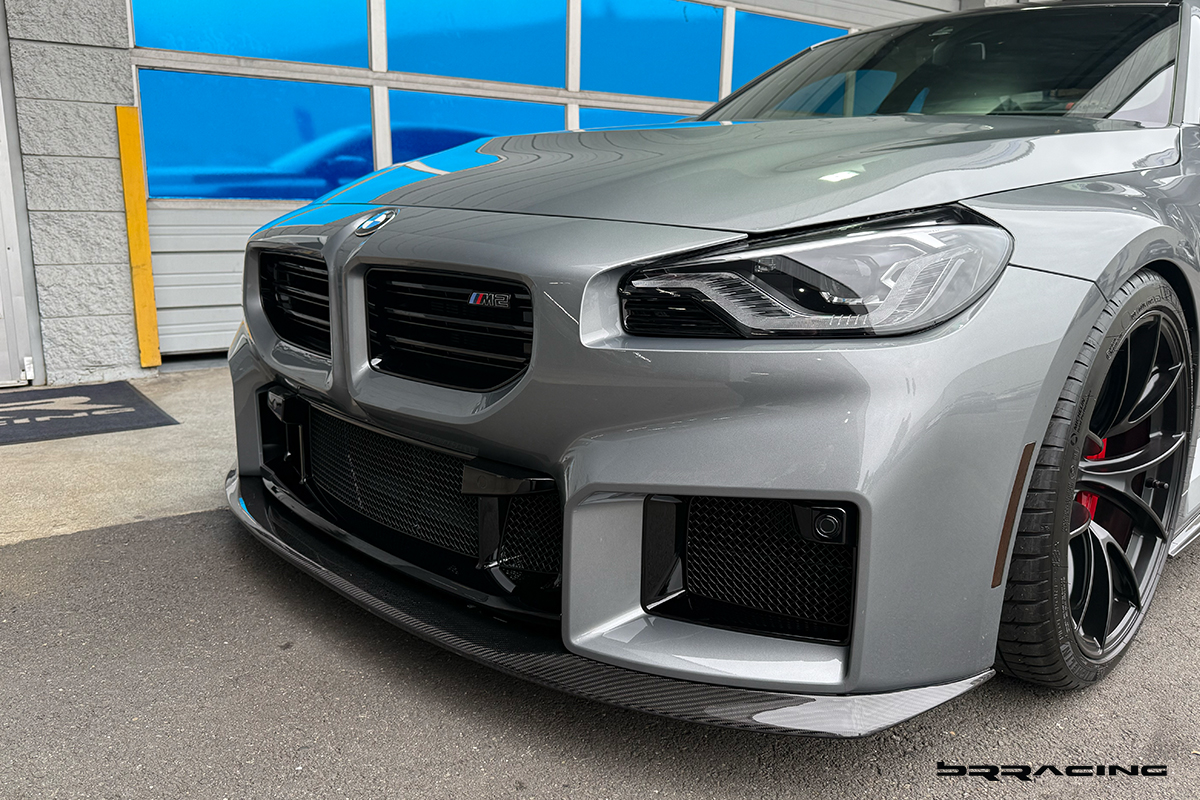
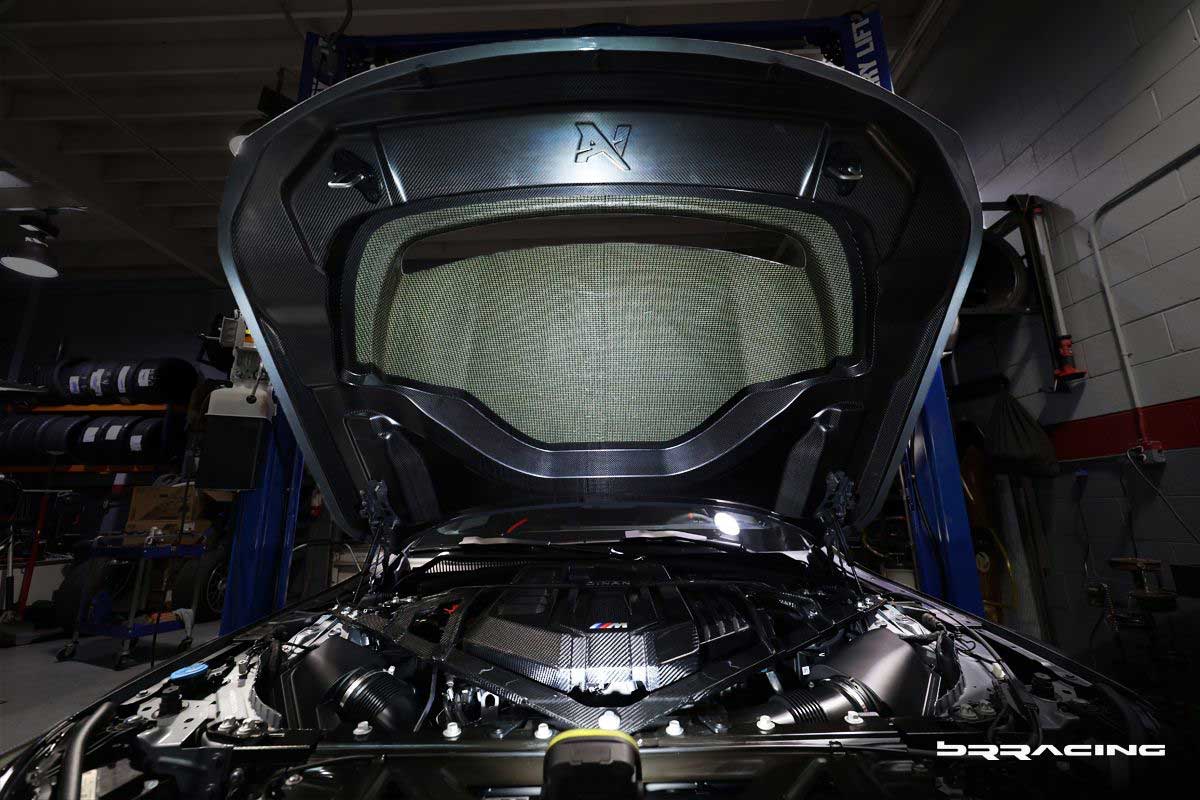
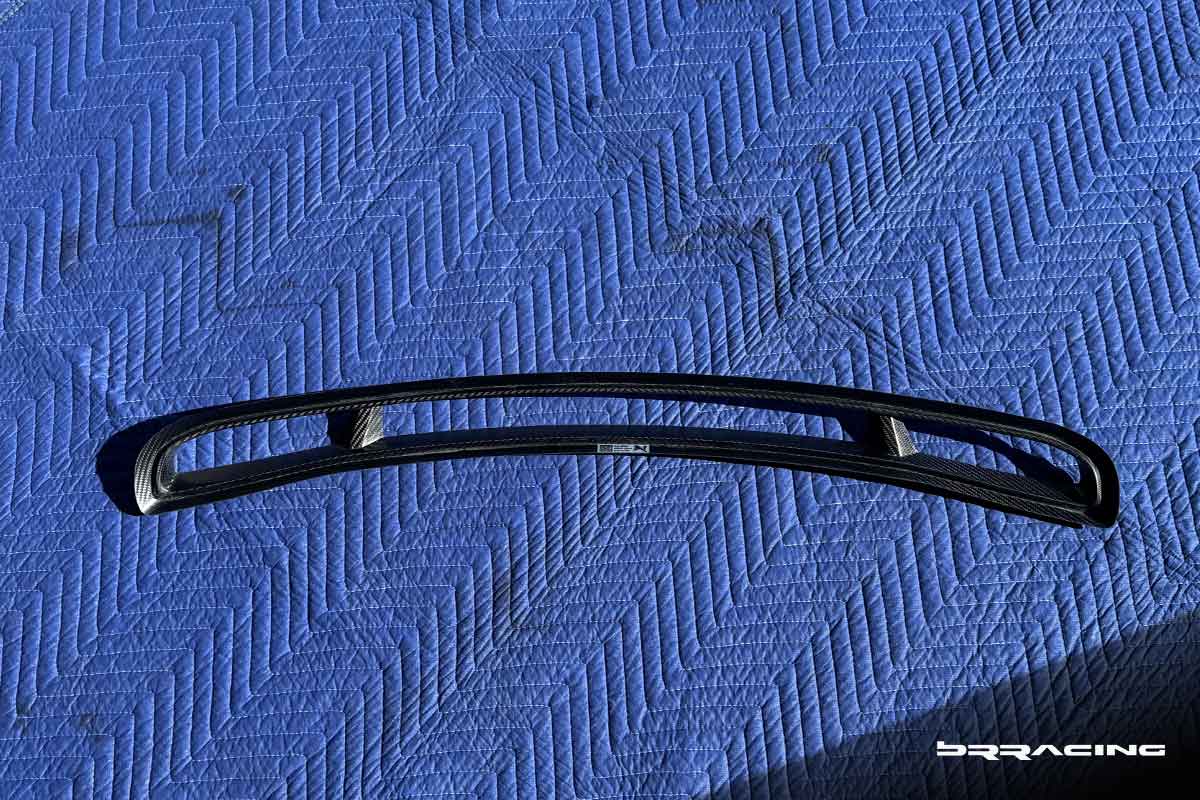
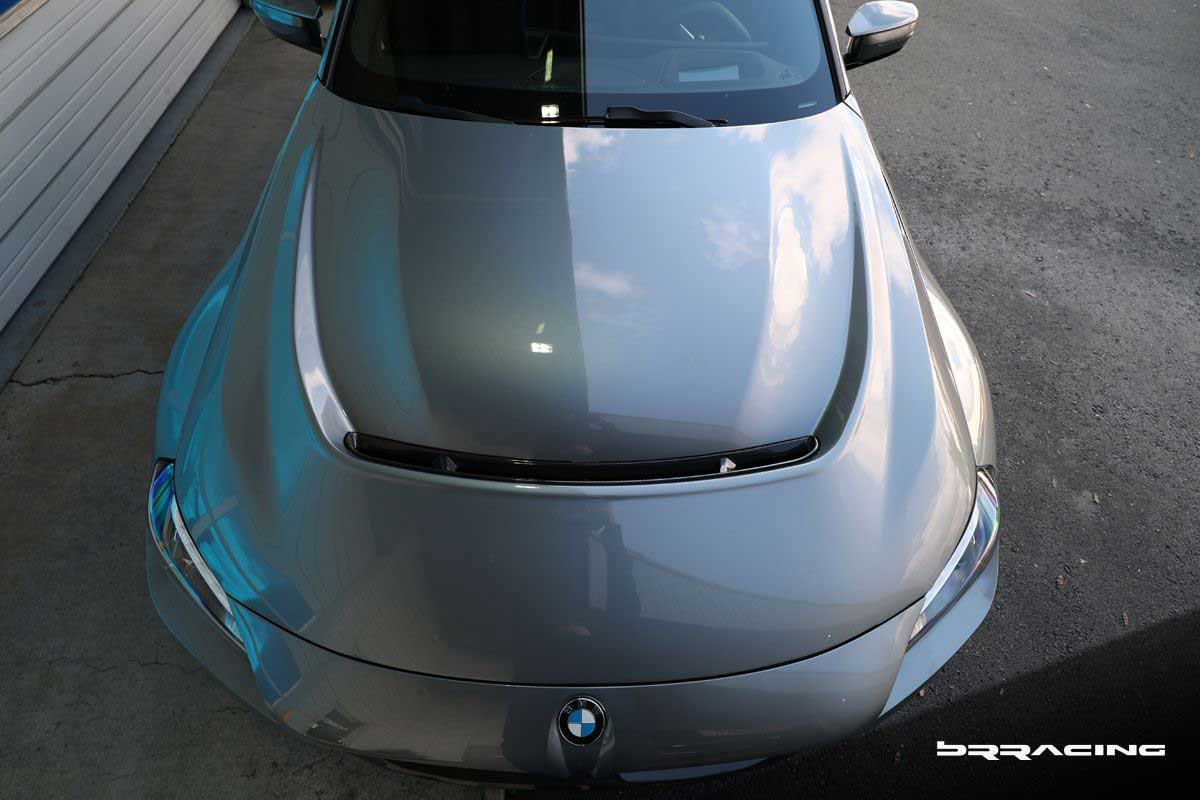
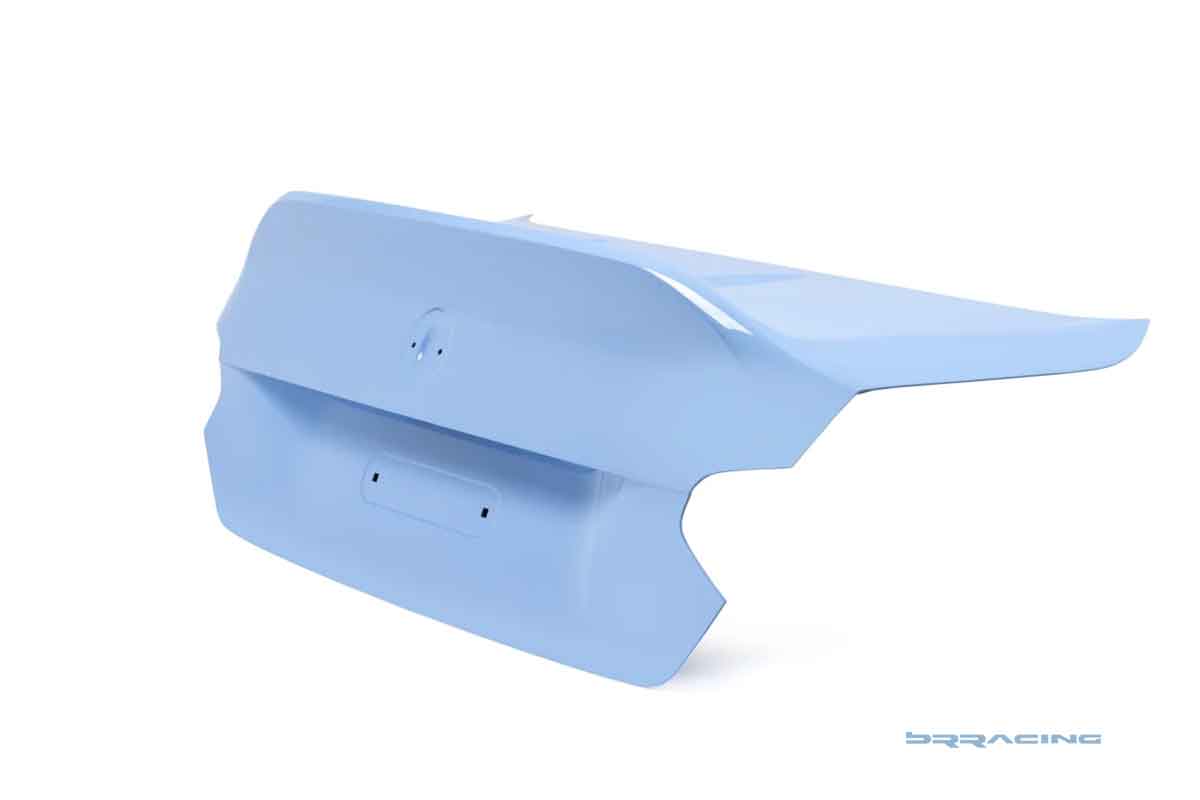
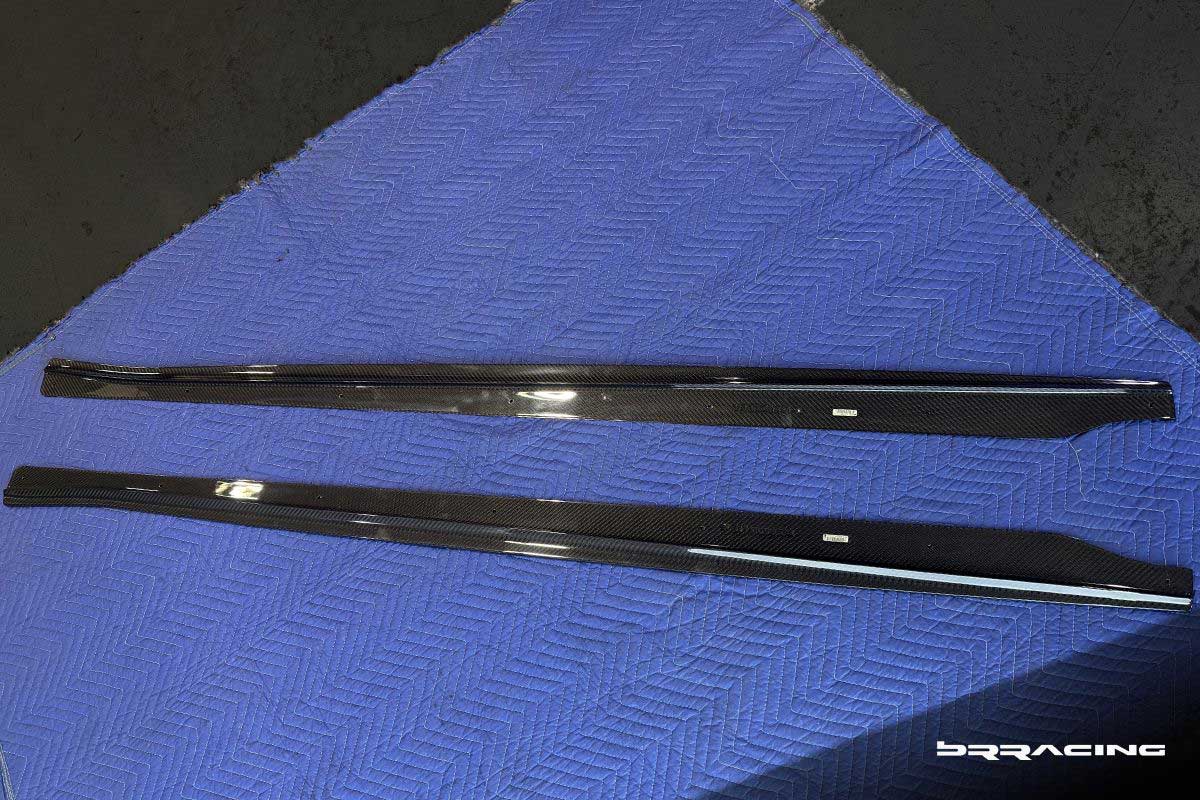
For the body, we wanted to make the car look a little bit more aggressive, but not “race-car” look. No off the trunk rear wing. We wanted a large front spoiler, a carbon fiber rear decklid w spoiler (but built in, not added on), new BMW M2 CS / CSL type vented carbon fiber front hood (w vent), and carbon fiber side rocker panels (but not the type that stick out so far as to catch your leg every time you try to get into or out of the car). We looked at a large variety of vendors, and liked the Alpha-N solutions more than anyone else.
EXHAUST
This is always, in our view, a very personal decision on the behalf of the customer. Every exhaust has a different tone, volume, and what sounds good to one, may not sound good to another at all. This being a CA car, meant that any change to the downpipe was not an option. Therefore, we had the option of changing the mid-pipe, the rear exhaust, or both. After listening to many sound clips, our customer choose to change just the mid-pipe, and go w the DINAN center section / X-pipe. Improves performance slightly, changes the sound, slight increase in overall volume, and does not induce any drone. Here is a pic of the stock set up before the change.
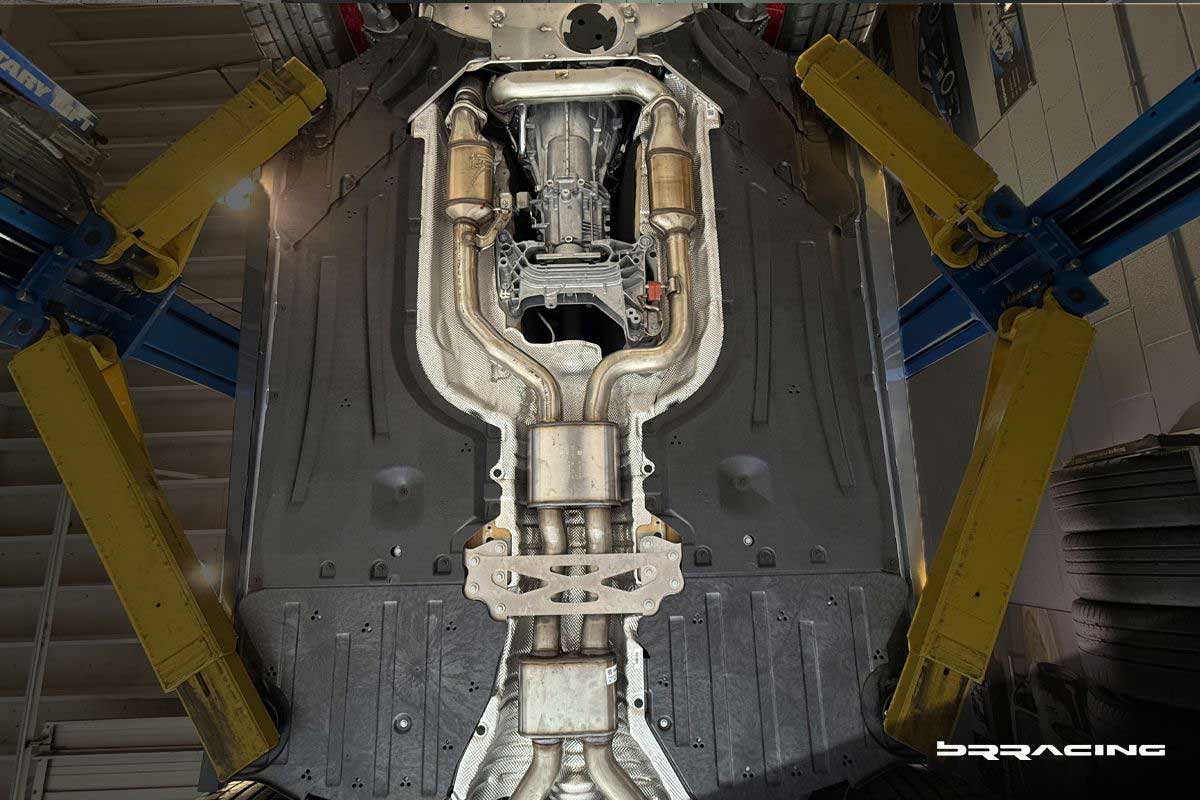
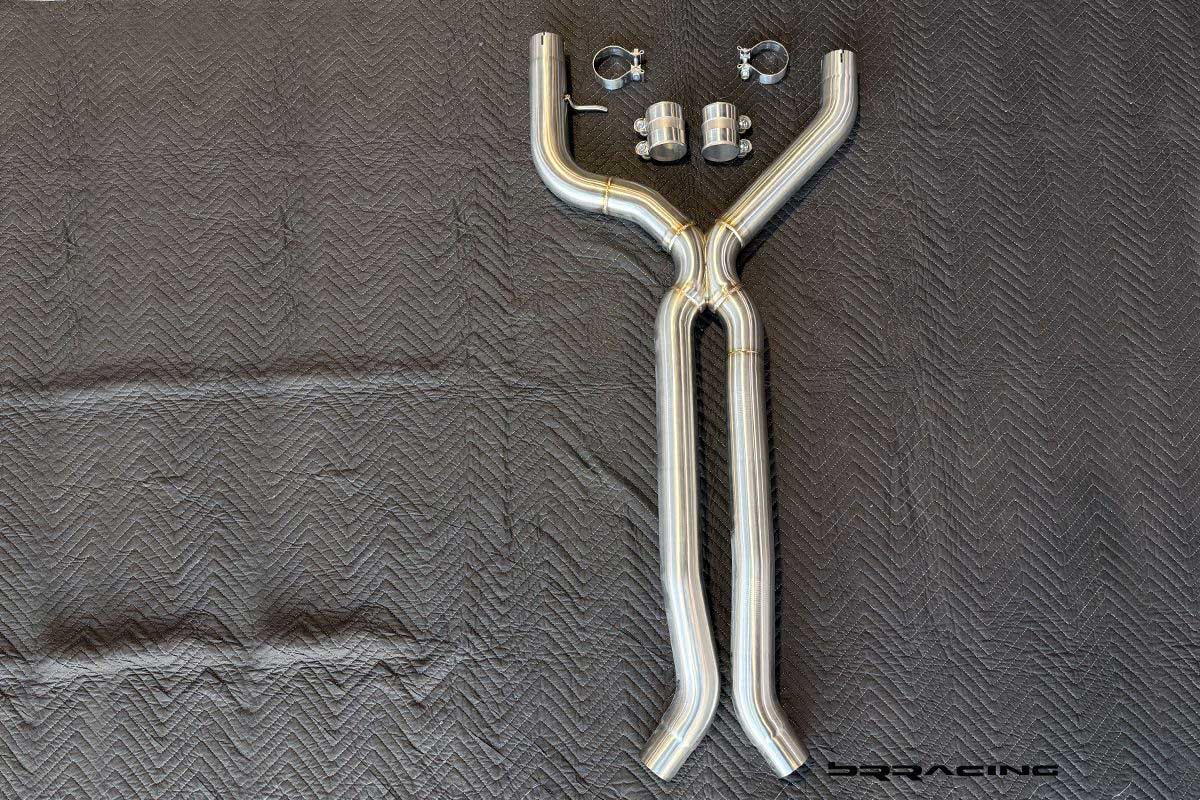
Here is the DINAN center pipe / X-pipe. Perfect fitment, does not introduce any drone, and slight improvement of engine performance. Slight increase of overall exhaust volume, and retains the rear valvetronic control.
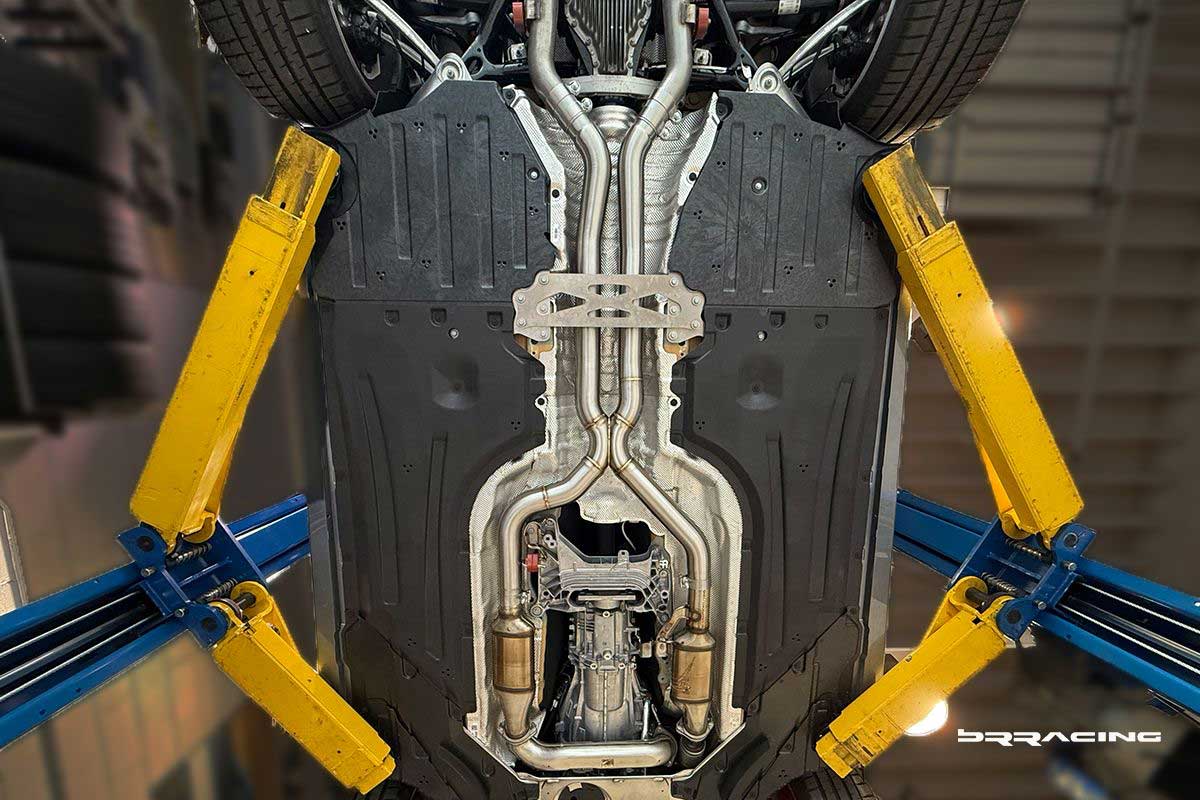
DINAN system installed.
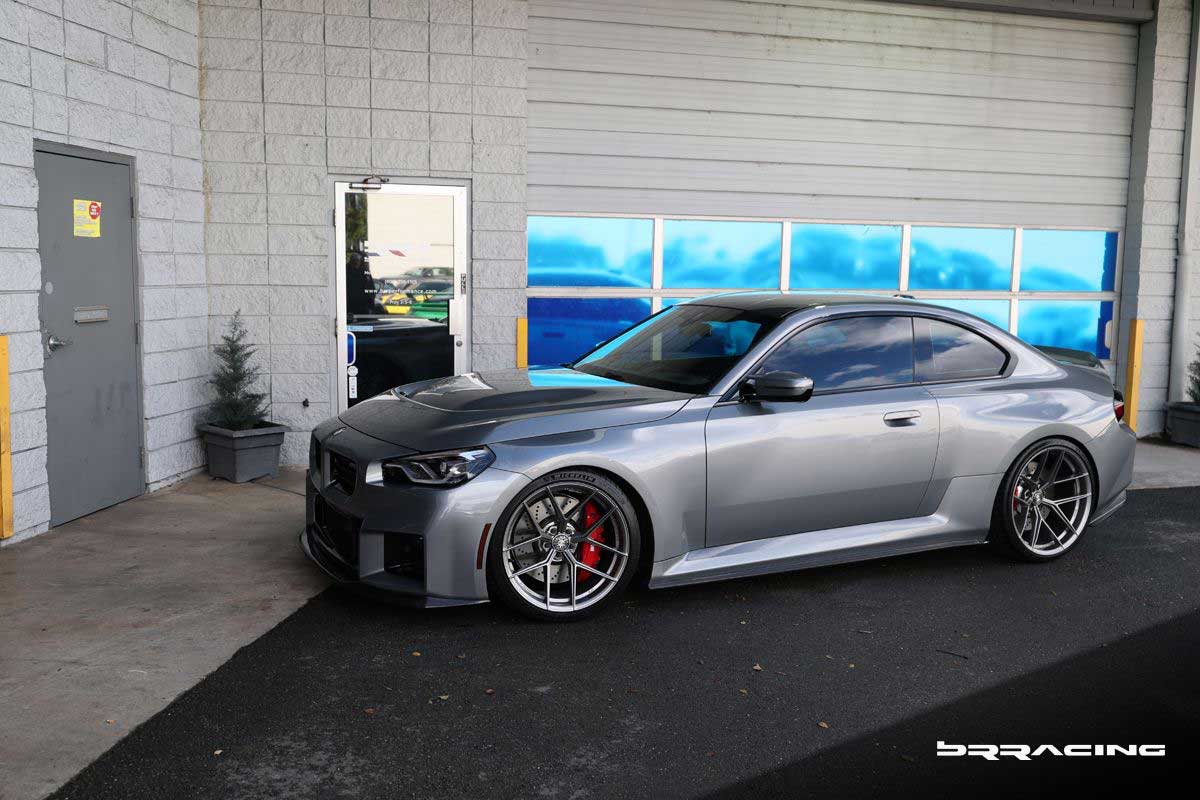
Well executed, achieved all the objectives, stunning good looks.
OTHER
You don’t have to go extreme, as both of the above customers did. You can just do minor upgrades, and make the BMW G87 M2 special in your own way. Here is another example of an G87 M2 that we did.
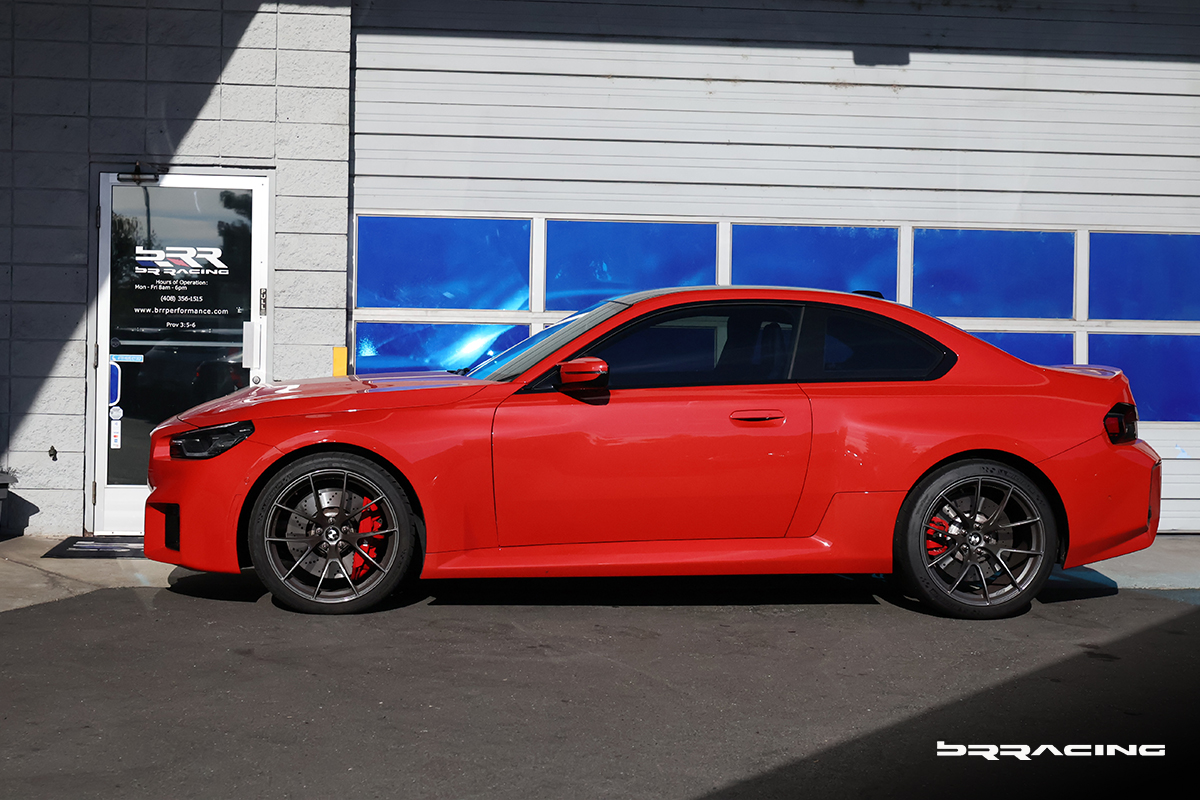
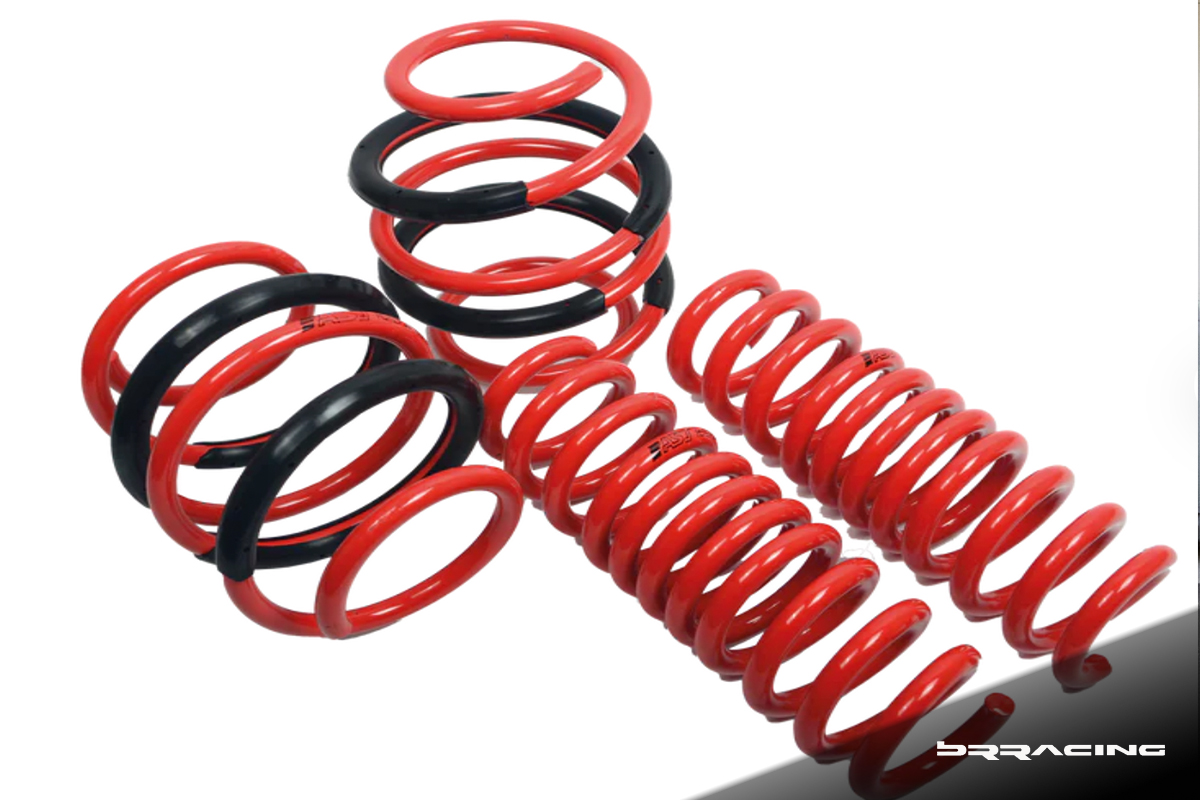
SUSPENSION
Same type of objective as in the street / show example documented above, we wanted to retain the EDC (electronic dampening control, or electronic shocks), and choose this time the AST sport spring kit.
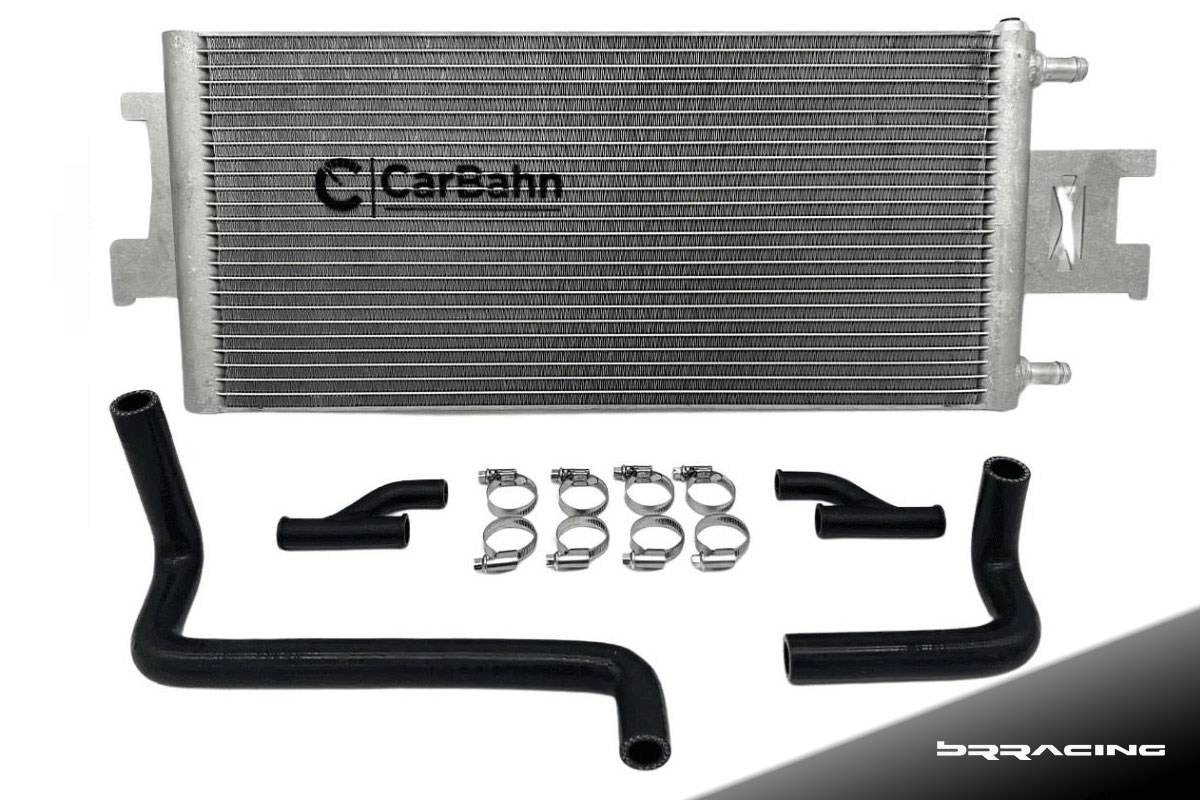
Other upgrades we’ve installed in other customers G87 M2 –
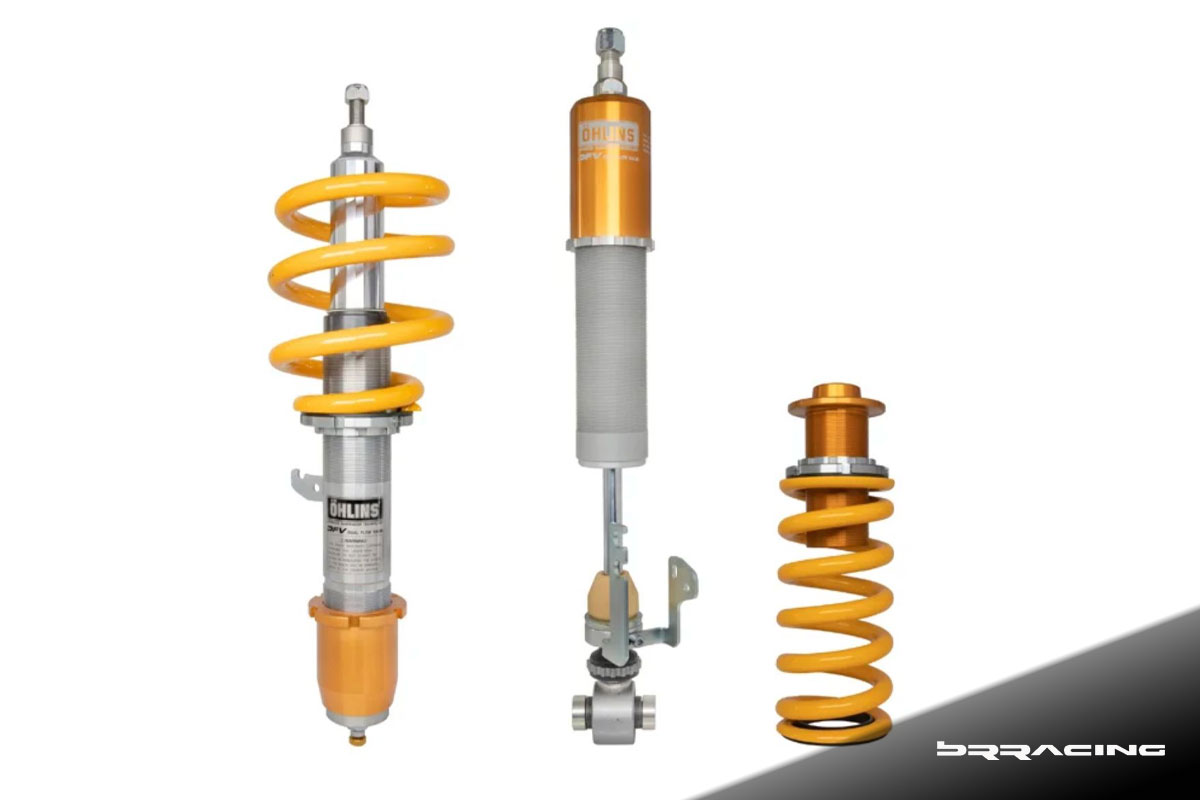
Other Suspension Upgrades
TALK TO US ABOUT WHAT WE CAN DO TO MAKE YOUR BMW M2 SPECIAL