GiroDisc Brake Rotor Upgrade
We could write an entire article on brake selection (and people do), because it turns into a near-religious argument: PCCB vs steel, BBK vs stock calipers, “pads fix everything,” etc. The reality is simpler—most modern cars already have very capable calipers. The limitation is usually rotor durability, pad selection, and long-term serviceability when you actually use the car hard.
That’s the lens we use when we recommend GiroDisc 2-piece steel rotors. Not because they’re “flashy,” not because they’re the biggest thing that fits behind your wheels—but because they solve the problems that actually show up in real life: consumable cost, brake pedal feel, in the case of OEM steel rotors – cracking, and the ability to keep your brake system working like a tool instead of treating it like a disposable part.
Below are the three most common situations where GiroDisc makes the most sense, and what you’re actually getting when you move to a 2-piece rotor platform.
First: what a 2-piece rotor really changes (and what it doesn’t)
A lot of brake marketing is built around “more stopping power,” but for most modern performance cars, you’re tire-limited long before you’re caliper-limited. In other words, the system can already activate ABS and stand the car on its nose. How fast it does that, or how quickly, is most due to the brake pad choice, not the rotor. However, the GiroDisc option may increase the overall diameter of the rotor, which increases the braking torque.
The real differentiators—especially if you do canyon or mountain driving, high-speed pulls into hard braking, autocross, or track days—are:
• Heat management and repeatability (does pedal feel stay consistent as temps climb?)
• Rotor life (wear and how quickly do you develop heat checking or cracks?)
• Pad compatibility (can you run the compound you actually need?)
• Serviceability (how expensive and annoying is it to keep the system healthy?)
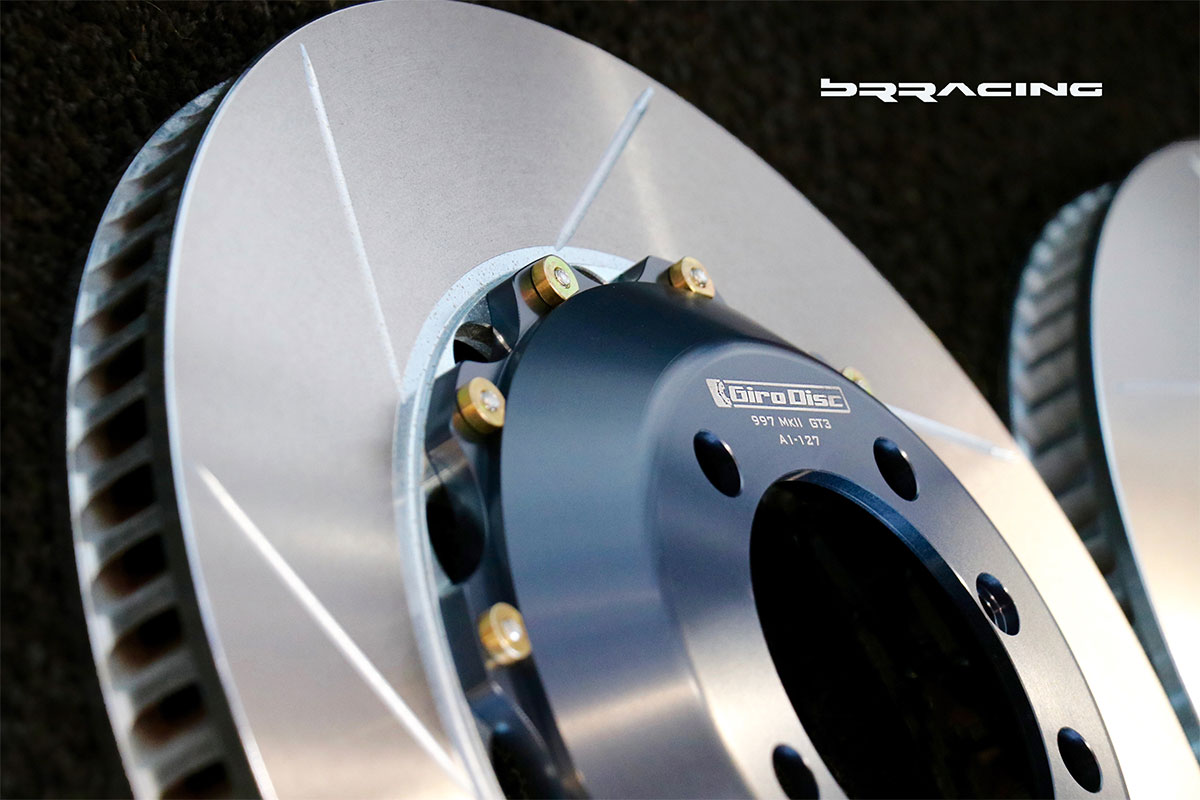
A 2-piece rotor separates the assembly into:
• a hat (the part that mounts to the hub)
• a friction ring (the wear surface the pad clamps onto)
That separation matters because it turns your brake rotor into a component you can service intelligently. Which leads to the three brake rotor scenarios –
OEM CCB (Carbon Ceramic Brake) → GiroDisc 2-piece steel rotors: make braking a normal and affordable consumable again
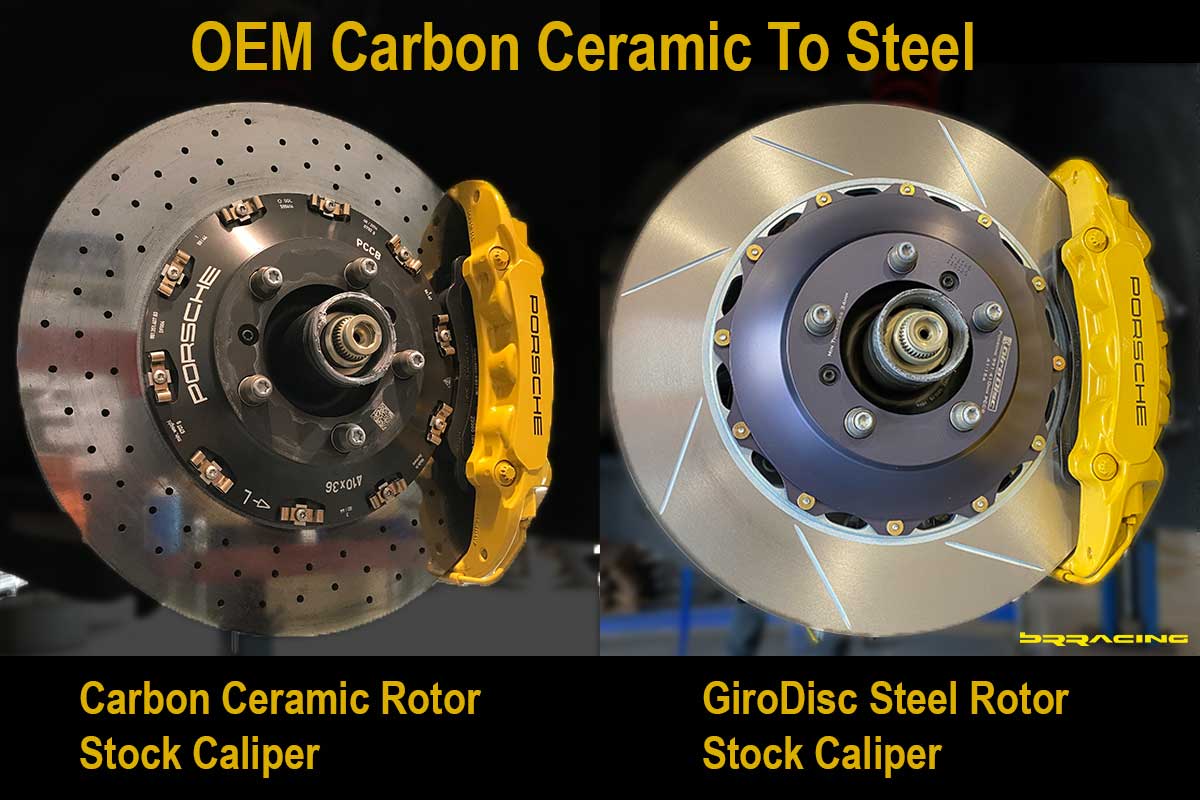
If you’re on PCCB (or any OEM carbon-ceramic system) and you actually use the car hard, the pain point is simple: carbon-ceramic rotors are phenomenal when they’re happy, but once you start treating them like wear items, it’s a very expensive way to learn brake management.
The GiroDisc path is essentially: keep the existing calipers and convert the rotors to a 2-piece steel setup so your system becomes:
• more pad-flexible (you can choose more brake pad compounds based on your driving rather than what’s “safe” or available for ceramics)
• more predictable in cost (pads and rotor rings become routine consumables again)
• easier to support long-term if you track the car or do repeated high-load braking
This isn’t “downgrading.” It’s converting to a setup that makes sense when the car’s usage shifts from “street impressive” to “actually gets driven hard.” There is even a case if you are just a normal street driven vehicle, and are going to own the car for more than 100k miles (the normal replacement interval for most CCB rotors).
If your CCB car sees:
• frequent canyon runs
• repeated threshold braking
• track days / HPDE
• sticky tires and higher brake energy
…steel rings become the practical choice, and a 2-piece design is what makes that choice sustainable. Conversely, you would need to get somewhere over 50 track days out of a set of CCBs to make them financially viable, but in all our customer tests, the most you normally can see if about 30-35 track day, which means staying with CCBs is nearly 50% more expensive.
The flip side of doing the swap from CCBs to steel, is that when the time comes to sell the car, you can put the CCBs that were pulled off back on the car, and tell the buyer that they have a set of brakes that will last them for over 100k miles of street driving…retains the sales value.
There is another benefit of the GiroDisc steel option vs the CCB…the pedal feel. Due to the nature of the friction surface of the CCB and the associated brake pad, the ability to do true “trail-braking” is very hard to do. The pedal feel is more like an “on / off” switch when braking hard and bleeding off pedal pressure. On the steel side, you have a much better modulation, and you have more brake pad friction choices.
The NET – save tons of money (we’re talking multiple thousands of dollars, and get brakes that are easier to use at the thresshold)
2) OEM steel brake rotors → GiroDisc 2-piece brake rotors: upgrade the part that takes the abuse
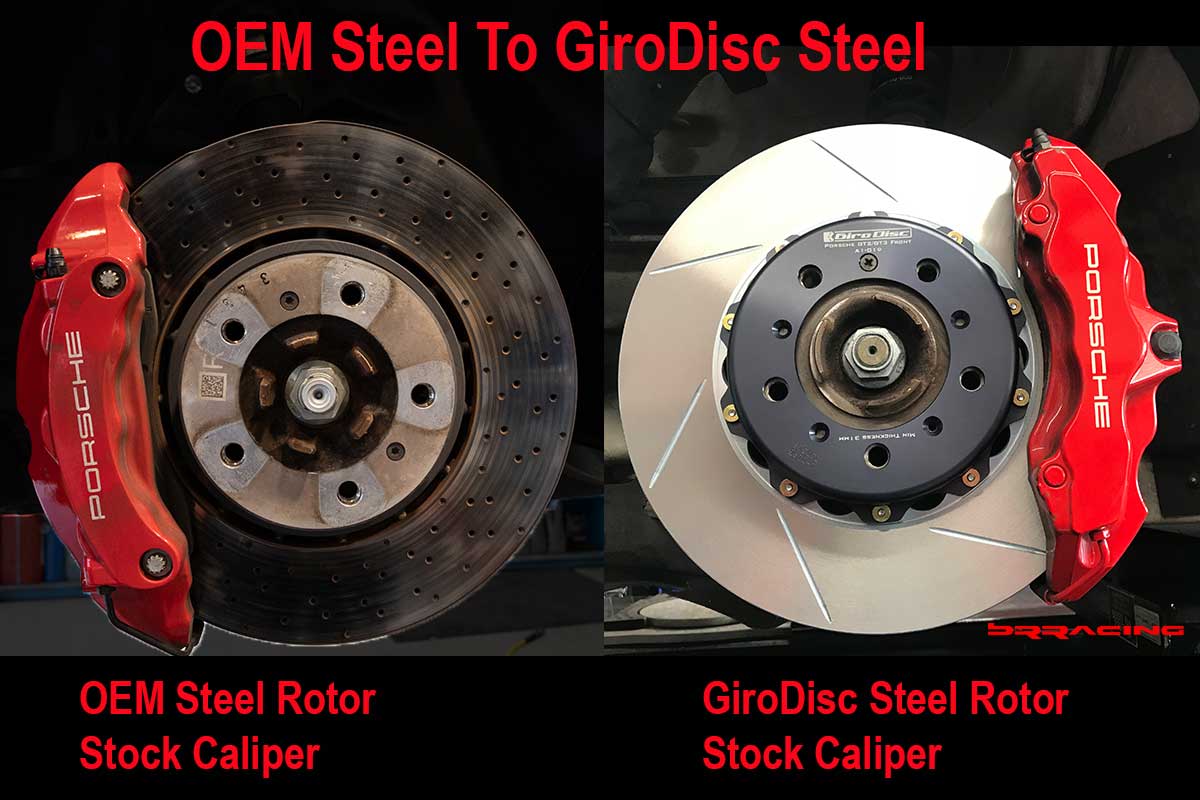
If you’re already on OEM steel, the move to GiroDisc isn’t about reinventing the whole brake system. It’s about upgrading the component that absorbs the punishment and dictates how often you’re doing maintenance.
Most “I need better brakes” complaints from performance street/track drivers aren’t because the caliper can’t clamp hard enough. They’re because:
• rotors heat cycle and start checking/cracking earlier than you’d like
• pedal feel changes as temps go up (especially when pads aren’t matched to the use case)
• the car is heavier/faster than people admit, so brake energy is high
• replacements are frequent and start feeling like a treadmill
A well-designed 2-piece rotor platform is typically the cleanest first brake upgrade because it preserves:
• OEM caliper fitment and function
• OEM-like packaging (wheels/clearances in the intended envelope)
• predictable service intervals
…but gives you a rotor solution that is built around real use, not “average customer commuting.”
This applies far beyond Porsche: modern BMW, AMG, Audi, Corvette, Camaro, Mustang, and plenty of performance SUVs/sedans that are simply heavy and fast enough to punish brakes.
We have seen the GiroDisc brake rotors last thru 3 or 4 sets of brake pads, whereas, the average OEM brake rotor is fully worn after just one set of brake pads.
The NET – longer life, less money, stronger
3) The big long-term benefit: replaceable rotor rings on GiroDisc 2-piece rotors
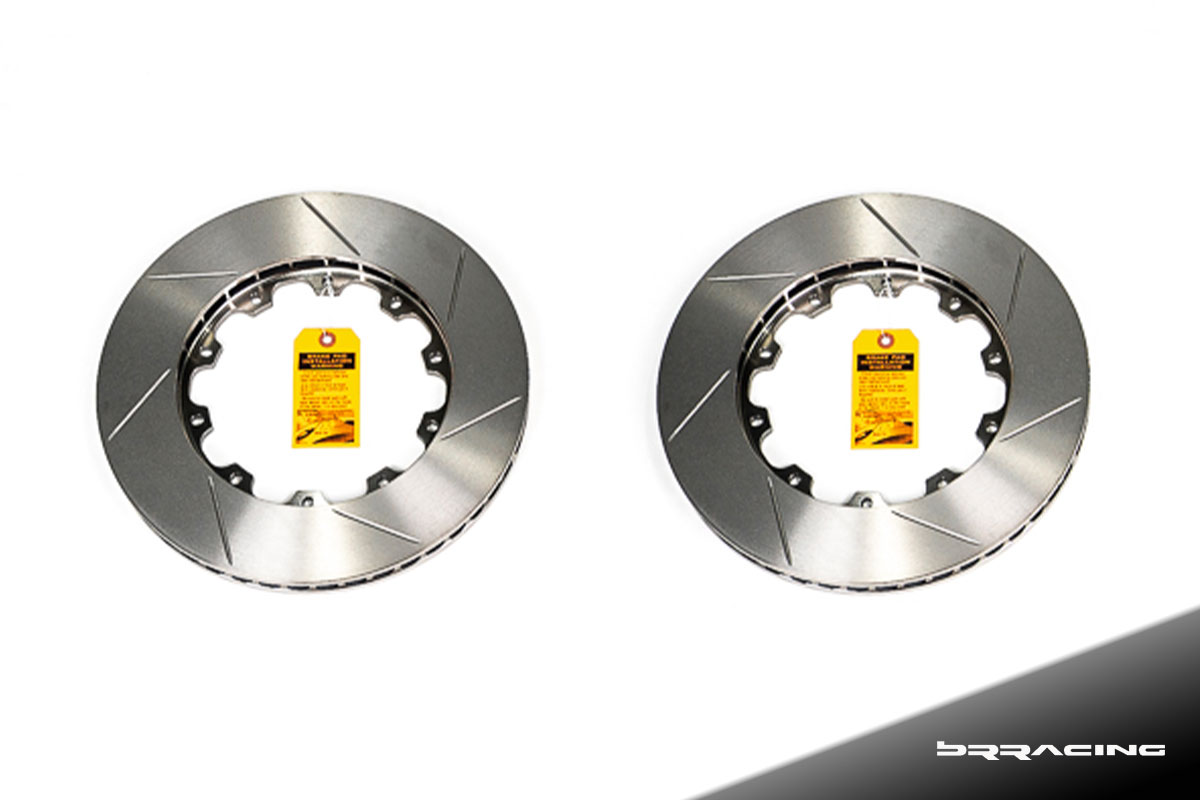
This is the feature that matters most if you keep cars for more than one season or you actually put brake heat into them.
With many one-piece rotors, once the friction surface is worn, cracked, or heat-checked, you’re buying the entire rotor again—every time.
With GiroDisc 2-piece rotors, the wear component is the ring. So when the friction surface is done:
• you replace rotor rings
• you reuse the hats
• you refresh the hardware as part of the ring replacement process
In ownership terms, this is the difference between:
• “I buy rotors repeatedly” and
• “I service rotors like a motorsport consumable system.”
Even if the upfront cost is higher than a basic one-piece replacement, the lifecycle cost and convenience can be substantially better if you drive the car the way it was meant to be driven. It also keeps your setup consistent: same hats, same fitment, same thermal behavior—just renewed friction rings when it’s time.
How we’d tell you to think about it (so you choose the right path)
Most people fit into one of these buckets:
Street + spirited
• You want durability, good pedal feel, and a rotor that isn’t constantly reminding you it’s a consumable.
Dual duty
• You want something that can take real heat occasionally without turning into a maintenance headache.
Track / HPDE
• You want a platform where pads and rings are predictable consumables and the system stays consistent across sessions.
The rotor is one pillar—pads and fluid still matter a ton—but moving to a 2-piece rotor platform is often the most rational step because it improves what most people actually struggle with: longevity and serviceability under heat.
Call to action (works for any platform, not just Porsche)
If you want the right GiroDisc setup for your car, send us:
• Year / make / model / trim
• Current brakes (OEM steel or OEM carbon-ceramic)
• Wheel/tire setup
• How you drive (street, canyon, autocross, track frequency)
We’ll point you to the correct front/rear rotor configuration and help you choose a pad direction that matches your real use—not internet arguments.
BRracing – steering you straight