Porsche 992 Turbo / Turbo S – Unleashed Potential
There has slowly been a blurring of the Porsche product lines. It’s supposed to be the GT cars (GT4, GT4RS, GT3, GT3RS…maybe a GT2RS), then the SUV types (Macan, Cayenne, Panamera, Taycan), and the sports cars (911, Boxster, Cayman). The GT cars were the hard core, top of the pyramid positioning. But, what has come of the 911 Turbo and Turbo S? There was a major change with the 991 model line for the Turbo / Turbo S, they not only were the normal street rockets, but with the significant change to the implementation of the 4WD system, they became cars that could be used for track cars or aggressive sports car type of driving. So, what is it? The cruiser type, the top of the line luxury model, or a track monster? Well, with the recent upgrades to the 992 platform, it can be any of those, and we will document those transformations here to show how the car can be evolved in to a truly amazing car for any of those purposes.
All Out APEX Prederator
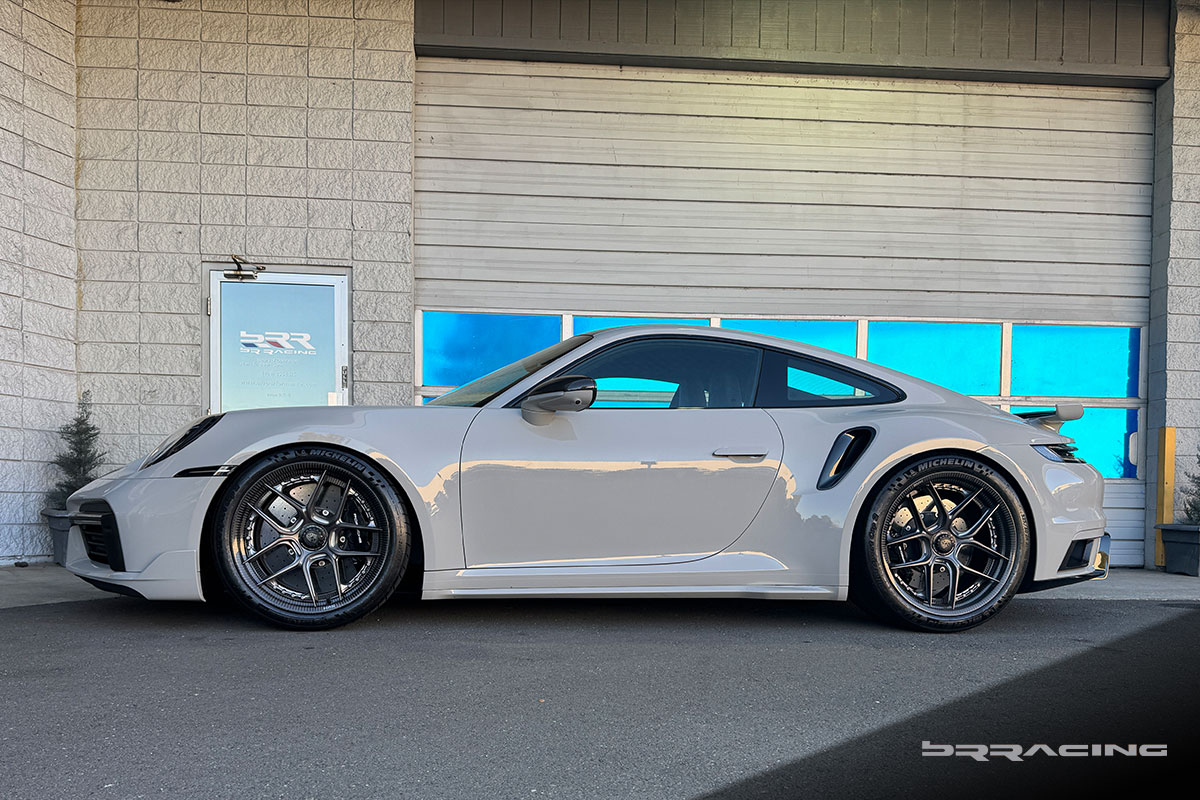
If the objective were to truly make the 992 Turbo S a full GT type car, capable of both aggressive mountain or canyon carving, and the track, then the normal elements need to be reviewed (power, suspension, weight, and exhaust).
SUSPENSION
The car comes with PASM, as most Porsche’s have now for nearly 16 years. And, the PASM shocks are exceptional. While many may still convert to a mechanical type coil-over solution, we don’t think you can beat the work that an electronic coil-over does. The ability to integrate multiple inputs (speed, steering angle, yaw, brake pedal, engine), and make changes to the valving hundreds, even thousands of times a second can not be beat. A mechanical shock just can’t do that. On a fully adjustable mechanical shock, you can set compression, rebound, maybe even “blow off”, but how does it know that you are trail braking into a corner, and you want to change the compression on the right front, rebound on the left rear as the trail braking progresses? A mechanical shock can not. So, we are not building an all out track car, but upgrading where opportunities exist. Where do they exist in the Turbo / Turbo S suspension? In the core suspension and geometry itself. So, out with all the stock suspension arms, links, bushings and in with the best there is.
Front Suspension
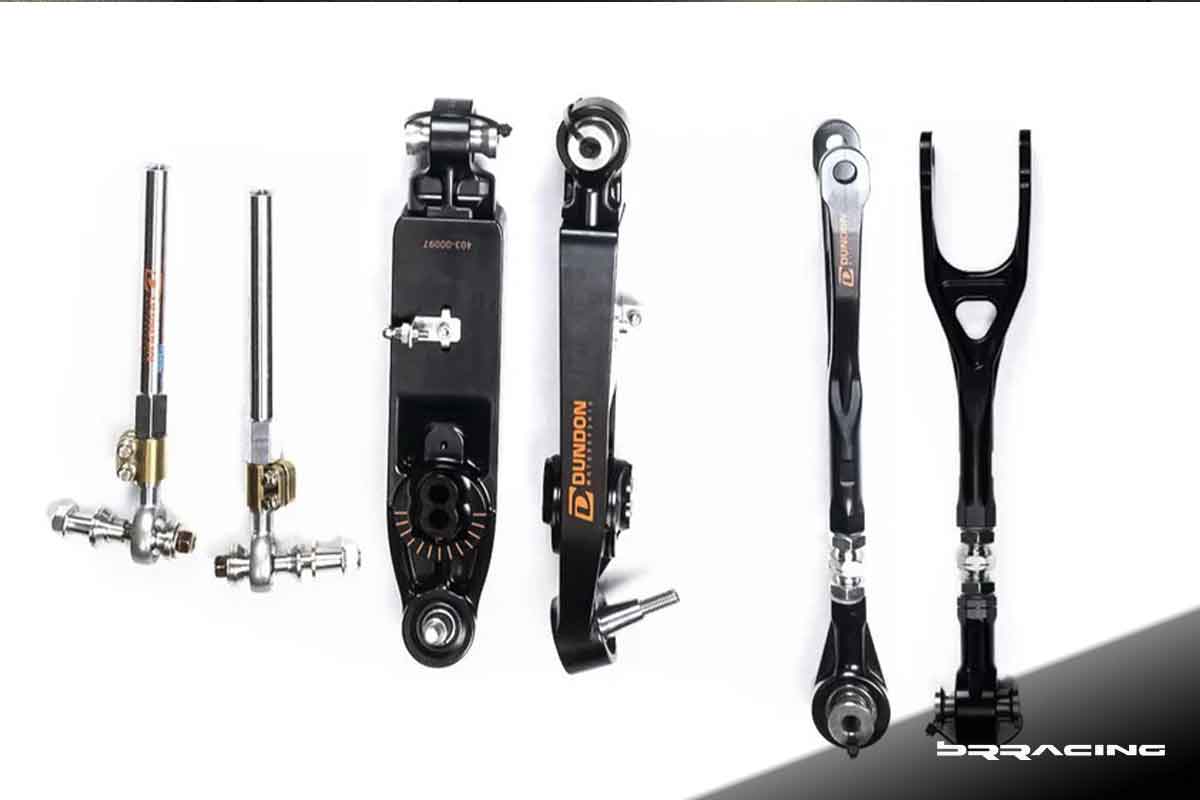
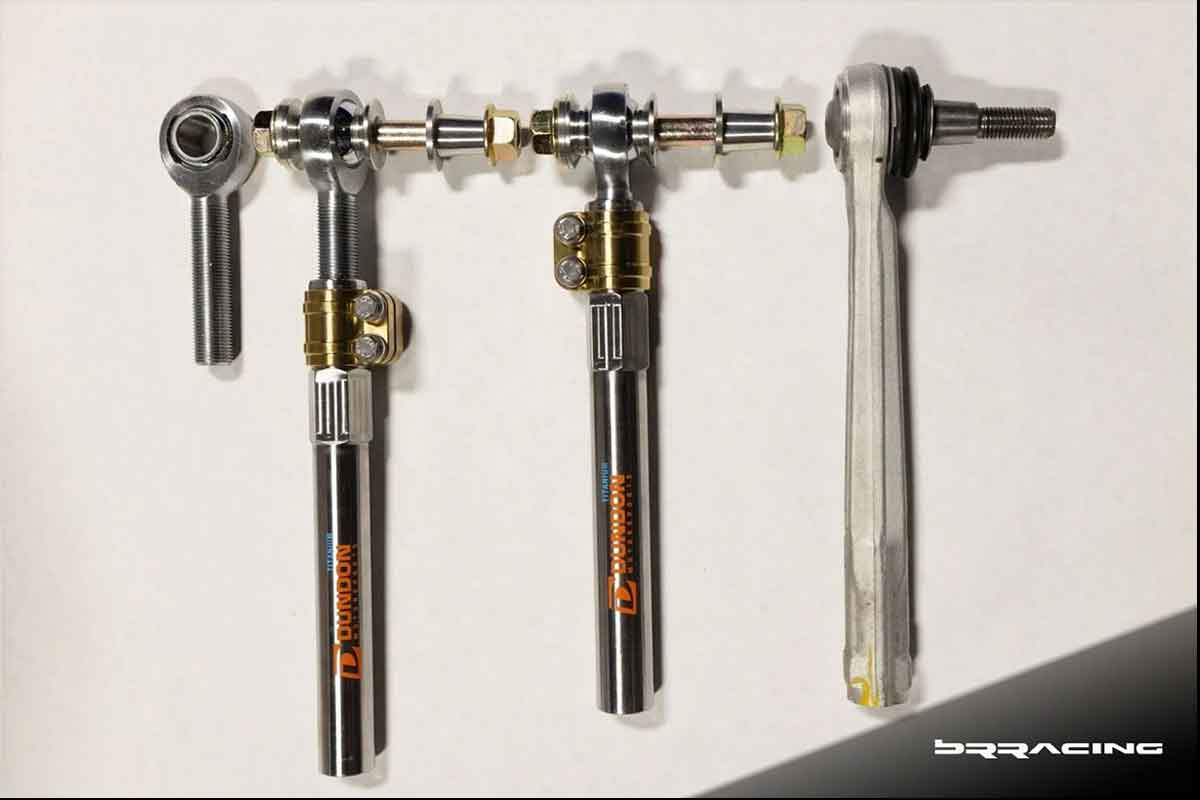
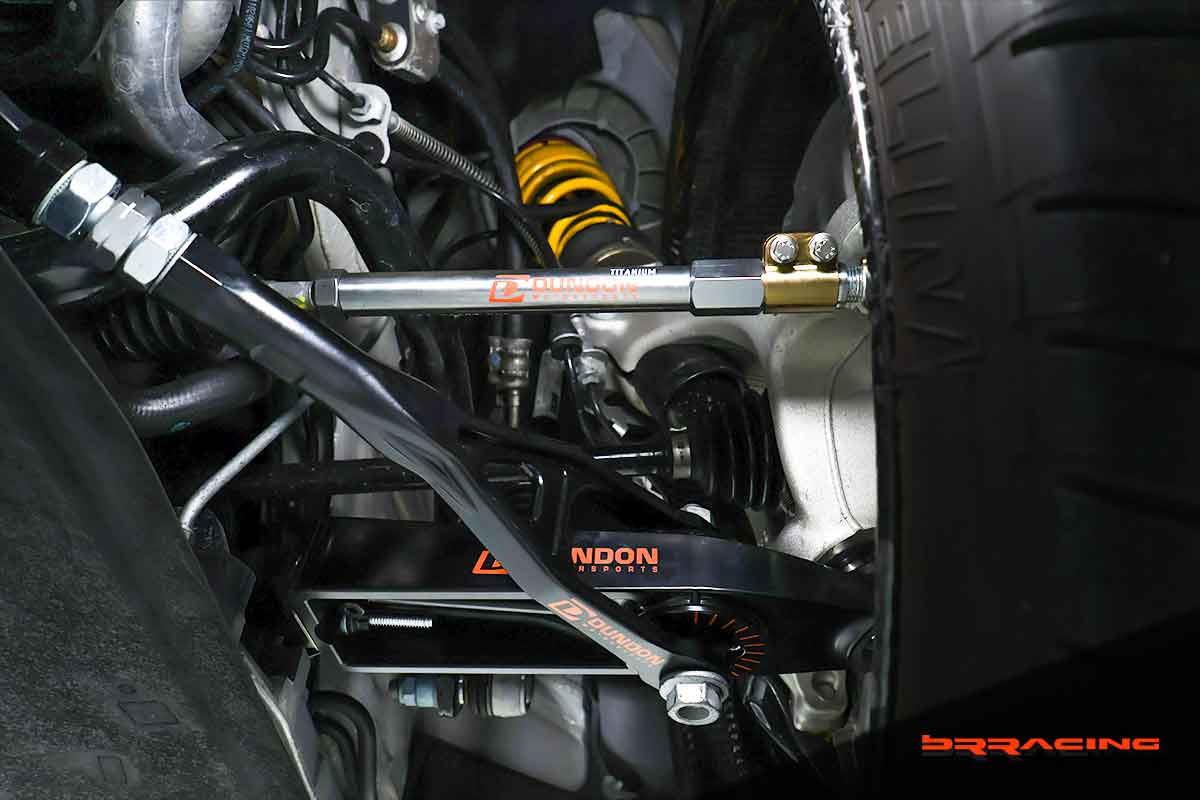
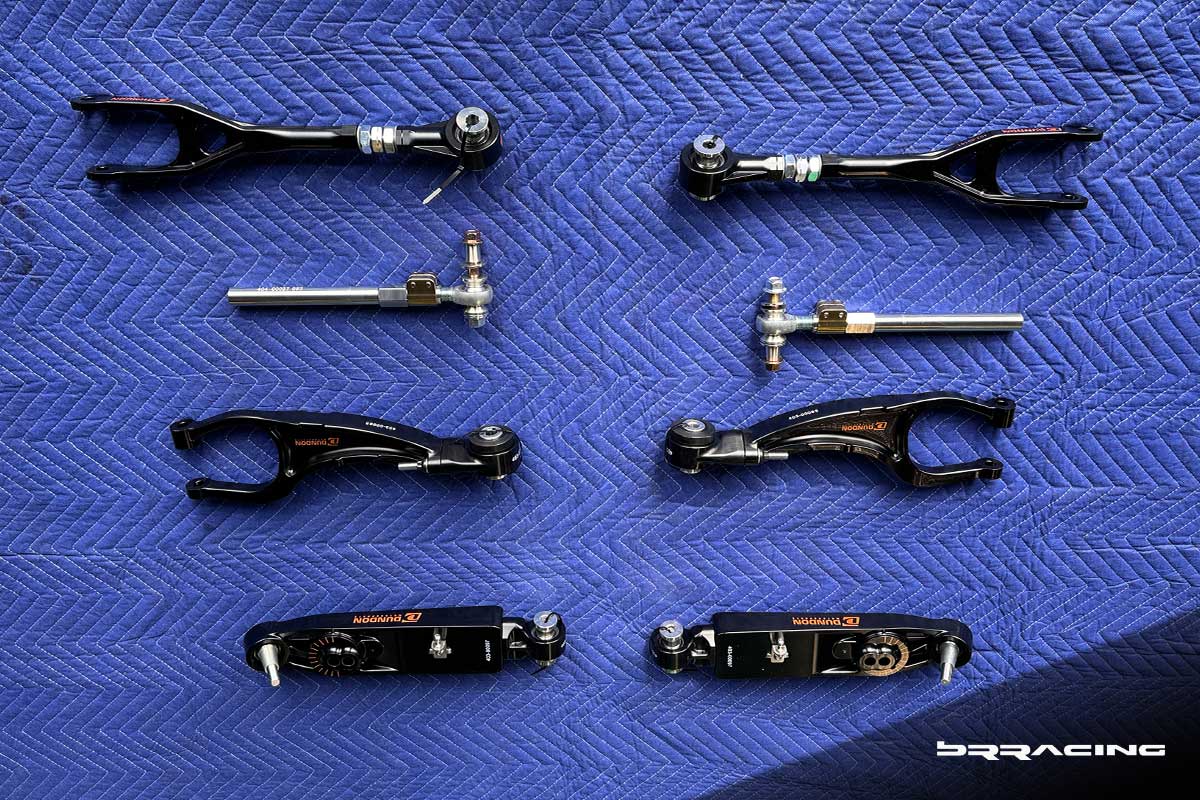
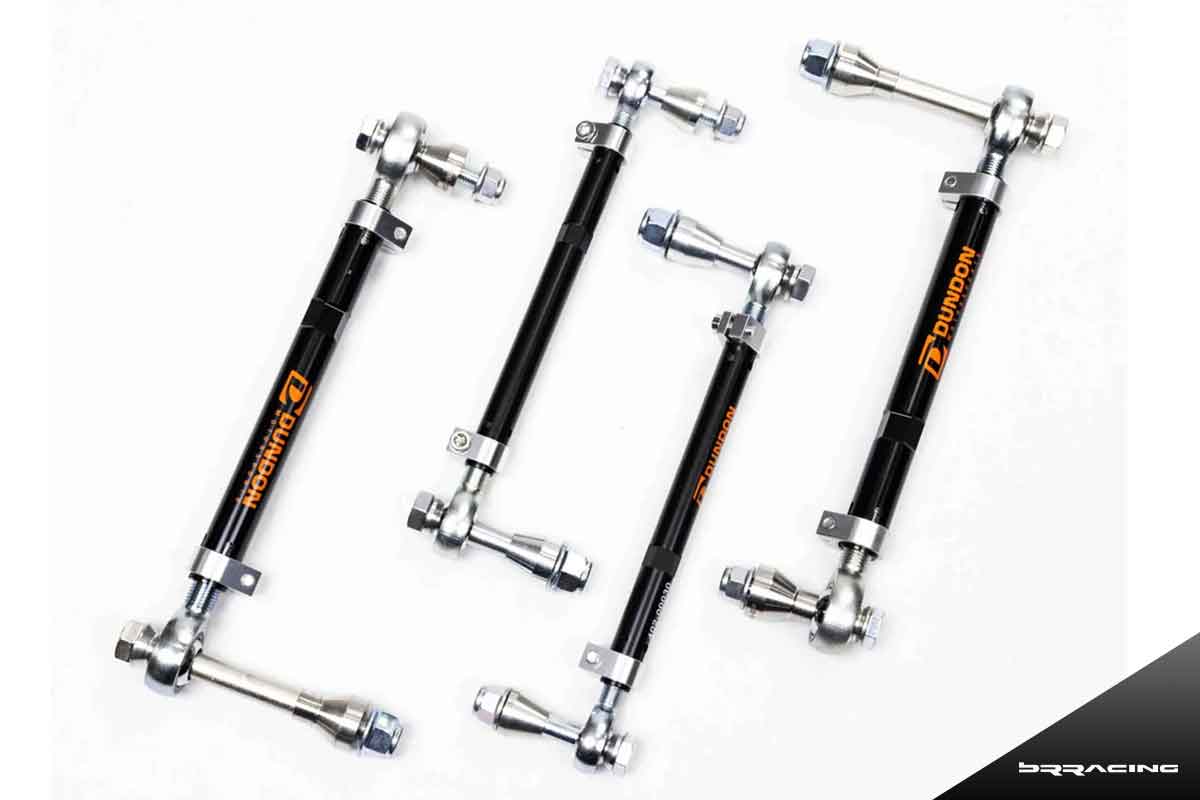
Front lower control arm. Upgrade the inner bushings, add an adjustable, solid thrust arm bushing. Front thrust arm / tension strut – upgrade to one that is fully adjustable (for geometry, alignment), upgrade the bushings. Front steering tie rods – upgrade, make lighter, incorporate proper bump steer adjustability, and upgrade the bushings. Sway bar end links – make adjustable for proper load or pre-load, upgrade bushings to eliminate any slop or play.
Rear Suspension
Rear lower control arm. Upgrade the inner bushings, upgrade the outer bushings in the hub / upright. Upgrade the upper links (solid, monoball type bushings). Sway bar end links – make adjustable for proper load or pre-load, upgrade bushings to eliminate any slop or play. Keep the active rear steering.
(Image shown below is the front and rear package, but also shows the inclusion of the rear main lower control arm)
Front and Rear Adjustable Sway Bar End Links
Springs
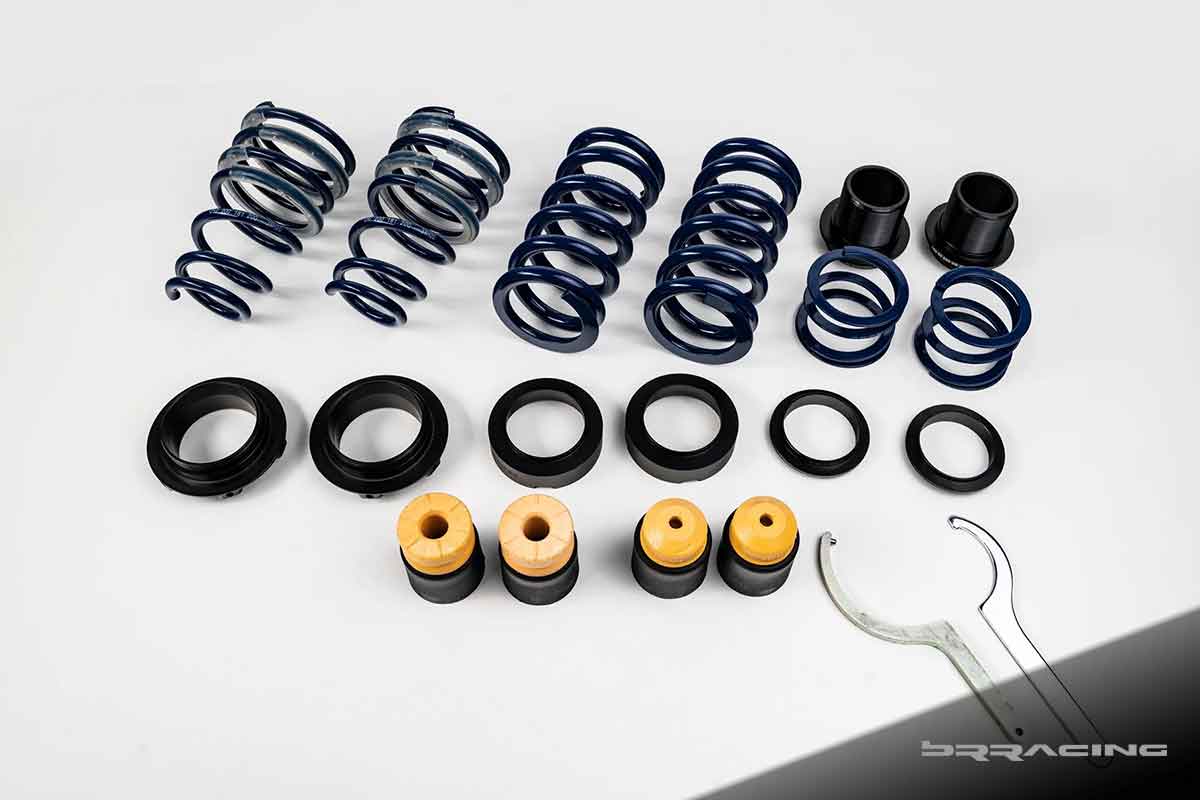
As mentioned before, we didn’t see the need in these cases to upgrade the shock, but that does not mean that we are leaving the springs alone. Our favorite solutions here are either the TechArt “height adjustable” spring kit (HAS), or the VF Engineering “height adjustable” spring kit (HAS). First, we would guide everyone to consider a “height adjustable” spring kit, or HAS kit, if springs are ever being considered. Since the labor to replace springs is not trivial, if you are going to replace the springs, replace them with a solution that offers coil-over like height adjustability. A HAS kit does just that. Then add in a dual rate spring set (not just a replacement linear rate (meaning the same rate) spring), but one that has a dual personality. Soft for cruising, commuting, normal driving and a higher, stiffer spring rate when cornering. For Phase 1 for this car, we choose the TechArt Height Adjustable Spring (HAS) kit seen below.
POWER
Several avenues that can be pursued on the Turbo / Turbo S to pursue more power. One side is engine power itself (software tune, turbos, intercoolers, inlet pipes, return pipes, intake, plenum), the other side exhaust. For this car, Phase 1 was to include a software tune (biggest bang for the buck), and exhaust (both power, sound, and weight savings).
SOFTWARE
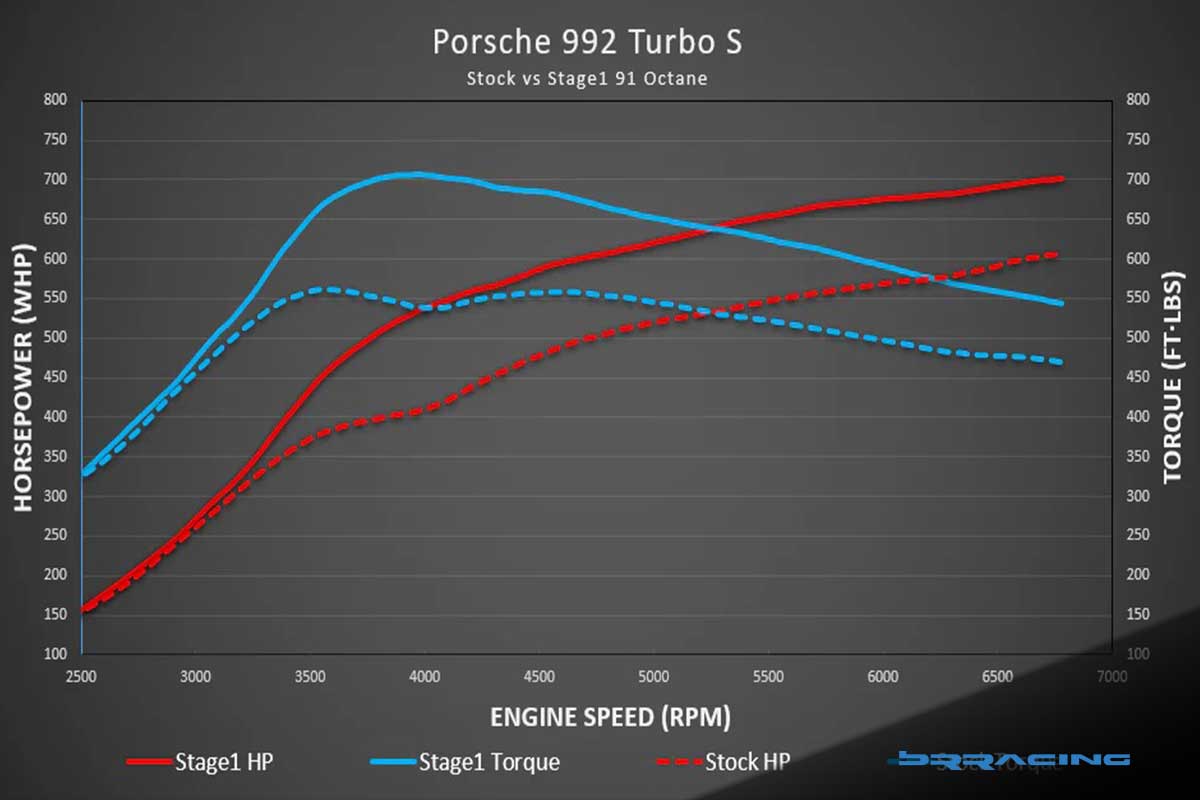
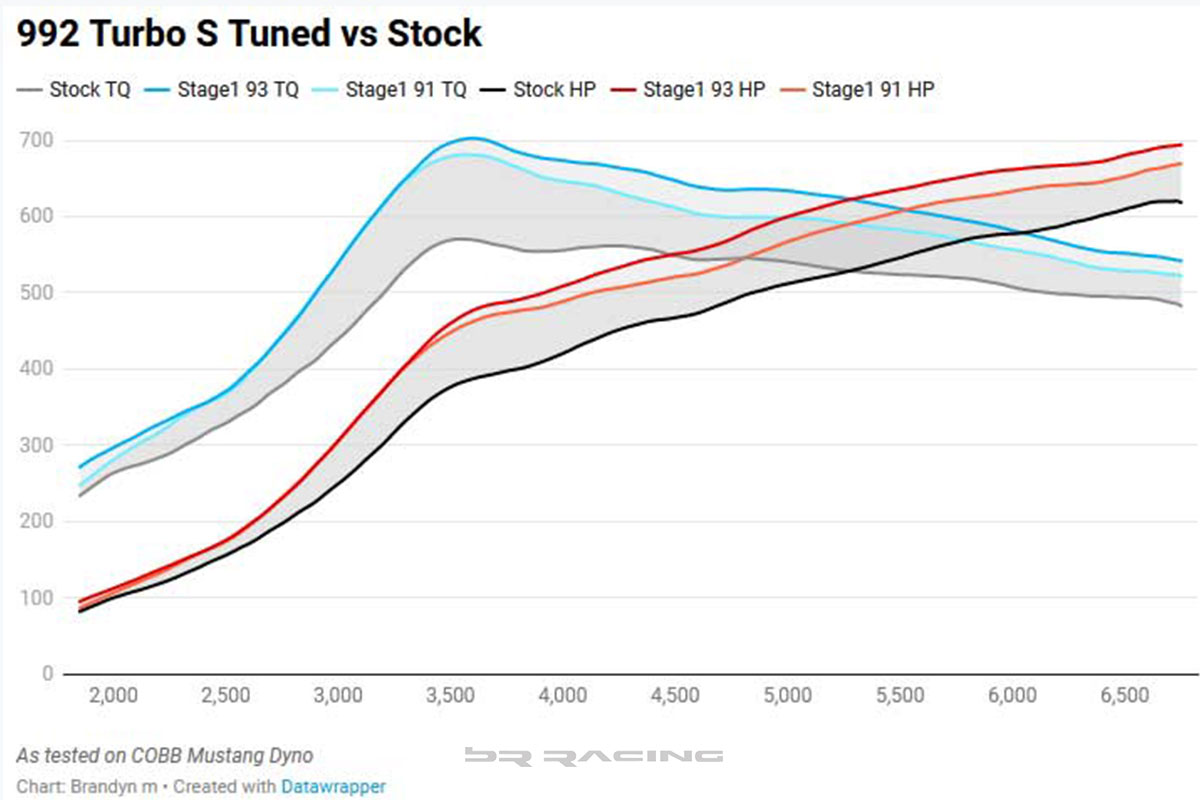
Two major players in this market – Cobb (AccessPort) and M Engineering. Given the choice for exhaust, we knew there was an existing software solution for this car from M Engineering that also leveraged the exhaust choice (see more below). This project we implemented a Boden Titanium rear exhaust, and upgraded Sport catalytic convertors, therefore, we wanted a software tune that would leverage that. This is what we got – (M Engineering, Stage 1, 91 octane). Quite an amazing leap in power from just a simple software upgrade.
Exhaust
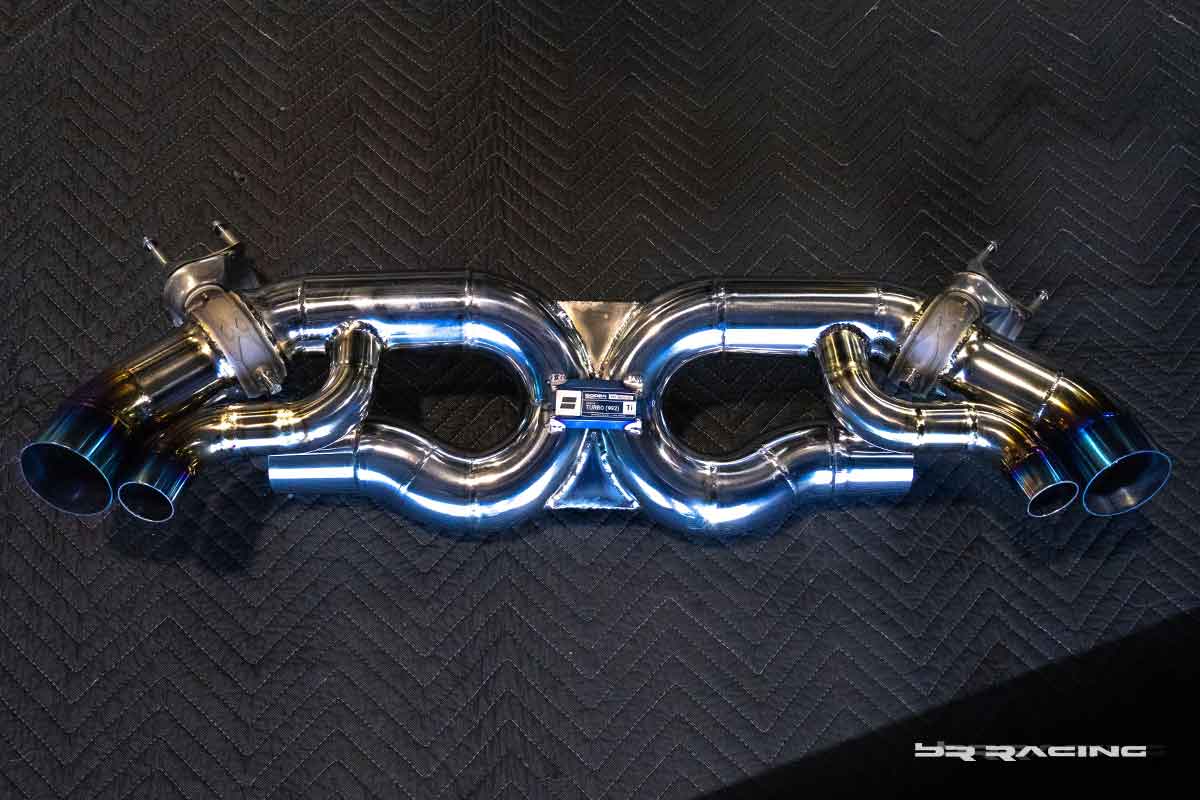
There are lots of exhaust options out there. We typically will provide a list of manufacturers that we have direct experience with relative to fitment, quality, sound. The next basic question is relative to cost vs weight. Do you want a stainless steel version (long life, lighter than stock) or a Titanium version (very light weight, usually a little louder tone, not as long lasting as the stainless steel). The objective here was more performance and an aggressive sound. Evaluated all the normal exhaust players (SOUL Perf, Armytrix, Kline, Tubi, Akrapovic, and Boden), and the customer selected the Boden Titanium version, along with an upgraded “sport cat” catalytic convertor. Love the fit, love the look, love the sound, and indeed, it is very light weight.
Boden Titanium Rear Center Exhaust
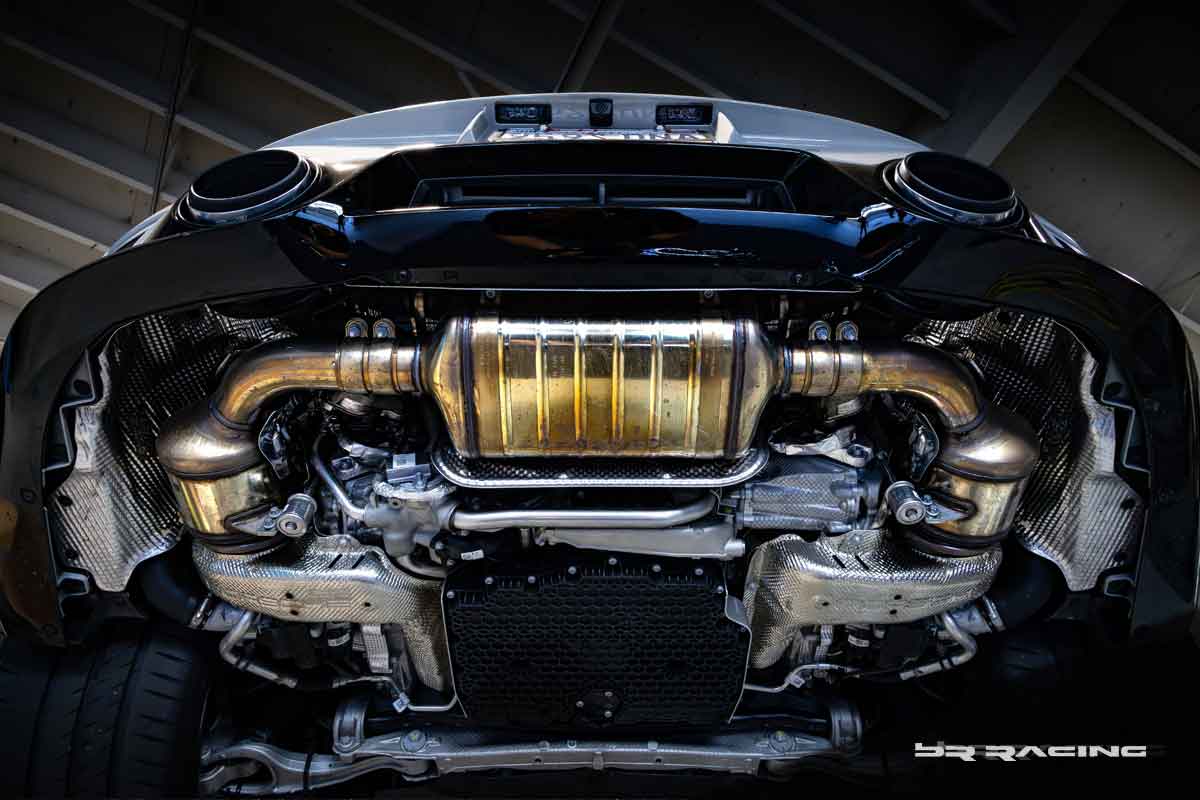
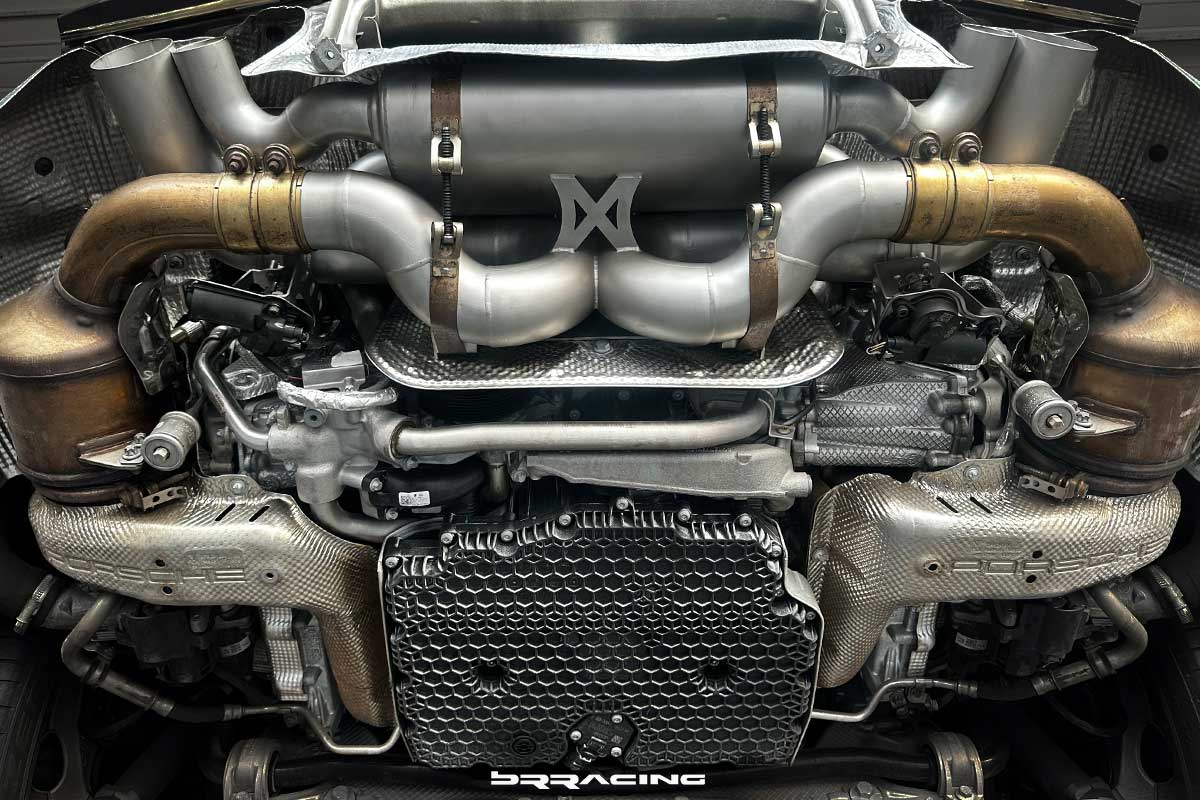
Stock exhaust (cats and rear center exhaust) before upgrades –
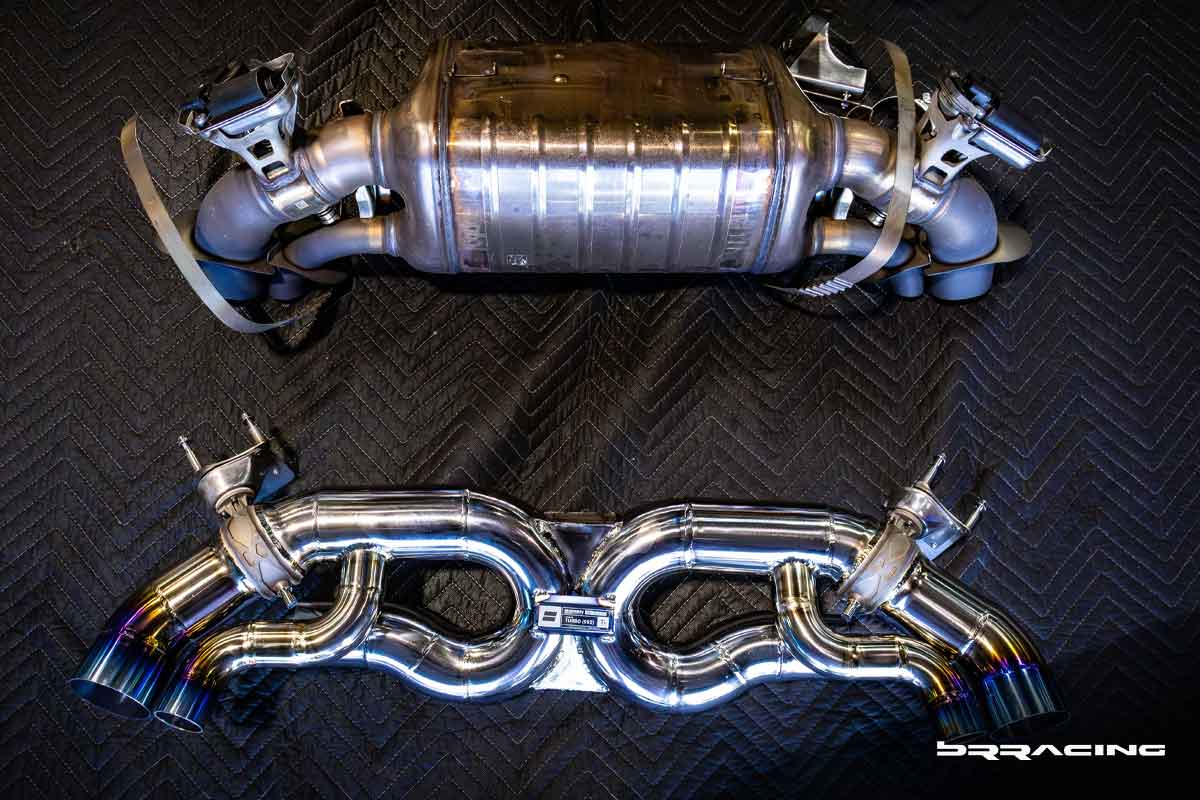
Below, stock center exhaust muffler vs the new Boden Ti center exhaust (notice, both are valvetronic) –
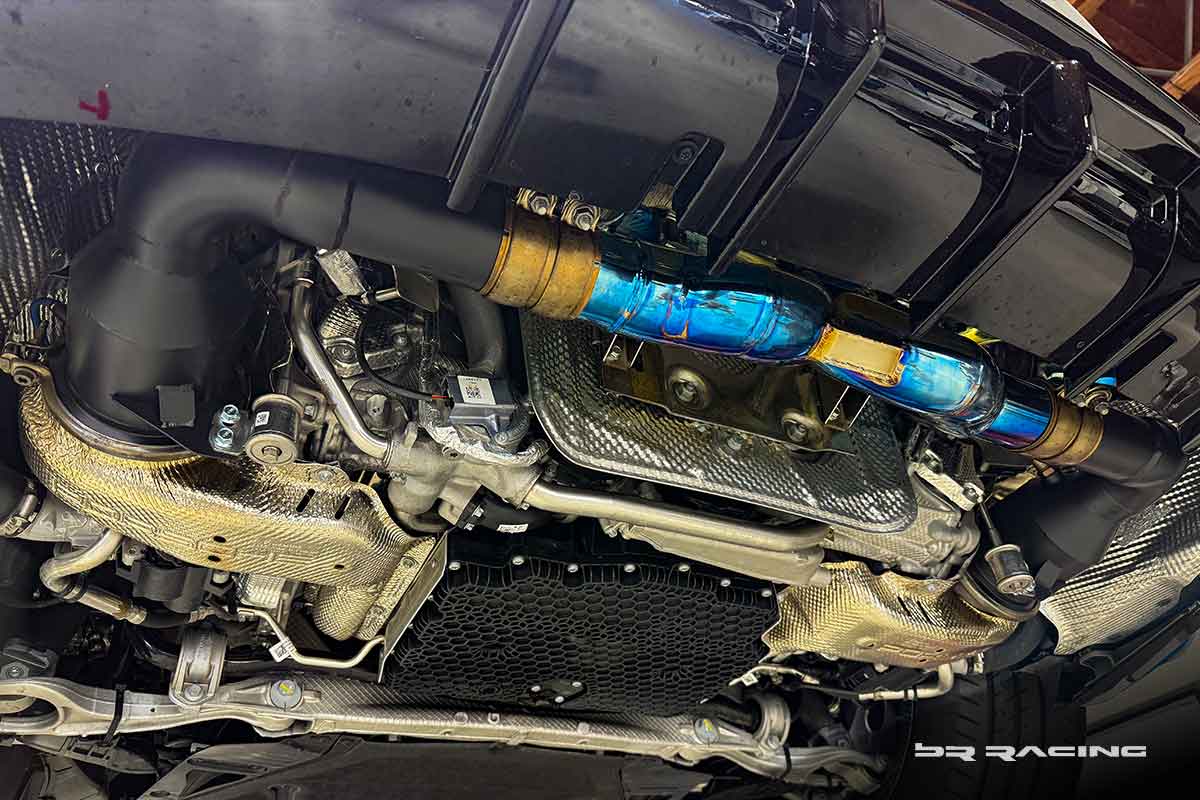
Final implementation – new Boden Ti exhaust (now w the pretty “bluing” color from use), and the two new “sport” catalytic convertors.
Wheels / Weight
Again, with the driving objective to gain performance, that can normally come in two ways. More power, or less weight. In regards to the wheels, we’re not going to get more power, so we desire to get the lightest wheels possible. Wheels come in four flavors – cast, flow formed, forged, or carbon fiber. The trade off w those is usually price, the lighter, the stronger the wheel, the more expensive. For this car, the budget was not the constraint, therefore, the option of carbon fiber wheels was a valid choice. In our view, the best wheels out there are made by HRE, and HRE has a full carbon fiber product line.
The wheels are carbon fiber barrels, mated to forged aluminum centers with titanium fasteners. You can see that in every element, the objective is to lower weight without sacrificing strength, elegance.
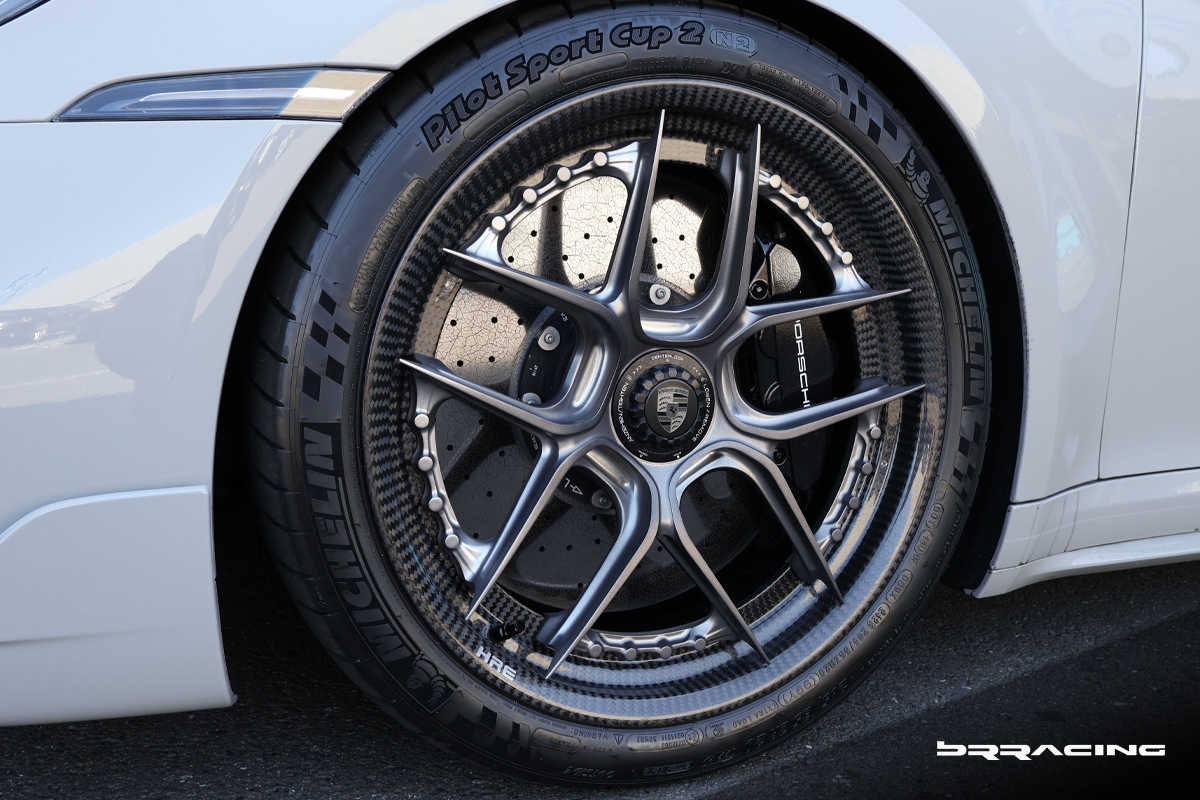
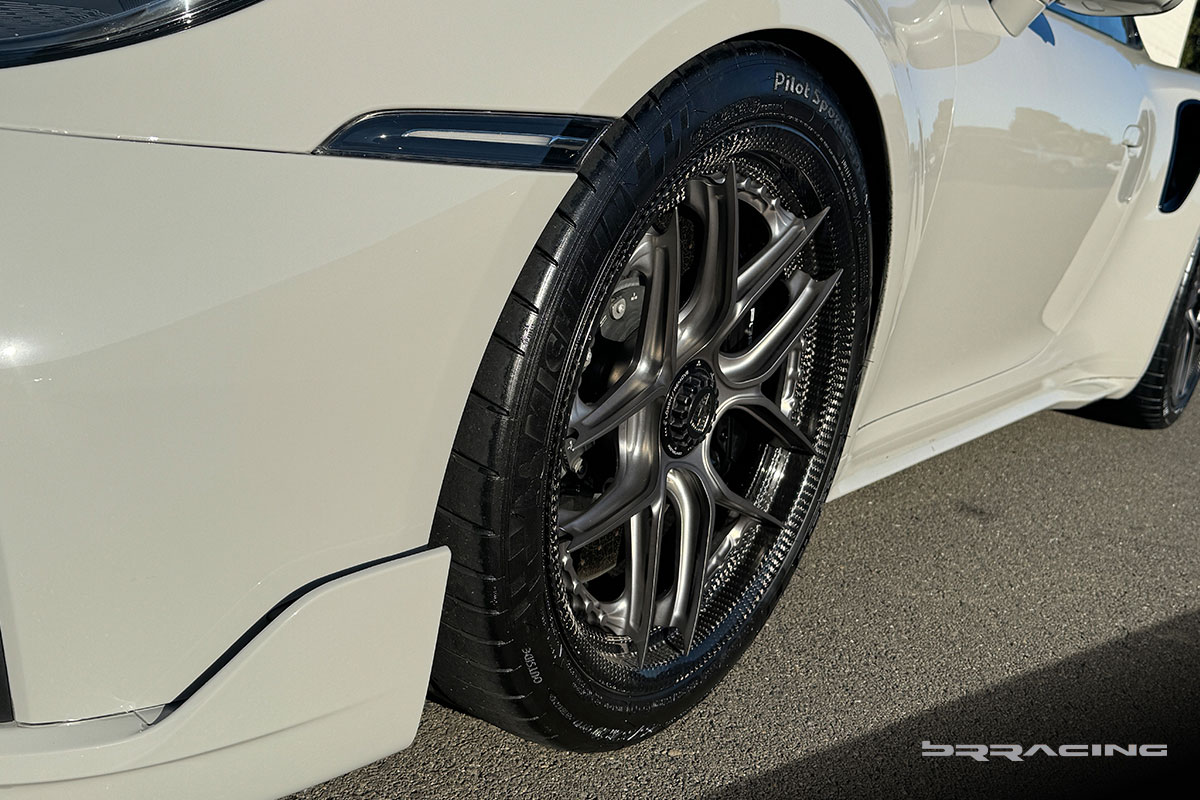
Stay tuned, more to come for this car. We can always make it better, faster, better looking, better handling, better sounding….
Street Monster
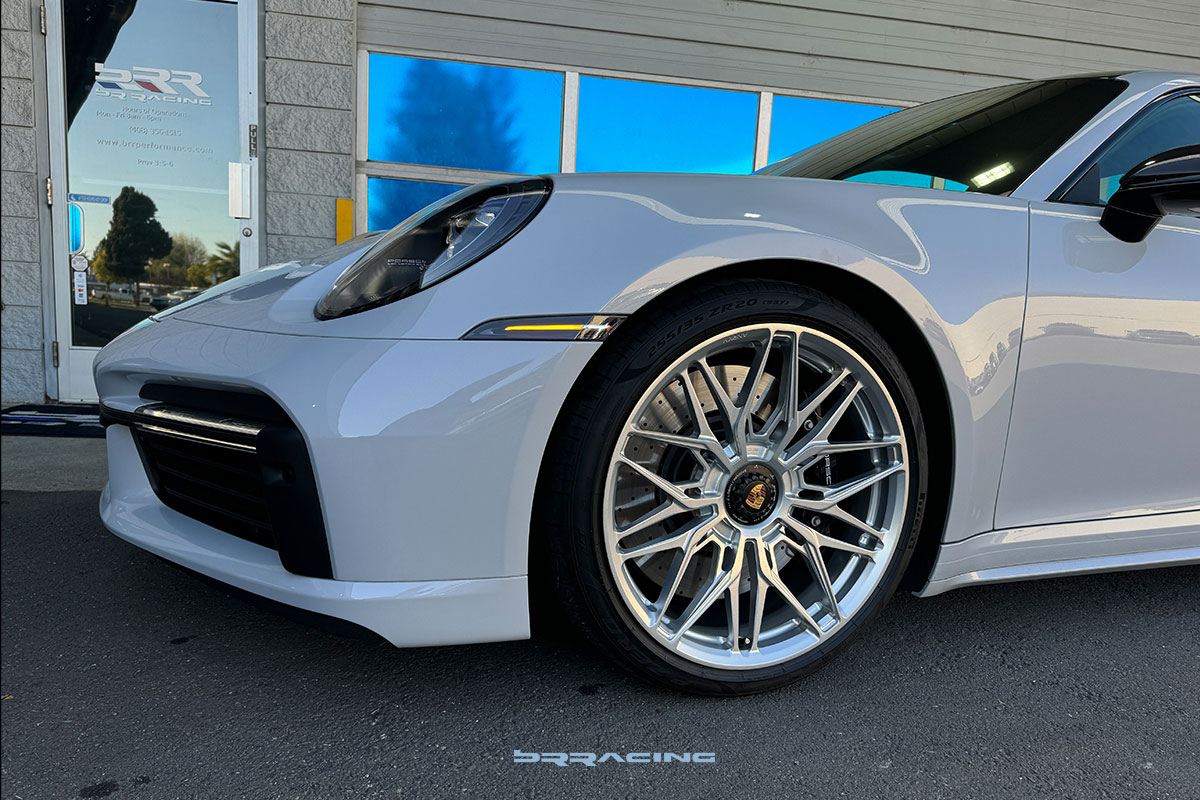
Unlike the prior project, this project was to make the car (Porsche 992 Turbo S) look more aggressive, improve the aesthetic of the wheels look, make it sound better, and make it FAST. Therefore, new ANRKY wheels (stock diameters, a little wider widths), new exhaust, new software tune for power, new suspension height adjustable springs for both better handling and better looks.
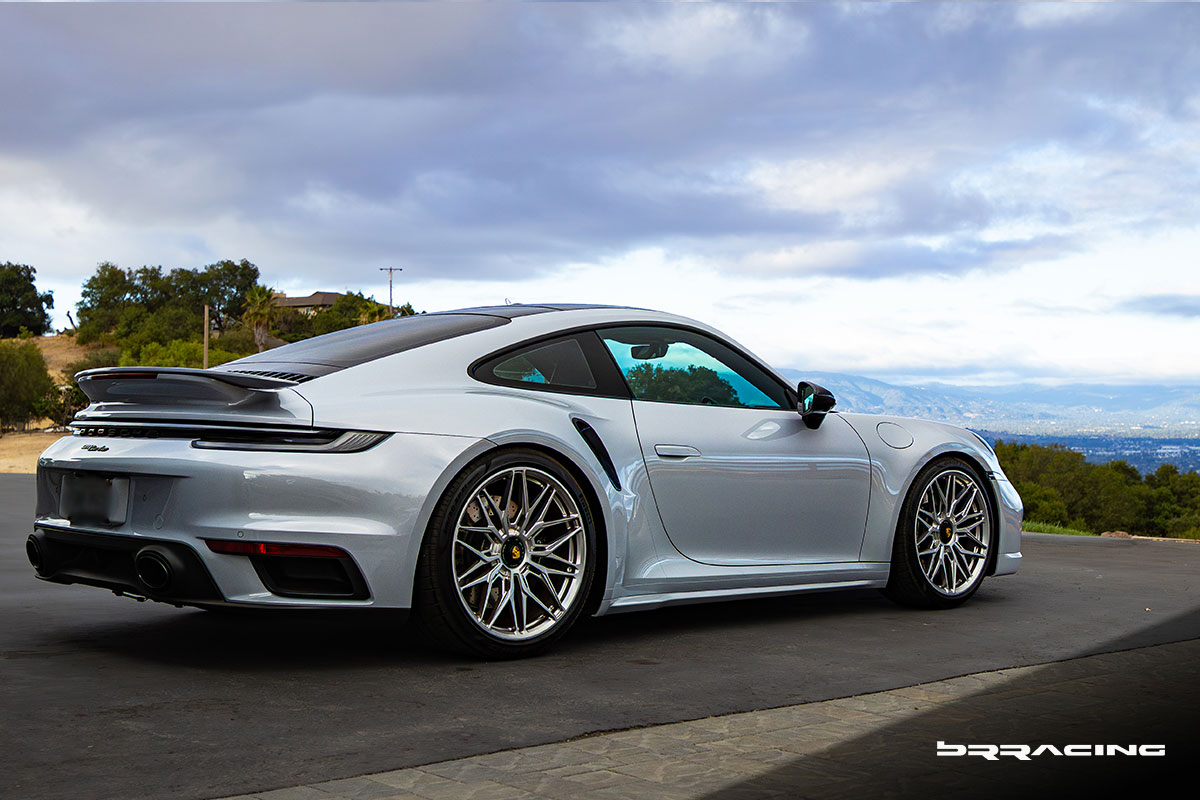
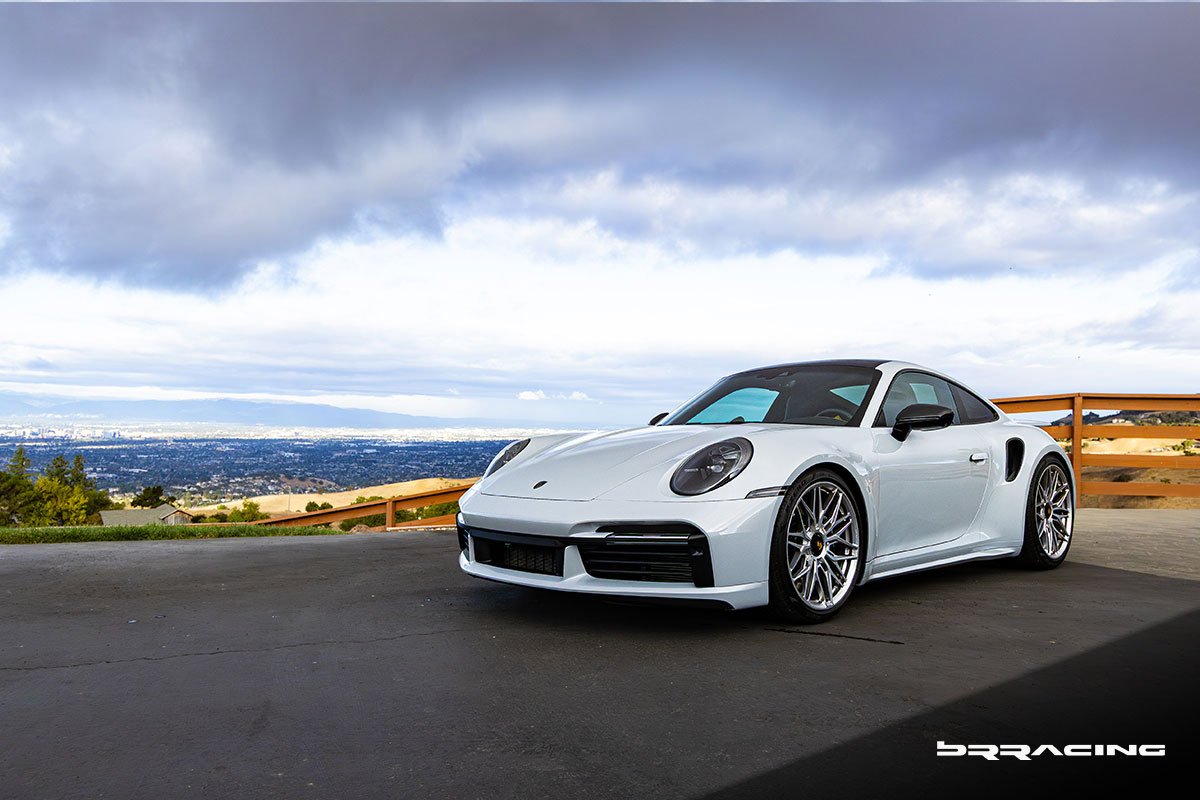
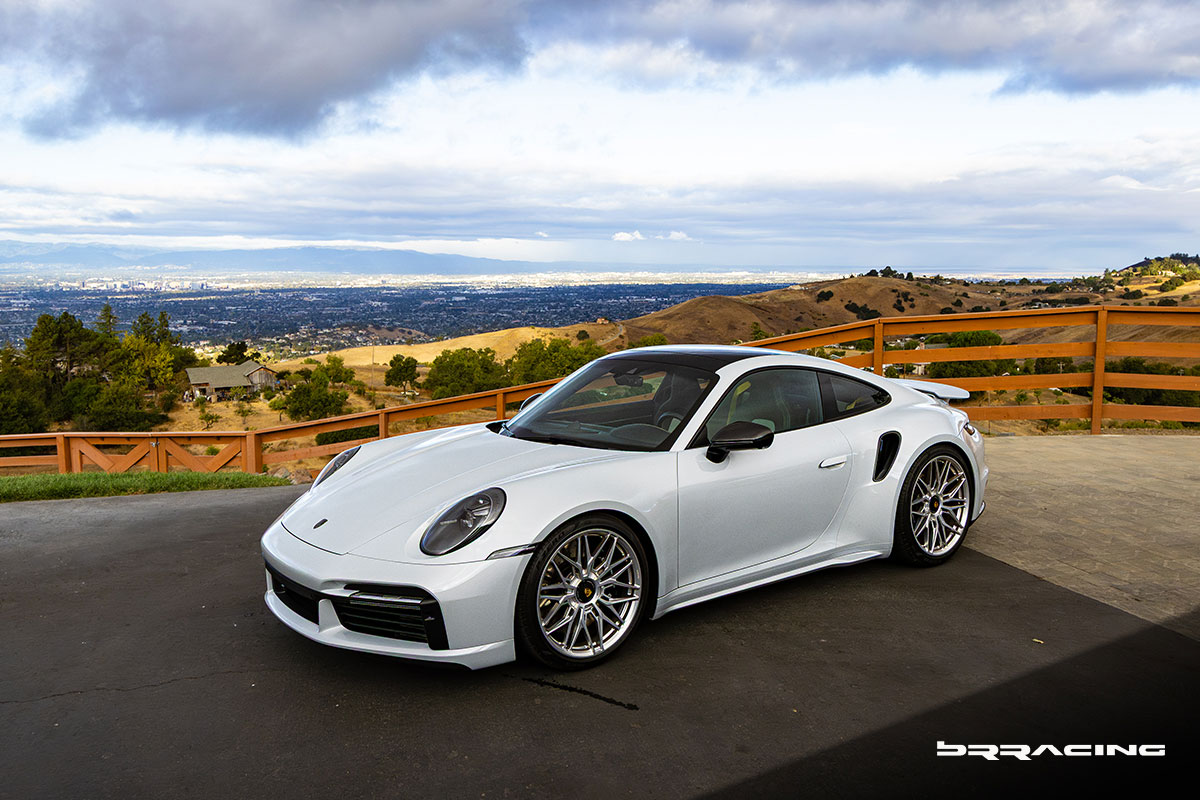
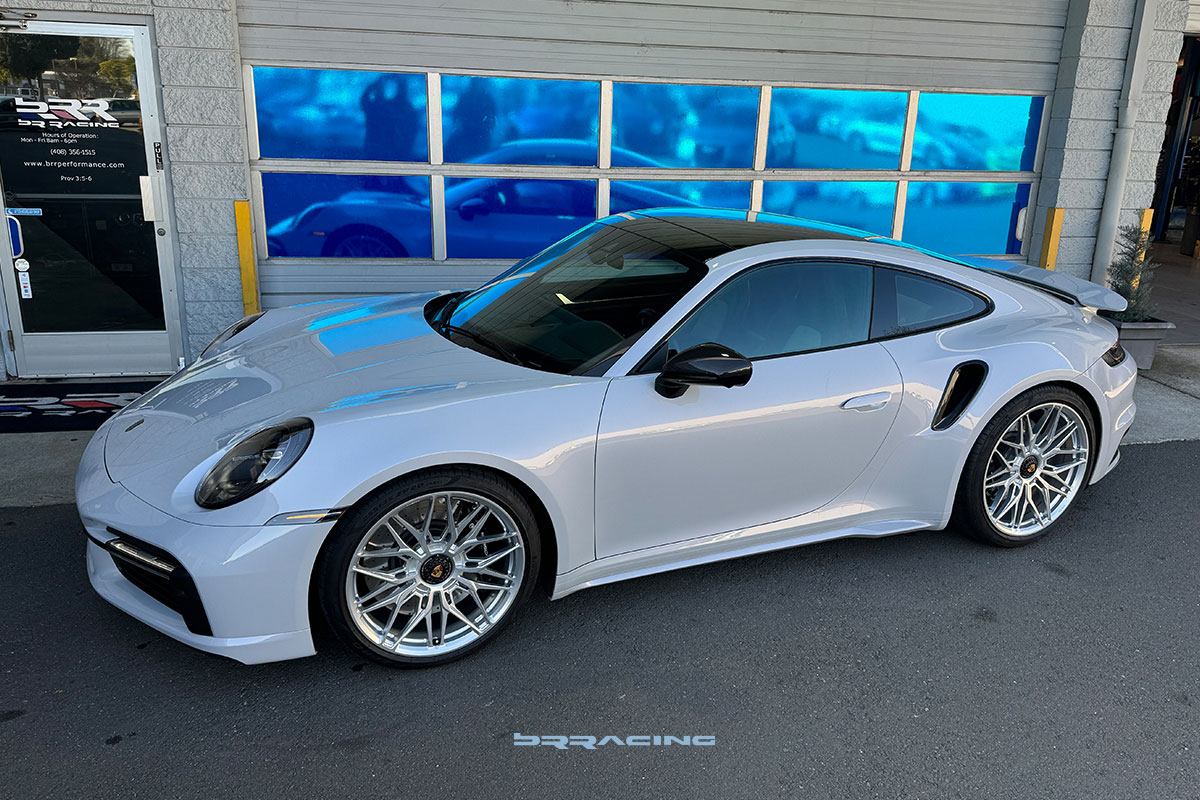
What were the pieces or needs to create this amazing car? We wanted to change the look, via the ride height, but didn’t want to produce a car that looked good, but scraped on driveways or steep roads. We wanted a wheel that would match the new aggressive nature of the car, and we wanted more power to make this a street rocket, but preserve the reliability.
Suspension
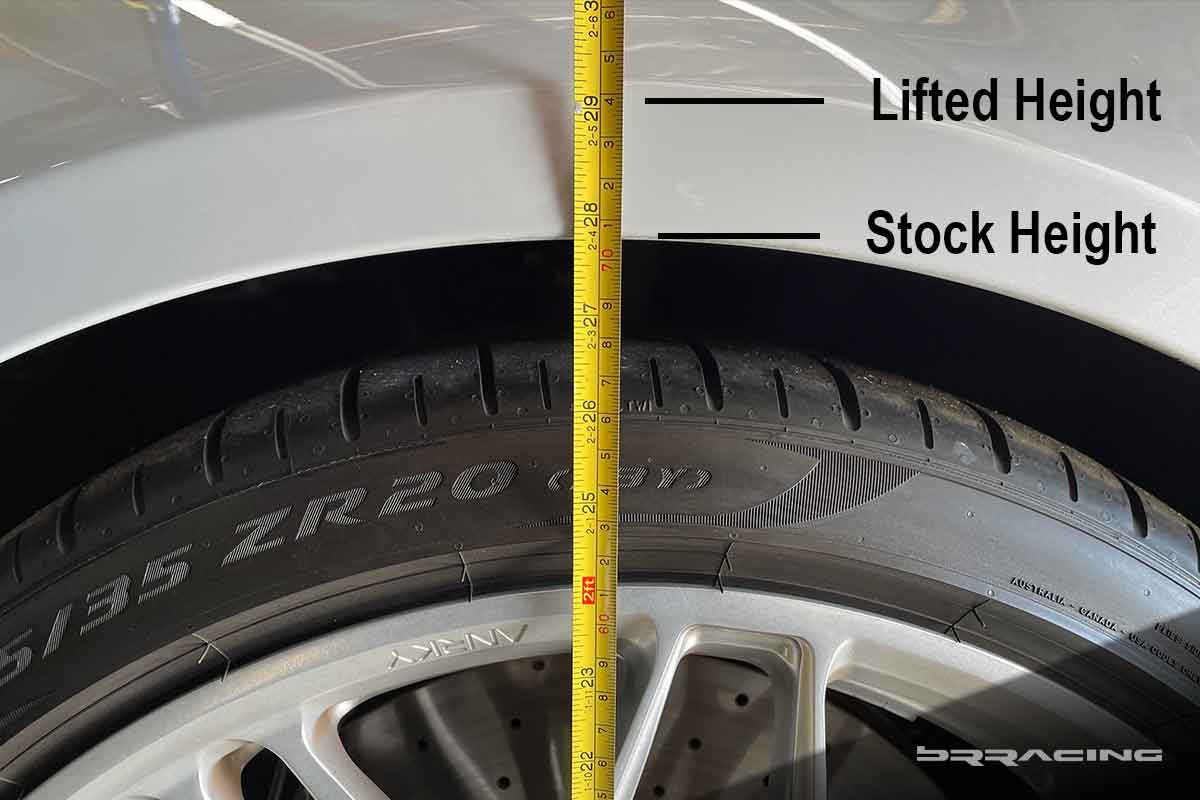
As mentioned, we wanted to lower the ride height, but make sure we still have the necessary ground clearance when needed. This car did NOT come with the factory axle lift system (FAL). Therefore, the answer is, we needed to add it. We wanted to change the ride height, and be able to set that ride height and rake to the specific desire of the customer. That solution is achieved with a “Height Adjustable Spring” kit (HAS). After some research, we found the solution that allowed us to combine both in one system – the TechArt HAS kit (see below)
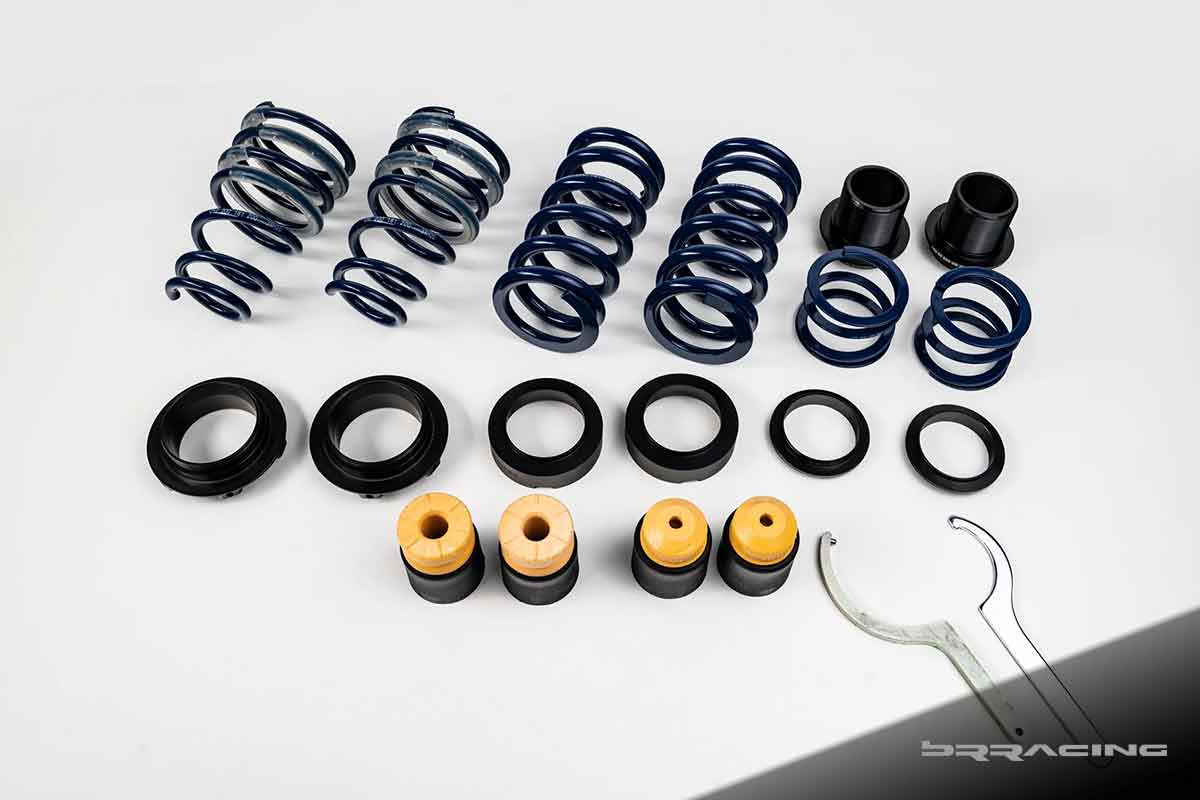
The next piece was the new “front axle lift” (FAL) kit from KW. See the kit below (image shows both the TechArt HAS kit, and the KW FAL kit.
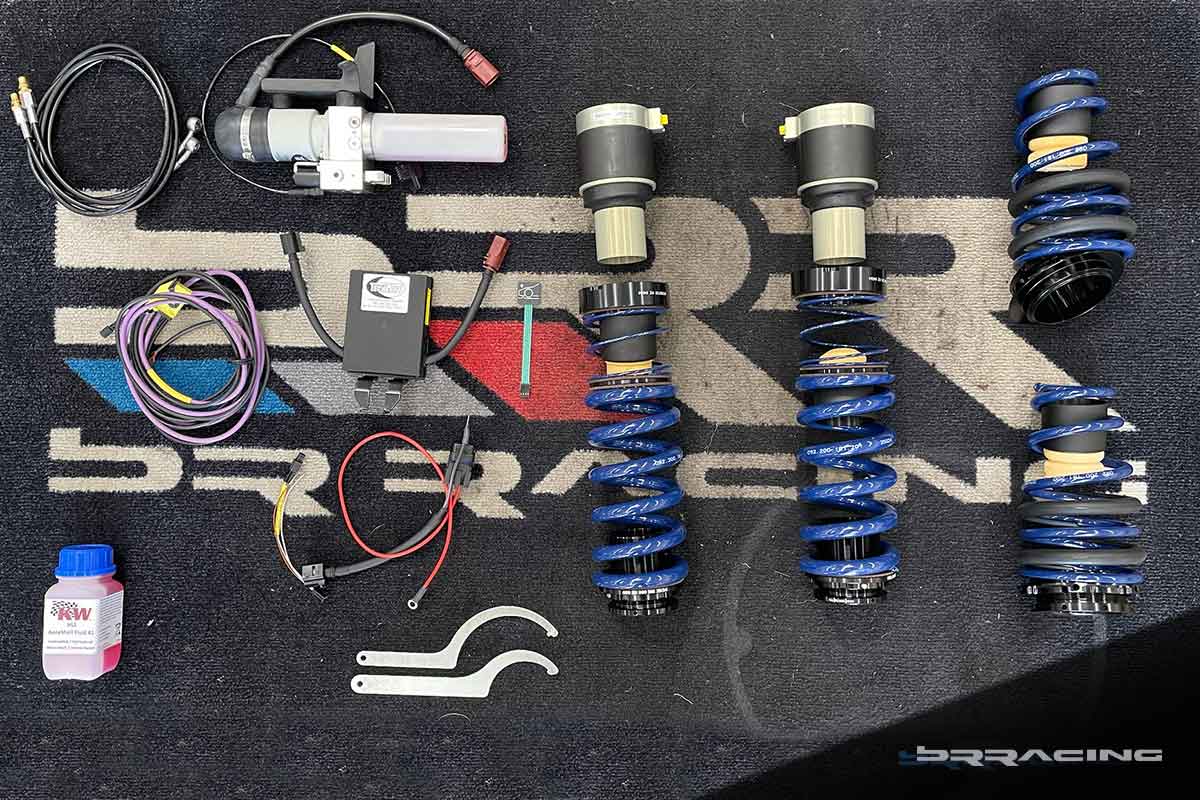
As mentioned, the car did not come from the factory w the Porsche FAL system (which is made by KW). So, the system can be made to install in the same manner, and has the same functionality (button to raise or lower, automatically lowers at the defined speed). Here is the install.
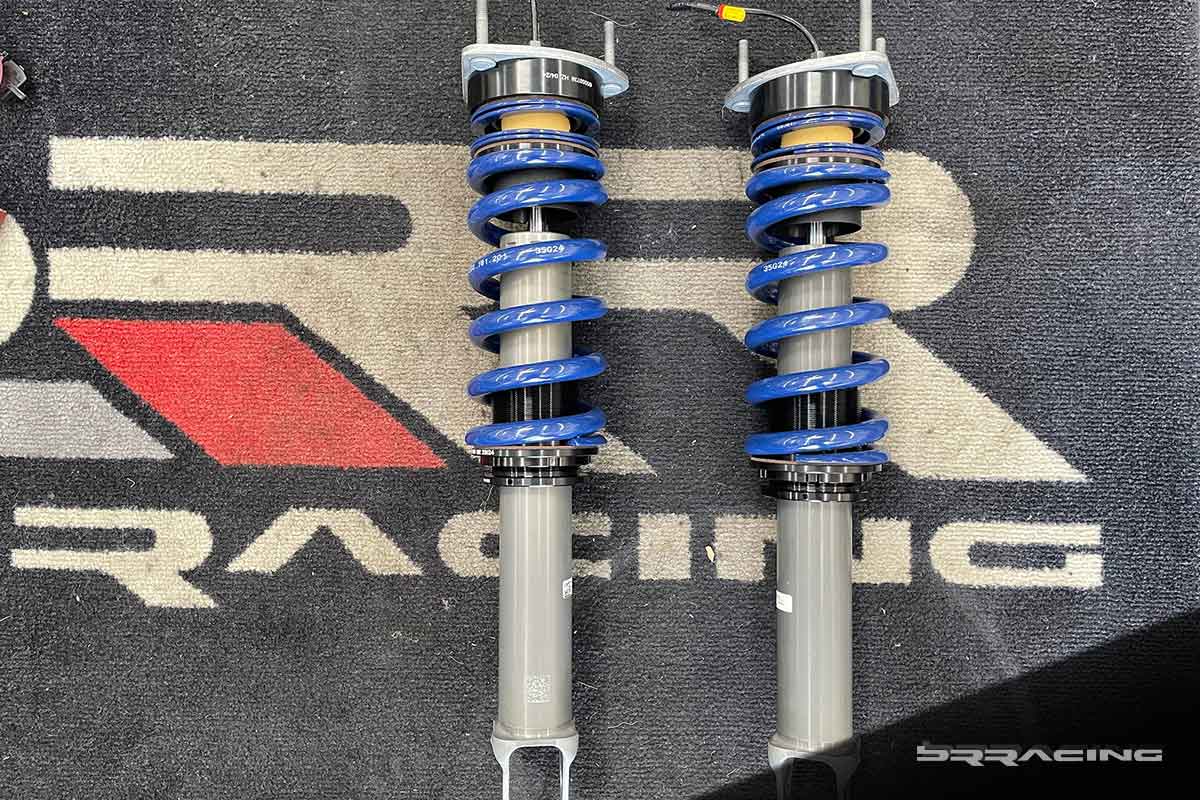
Front strut w the HAS kit, and the KW FAL lift installed below the springs.
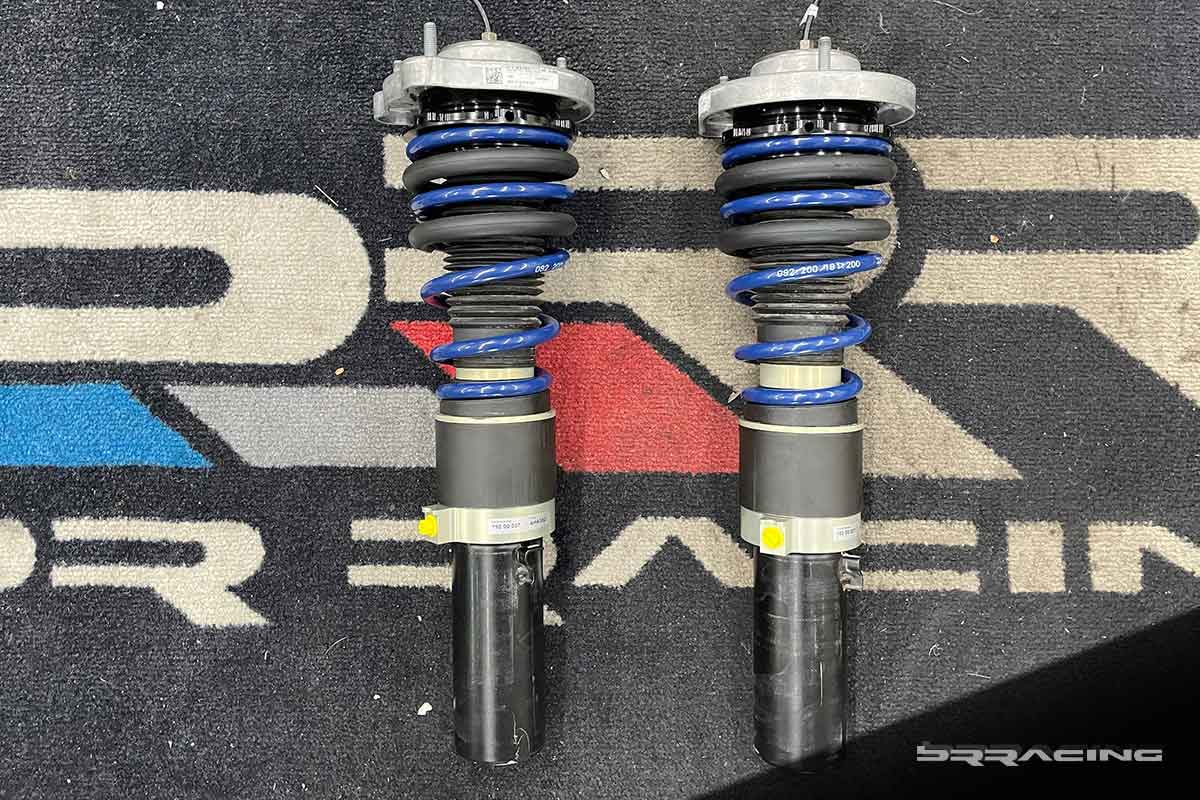
Here is the rear strut w the HAS kit (no FAL on the rear struts, only the front).
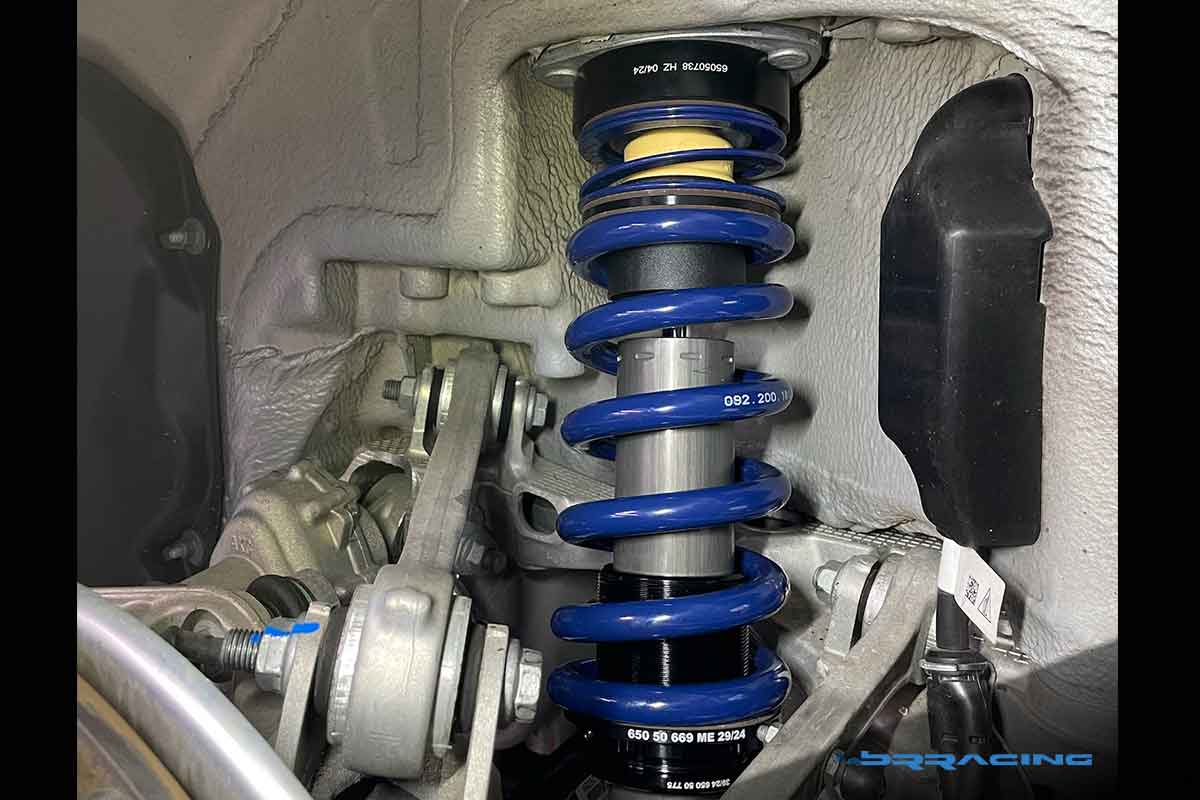
Assembled units installed in the car – rear suspension
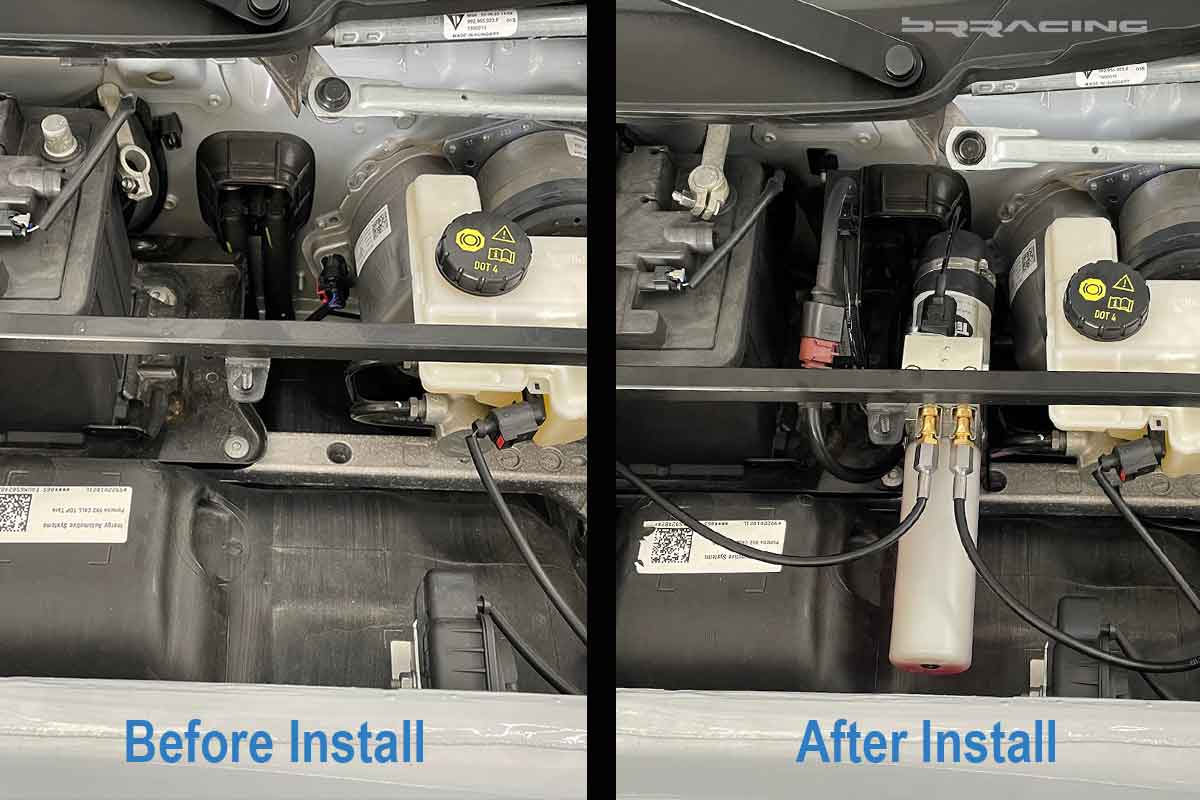
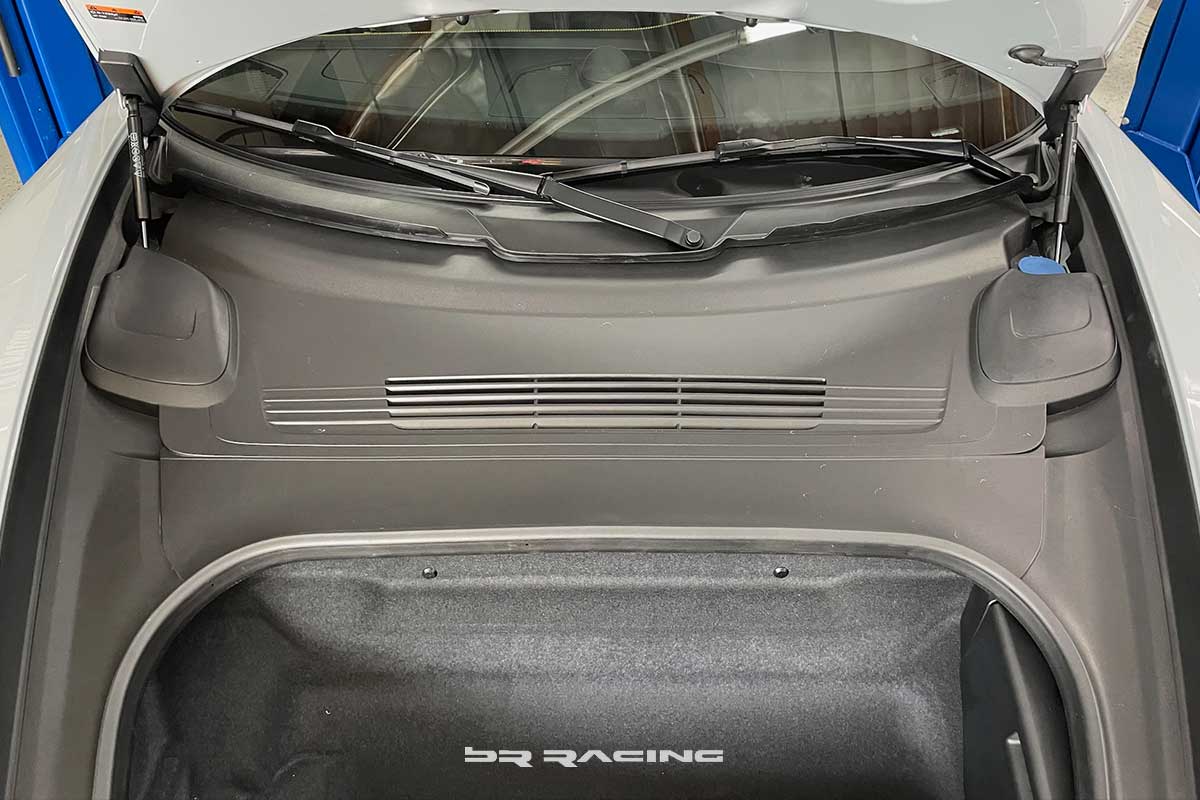
The main pump unit, installed in the front trunk area, right next to the battery. Pump, module, wiring harness, and hydraulic lines. The hydraulic lines run from the pump to each front strut.
Here is what the FAL kit produces in terms of lift.
And, if you didn’t know it, you wouldn’t know it is there.
Wheels
There are literally thousands of wheels. The first choice when changing or upgrading the wheels is what type? (Carbon, forged, flow-formed, or cast)? For this customer, it was a custom set of forged wheels. Most forged wheel options will provide a car specific fitment, to optimize the diameter, width, offset. Next, what diameter (this is often driven by two elements, what tires are available, and what the customer thinks looks the best)(NOTE – don’t fall into the train of thought that bigger is better, as you don’t want to get a wheel diameter that requires a tire with an aspect ratio of “25” or less….one, there aren’t many tires, and two, the ride will be harsh, and very likely to damage the expensive wheels). After reviewing all the major forged wheel players (BBS, ANRKY, HRE, APEX, Vorsteiner, Vossen, and others), this customer loved the look of the ANRKY forged wheel. You can normally get a forged wheel in any color combination or finish…for this, we went with a color that brought out the silver flakes in the body paint.
Power / Engine Software Upgrade
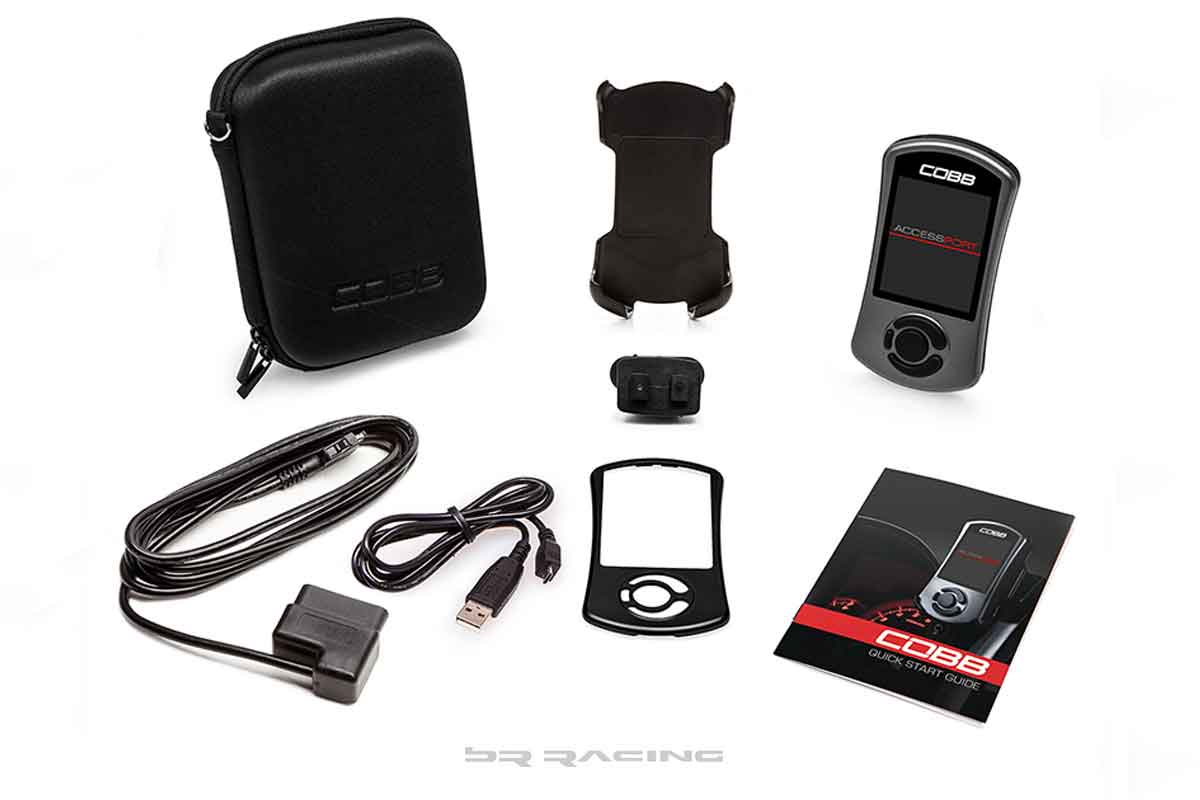
In the prior car, we went with M Engineerings software solution, as they had developed a “map” or file that leveraged the Boden exhaust. For this car, we went with the Cobb Tuning software platform, and then a specific file developed by reknowned Porsche turbo tuner “ByDesign”.
Producing amazing results….just from a software upgrade –
There is always more…but these first two projects give you idea of what can be done w the amazing Porsche 992 Turbo or Turbo S.
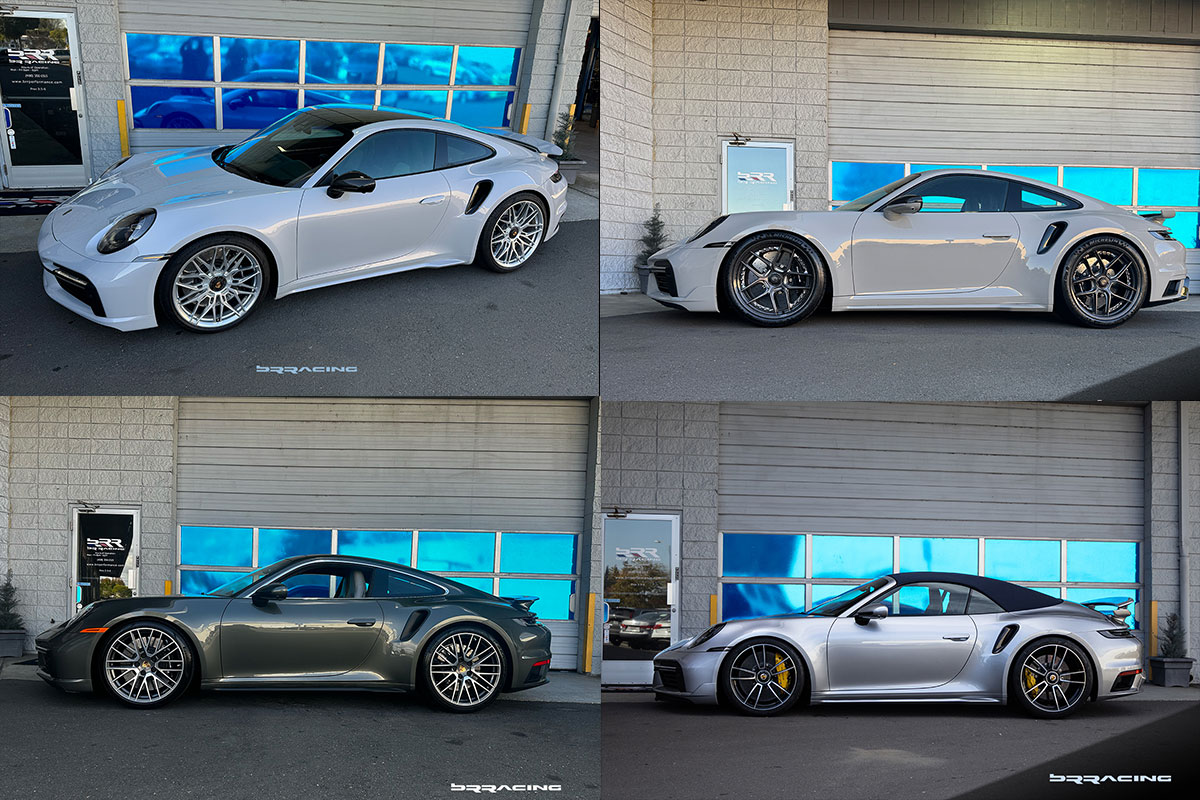
Here are some more examples of work we have done w the 992 Turbo / Turbo S.
Refinement
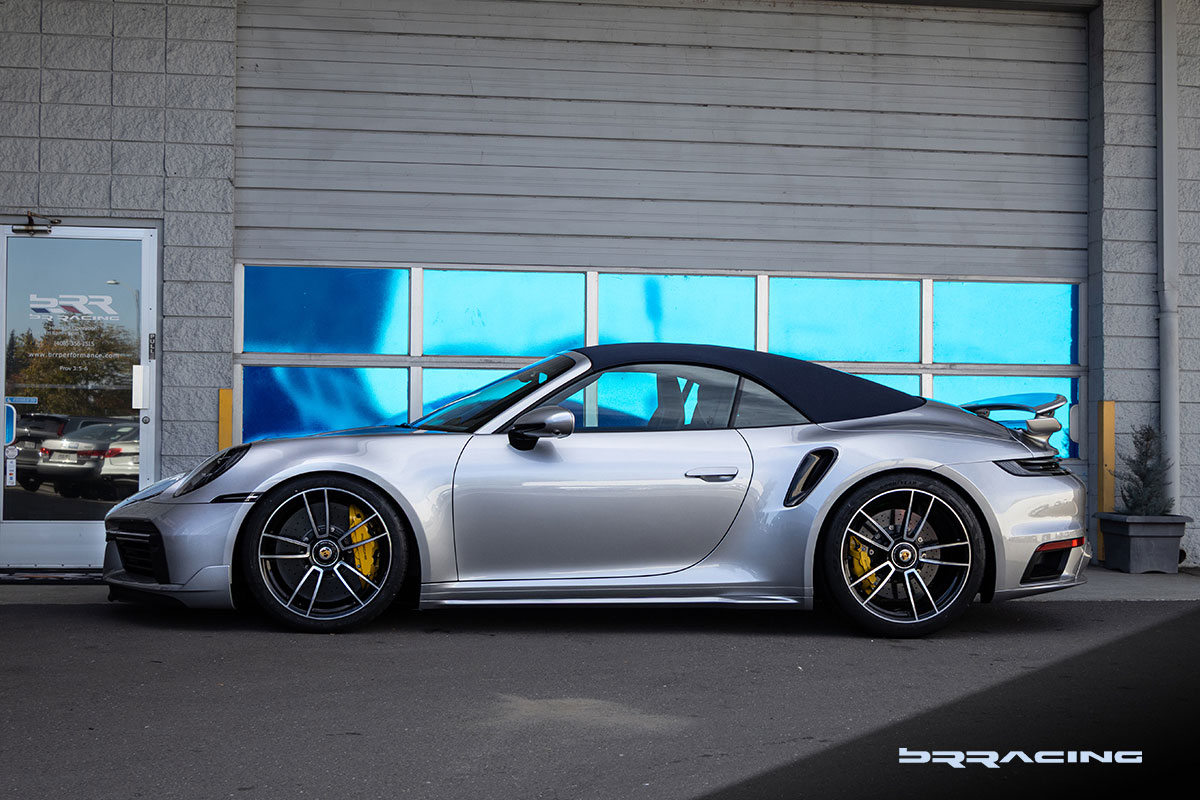
The objective here was not to go over the top, just refine. Refine the look, refine the sound.
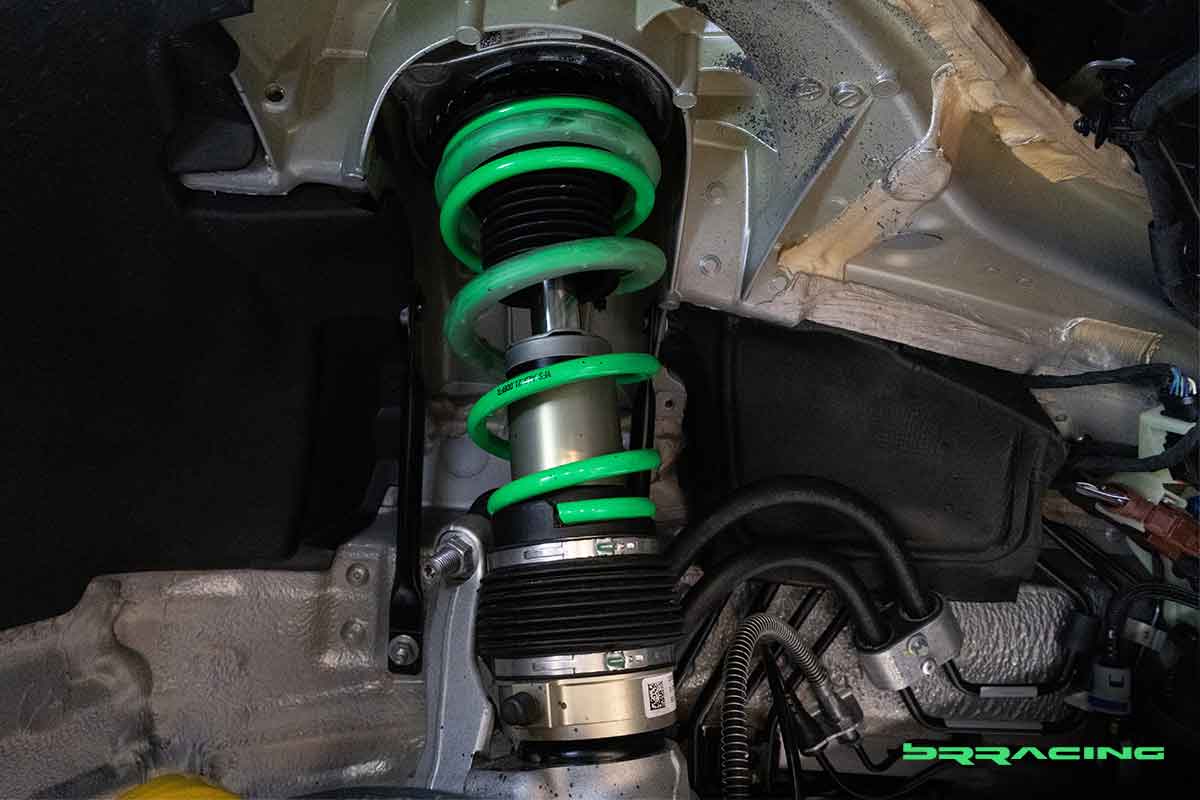
To get the “look”, again we turned to a “height adjustable spring” kit, (HAS), this time from VF Engineering.
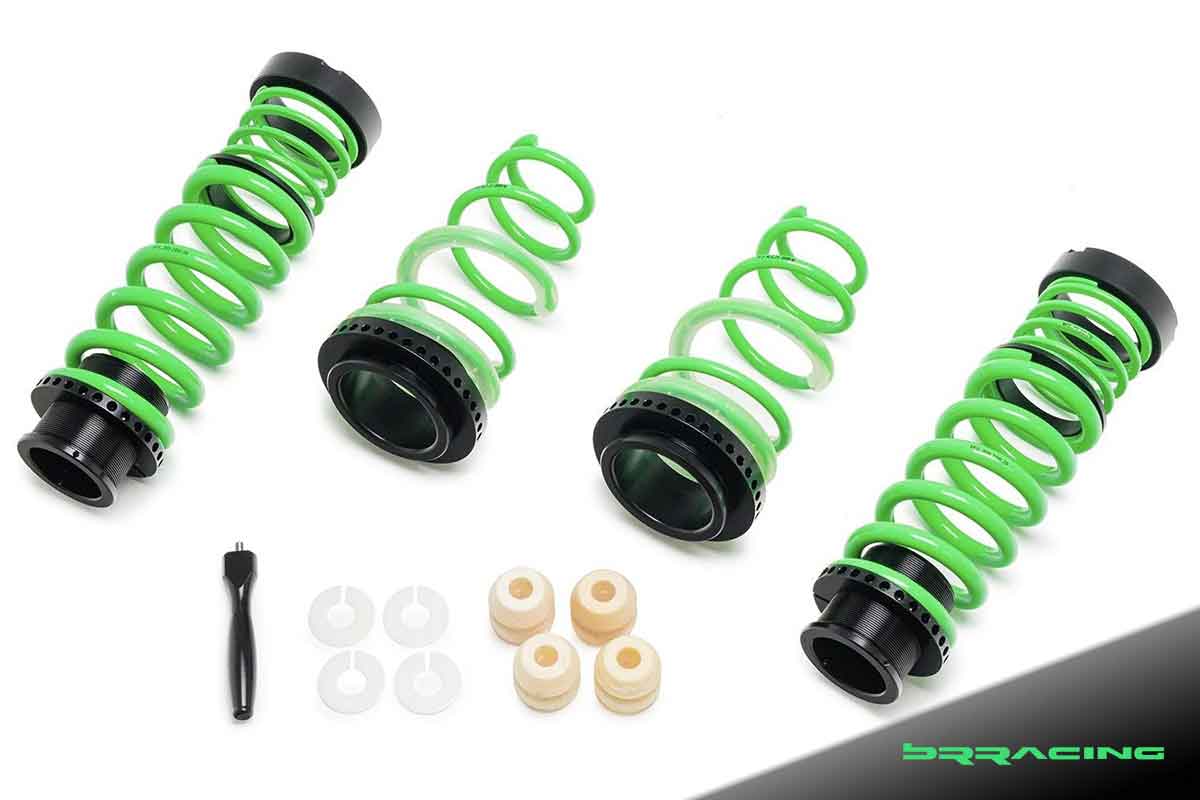
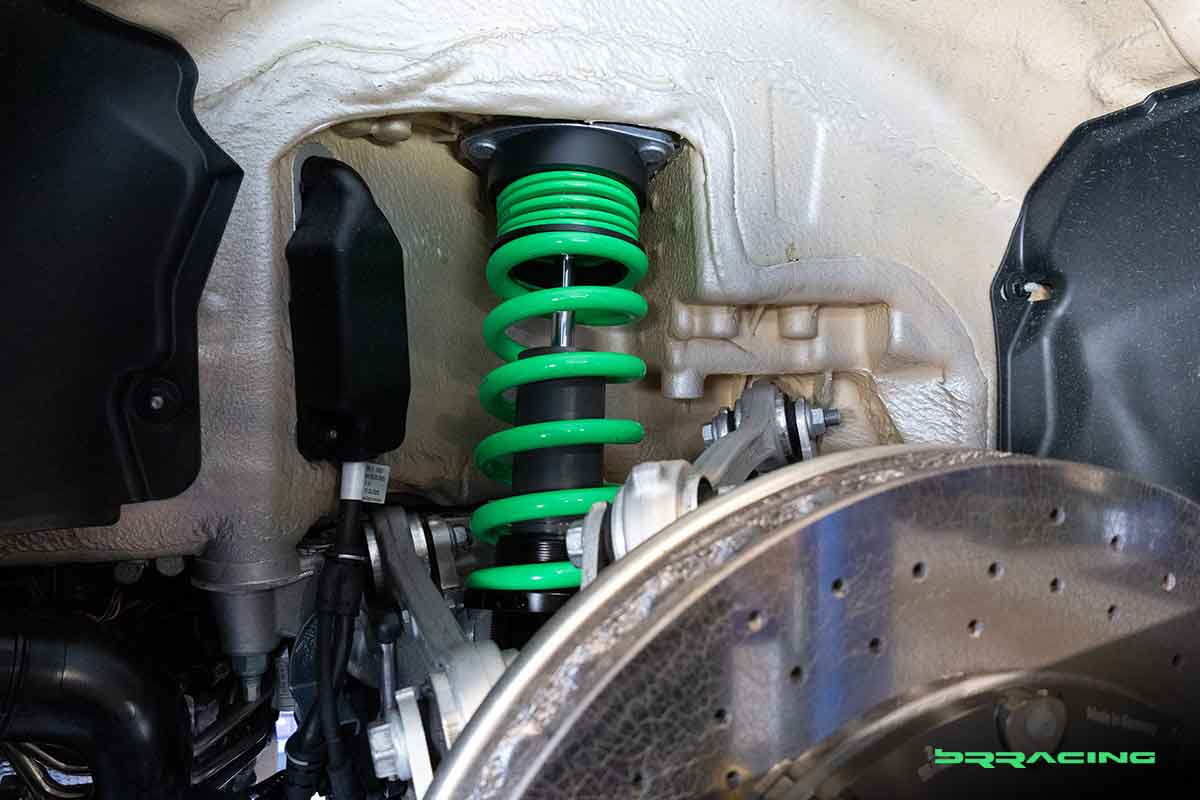
The front HAS kit installed and integrated with the factory “nose lift” (FAL) system.
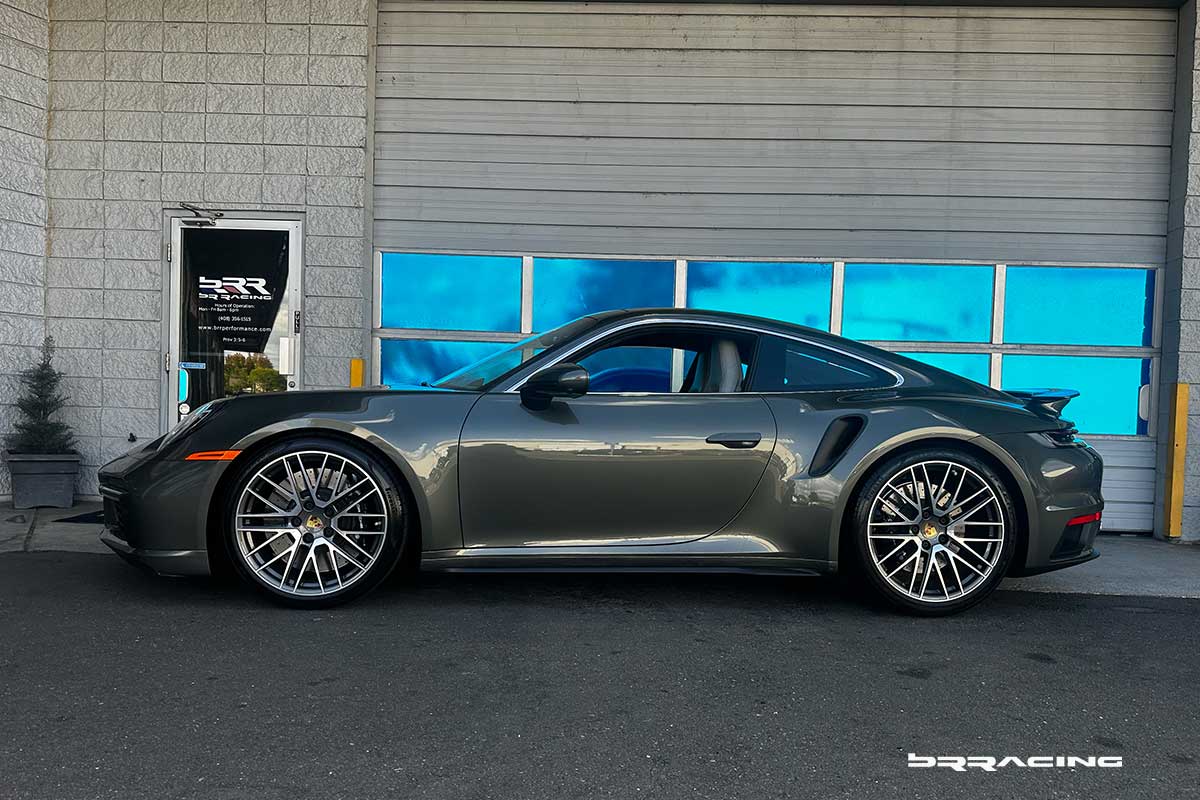
Excitement
This customer loved his Porsche 992 Turbo S just the way it was, but didn’t think the exhaust sound matched the personality of the car.
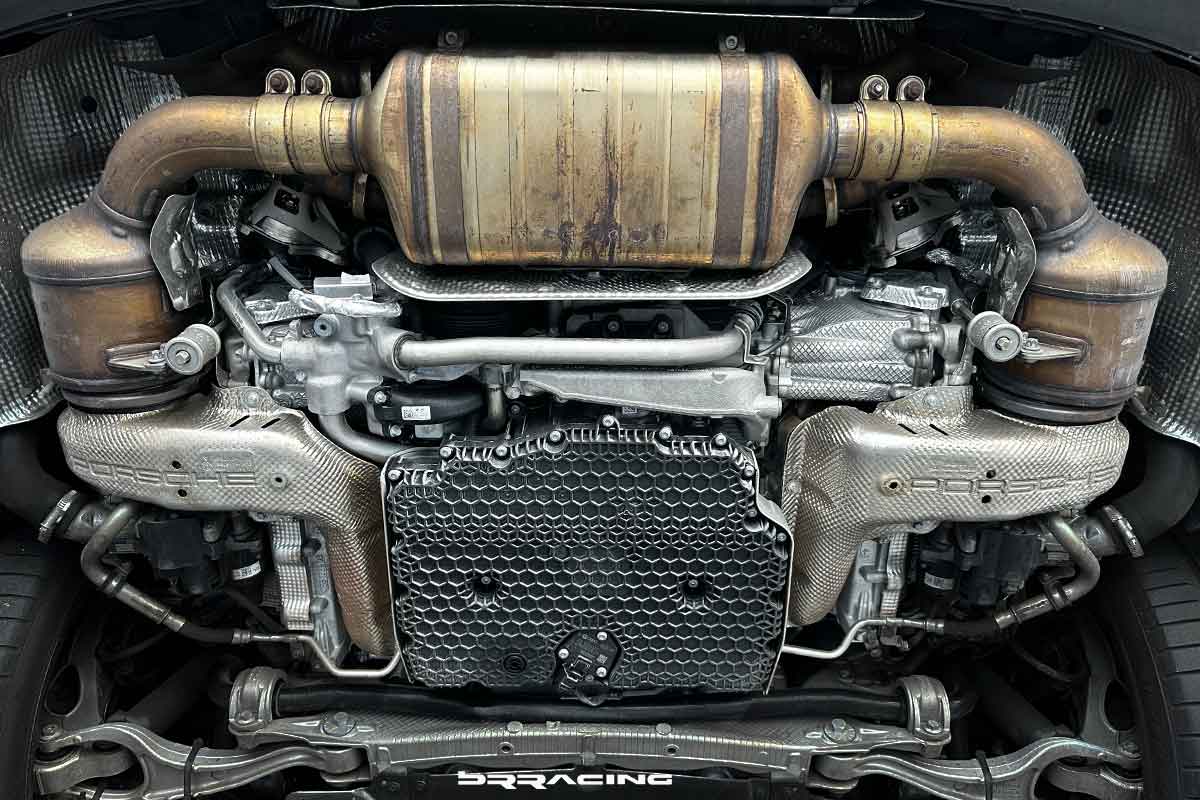
Here is the original Porsche exhaust (turbo, catalytic convertors, main center exhaust / muffler.
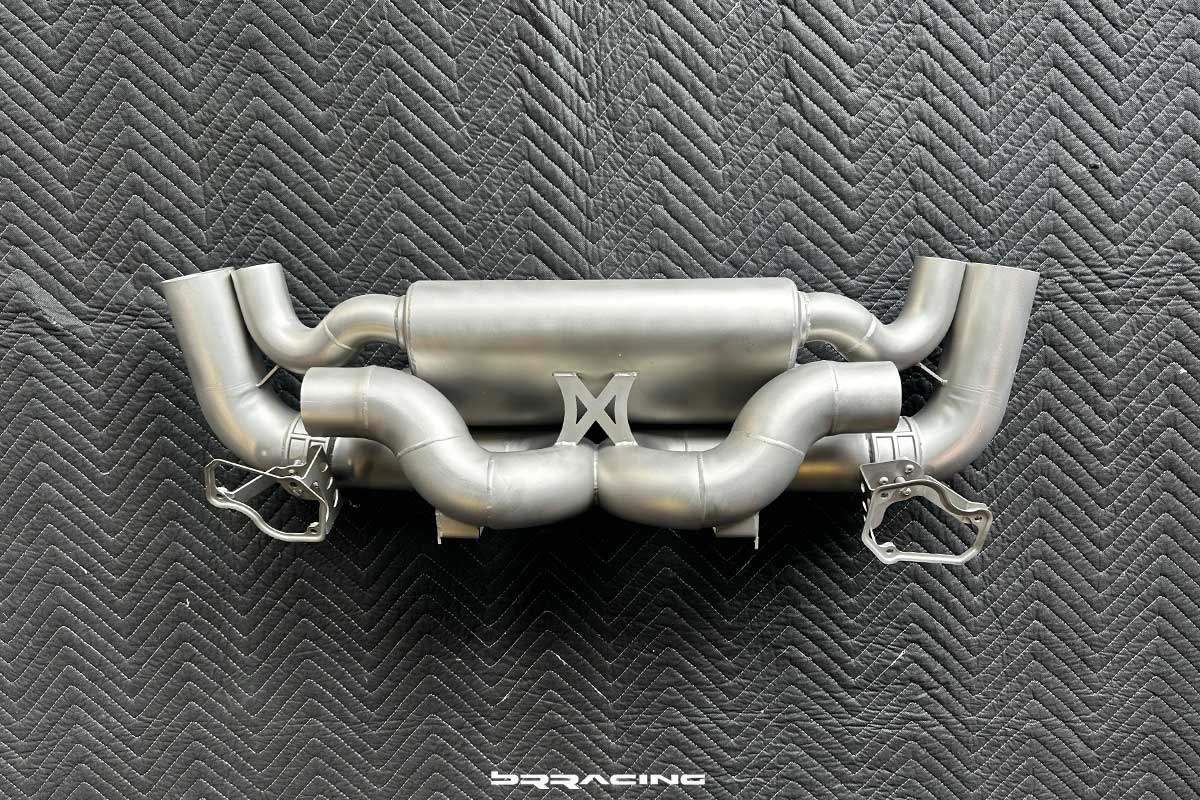
After reviewing the same list of good exhaust options, and listening to the various sound clips, this customer elected to go with the SOUL Performance rear center section, seen below.
And, now fully installed –
As you can see, the Porsche 992 Turbo is quite a platform from which you can morph or evolve to your specific needs, objectives. Talk to us about hwo to make your Porsche 992 Turbo / Turbo S something very special to you.